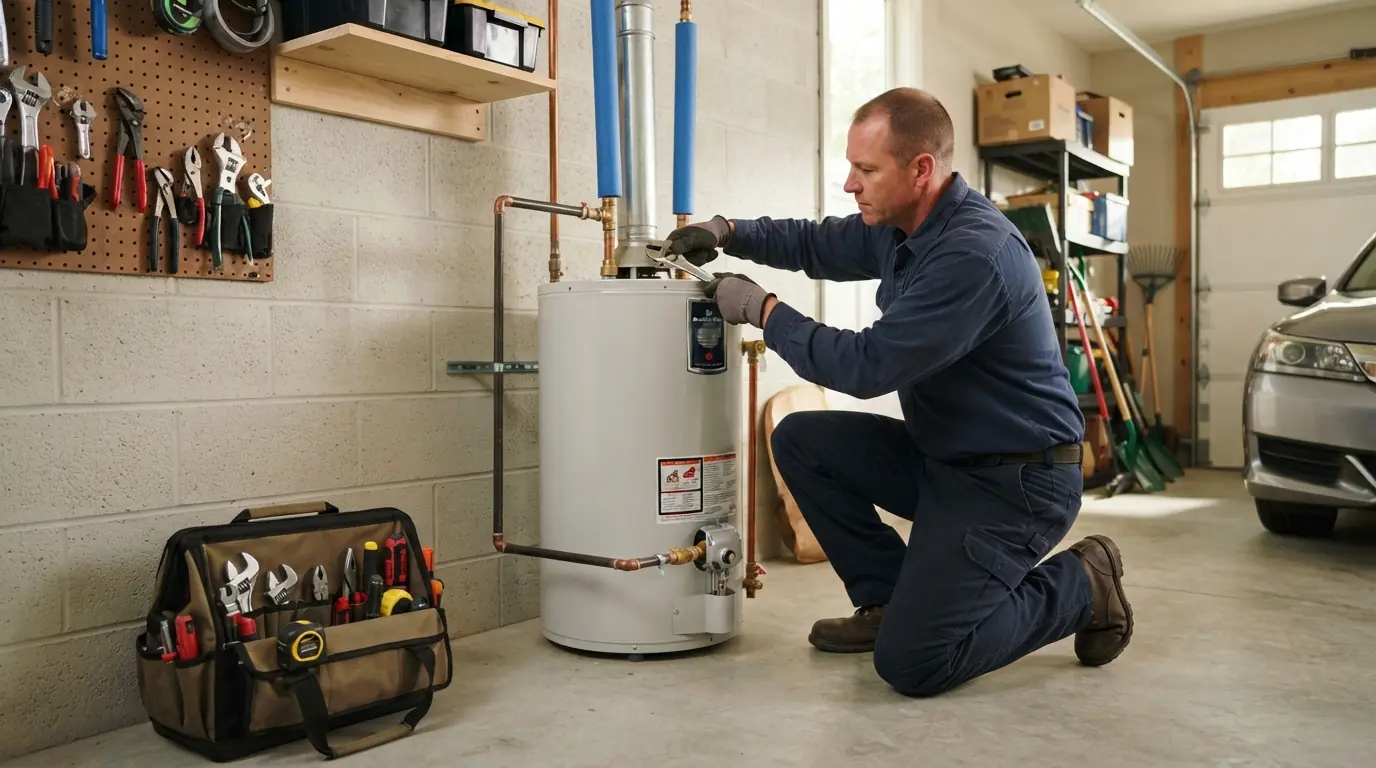
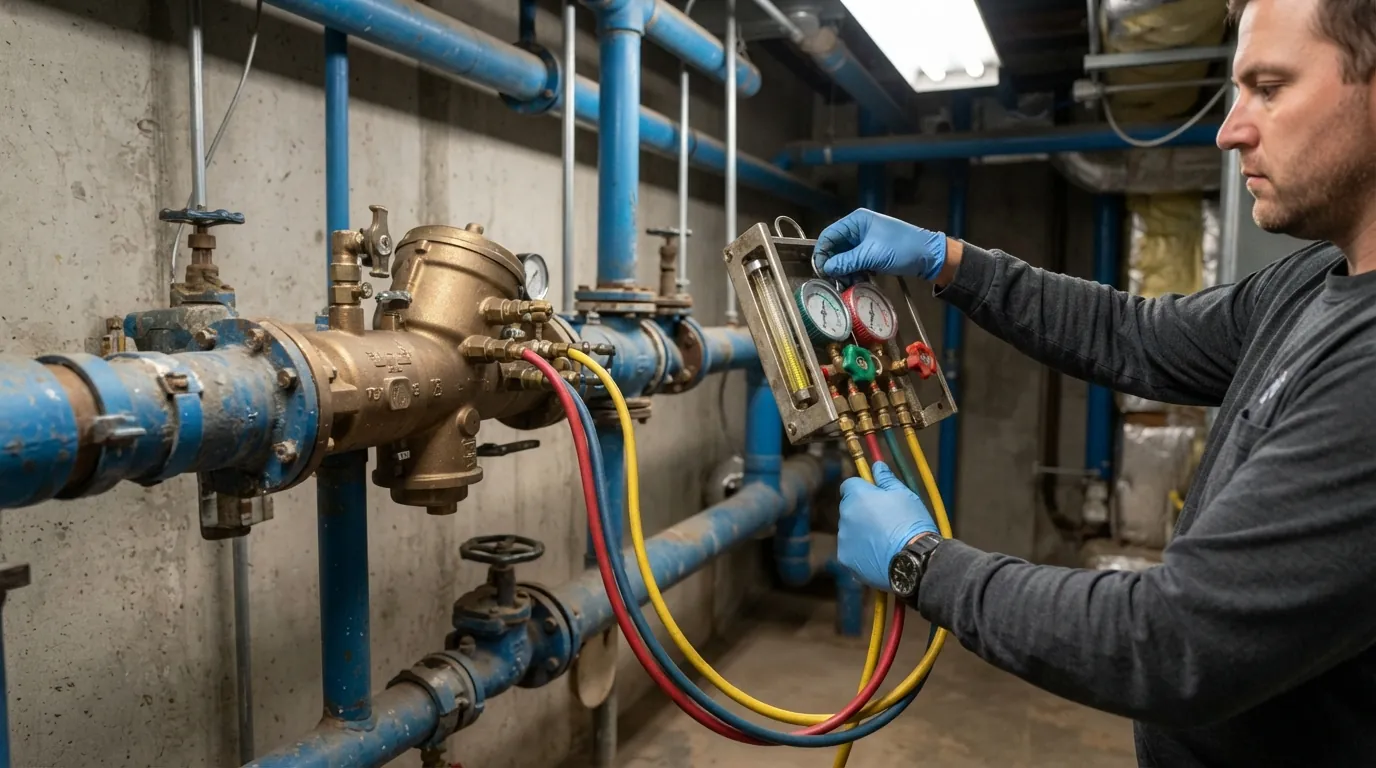
Backflow testing in Knoxville, TN checks that the assembly on an irrigation, fire or commercial line still stops water flowing backward into the public supply. A differential pressure gauge goes on the test cocks, each check valve and relief valve is measured against its limit, and a failed device is repaired and retested.
Updated October 2026
What a Backflow Preventer Protects Against
Water is supposed to flow one way, from the main into the property. When pressure in the main drops, during a break or heavy hydrant use, it can reverse and pull water back out of a lawn sprinkler, a boiler loop or restaurant equipment. A backflow preventer is a set of check valves that closes when that happens.
Those valves have rubber seats and springs that wear, stick or foul with debris, and a device can fail with no visible sign. That is why testable assemblies are checked on a schedule rather than trusted. Commercial buildings often carry several; the rest of that work sits under commercial plumbing work.
What a Backflow Test Visit Includes
- Device make, model, size and serial recorded
- Test cocks flushed before the gauge goes on
- First and second check valves measured
- Relief valve opening point checked on RPZ devices
- Shutoff valves checked for tight closure
- Readings recorded on the test report
- Report copies to you and the water utility
Annual Backflow Test
A test measures each part of the assembly against a set limit: the first and second check valves must hold a pressure difference, and on a reduced pressure zone device the relief valve must open at the right point. The gauge is hooked to the test cocks, the shutoffs are cycled in order, and each reading is recorded. Water is off only while the device is tested. The finished report lists the device's make, size, serial number, location and readings, and goes to the property owner and the water utility.
Irrigation Backflow Preventers
Lawn sprinkler systems are the most common residential backflow device, because irrigation water sits in pipes buried among fertilizer and soil. Most use a pressure vacuum breaker or a double check assembly near the house, above or below ground. Above-ground devices face hard freezes every winter, so they need draining or an insulated cover before the cold arrives. A body cracked by a freeze is a common spring discovery, and it usually means replacing the assembly rather than rebuilding it, which is the costly way to learn the lesson.
Backflow Repair and Retest
A failed test usually means a worn check seat, a weak spring, or debris holding a check open. Most assemblies are rebuilt in place with the maker's repair kit rather than replaced: the checks come out, seats and rubber parts are swapped, and the device goes back together and is tested again. A body cracked by freezing or an assembly too old for parts gets replaced. Either way the property is not in compliance until a passing retest is on record, so repair and retest happen together whenever the parts allow.
Protecting the Water KUB Delivers
Backflow Devices: What Owners Can Do
Owners can protect a device; testing it for the record is another matter.
| Job | Reasonable DIY? | Why |
|---|---|---|
| Draining an irrigation device for winter | Yes | Follow the shutoff and drain order on the device |
| Insulating an above-ground assembly | Yes | A fitted cover prevents freeze cracks |
| Running the annual test | No | The report must come from a tester the utility accepts |
| Rebuilding check valves | No | The device needs a formal retest afterward |
What Drives the Cost of Backflow Testing
Testing is priced per device; repairs are priced by what the test finds.
Reduced pressure zone assemblies take more steps than a double check.
Irrigation, fire and domestic lines each carry their own.
Devices in vaults or pits take longer than those above ground.
A rebuild kit costs less than a new assembly.
A failed device needs a passing retest before the report is filed.
How a Backflow Test Runs
- 1
Locate and record
Device found, make, size and serial noted.
- 2
Connect the gauge
Test cocks flushed, differential gauge attached.
- 3
Test each part
Checks and relief valve measured in sequence.
- 4
Repair if needed
Failed parts rebuilt, device retested.
- 5
File results
Report completed and copies sent.
Backflow Testing & Certification Questions From Knoxville Homeowners
How often does a backflow preventer need testing?
Testable assemblies are typically tested every year and after installation or repair. Your water utility sets the schedule.
Do houses need backflow preventers?
Homes with irrigation, boilers, pool fill lines or fire sprinklers usually do. A plain house supply relies on simpler protection at fixtures.
What happens if my device fails?
It is repaired or replaced, then retested, and the report is filed once it passes.
Will the water be off during the test?
Only for the short time each device is being tested.
Can a frozen backflow preventer be fixed?
A cracked body usually means replacement. Draining or insulating it before winter prevents most freeze damage.
What is the difference between an RPZ and a double check?
A reduced pressure zone device adds a relief valve that dumps water if the checks fail, for higher-hazard connections.
Other Water Quality & Maintenance Jobs We Handle
Well Pump Repair & Replacement
No water from the well and waterlogged pressure tank.
Well Pump Repair & Replacement detailsWater Pressure Booster Pump
Booster pump sizing and booster with pressure tank.
Water Pressure Booster Pump detailsPlumbing Inspection
Pre-purchase plumbing inspection and annual whole-home plumbing check.
More on plumbing inspectionSeptic to Sewer Conversion
Tap fee and permit and septic tank abandonment.
Septic to Sewer Conversion detailsBackflow test due?
Call to schedule. We test, repair if needed, and handle the retest.