Trenchless sewer repair in Knoxville, TN rebuilds a failing lateral without an open trench: cured-in-place lining forms a new pipe inside the old one through a single access point, and pipe bursting pulls new pipe through the old path from a pit at each end. Lining needs pipe that still holds its shape; bursting does not.
Updated October 2026
When Trenchless Makes Sense, and When It Doesn't
Trenchless repair earns its place when the line runs under something expensive to dig: a driveway, a patio, finished landscaping, or the roots of a tree you want to keep. It also shortens the time a yard stays torn up. It is not magic. A line with a deep sag keeps the sag after lining, and pipe collapsed flat cannot be lined.
The camera tells us which case you have. Round pipe with cracks and rooted joints is a lining candidate; collapsed Orangeburg or broken clay on a straight path suits bursting. A badly bellied or misaligned run may still need the open-trench replacement it has been avoiding.
What Shapes the Price of Trenchless Repair
Trenchless work is priced by method and length, after the camera run.
Spot lining costs least; lining or bursting a whole lateral costs more.
More pipe means more liner or more HDPE.
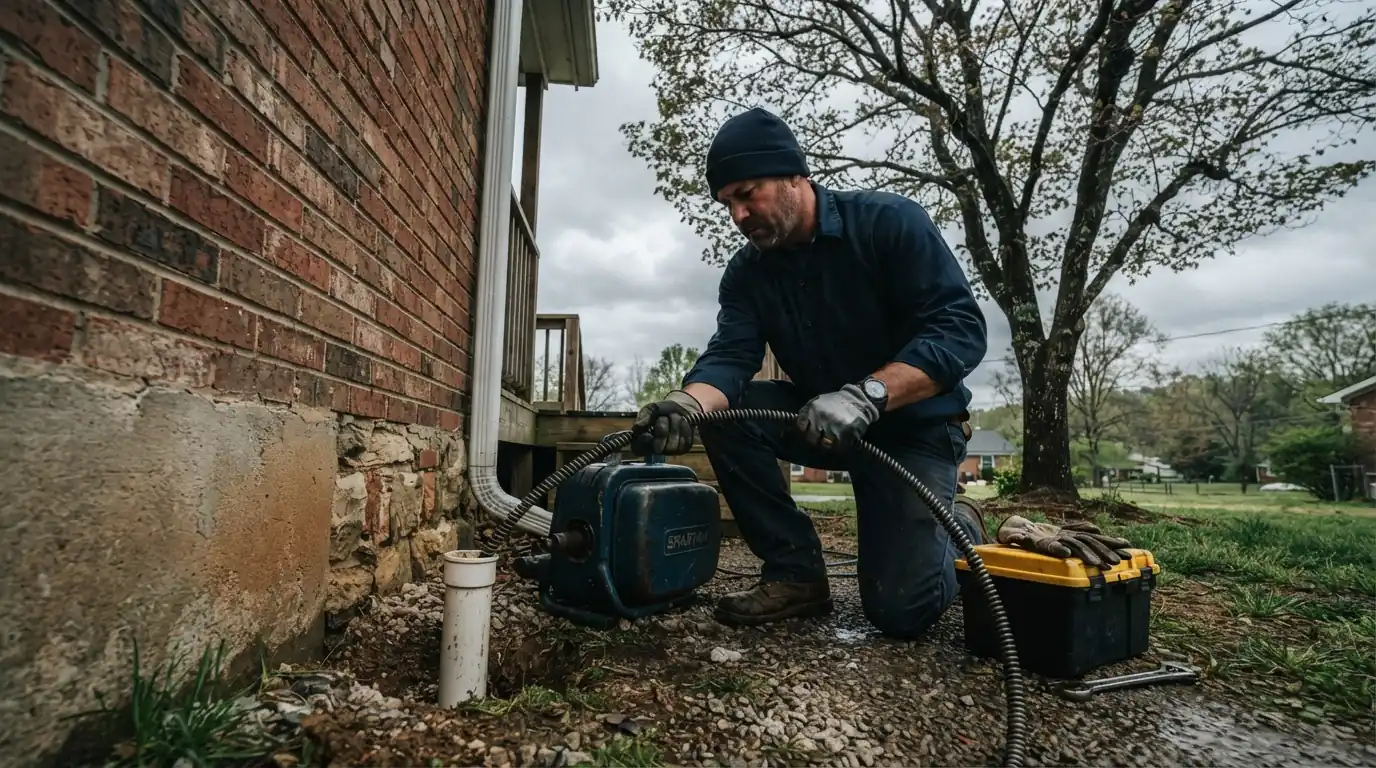
Heavy roots or scale take longer to clear before lining.
Bursting needs a pit at each end; lining may need only a cleanout.
A plumbing permit typically runs $100 to $250 where required.
CIPP Pipe Lining
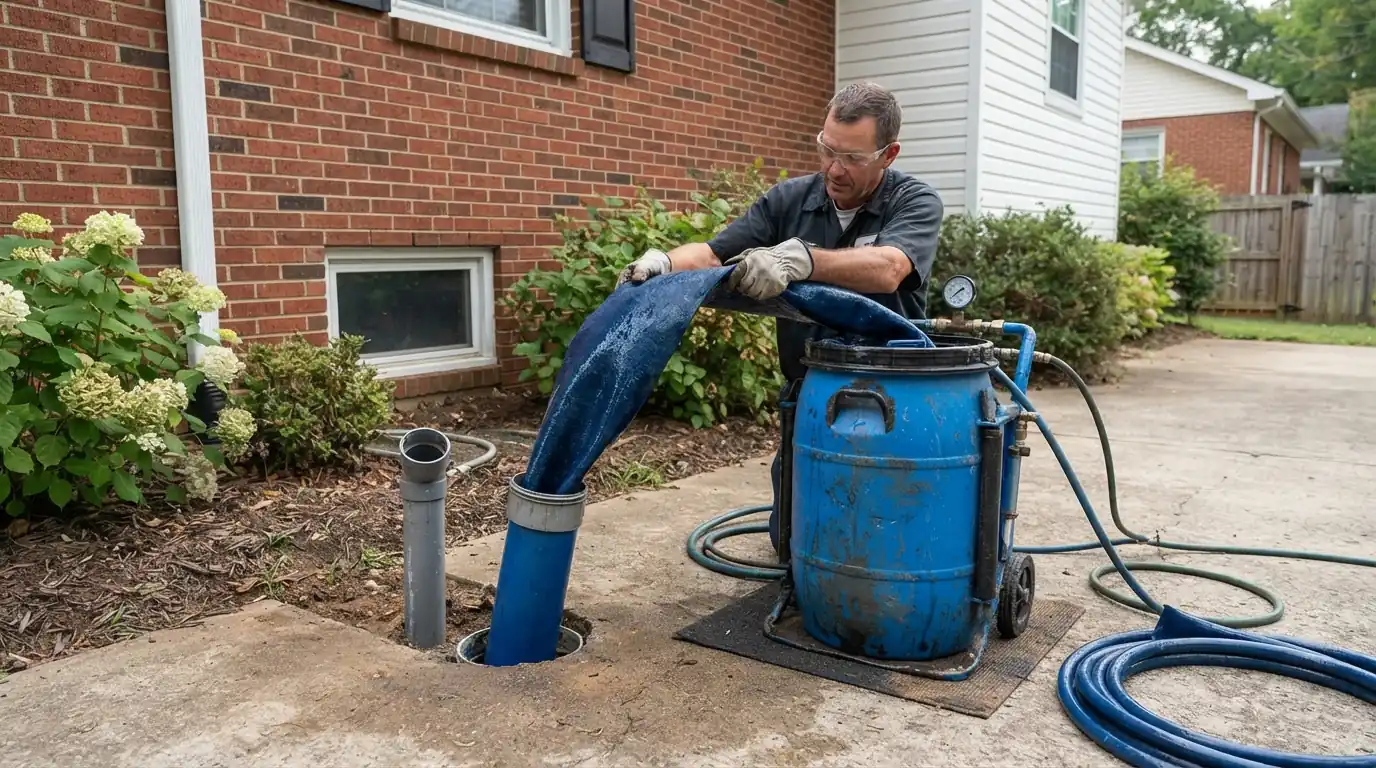
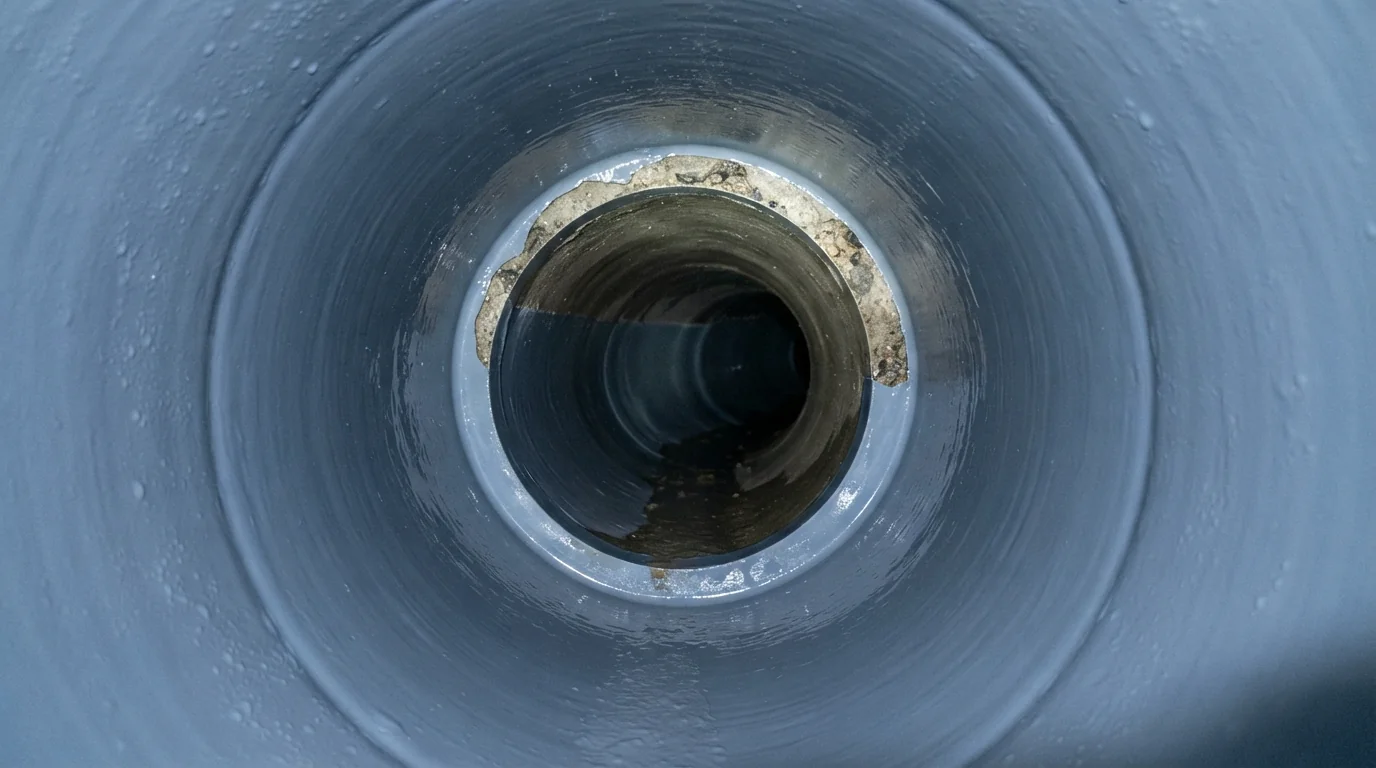
Cured-in-place lining starts with cleaning the old line, usually by jetting, so the liner can bond to the host pipe. A felt tube saturated with resin is pulled or inverted into the line through a cleanout or small pit, inflated against the old wall, and cured with hot water, steam or light until it hardens into a jointless pipe inside the old one. Branch connections are then reopened from the inside with a robotic cutter. The result has no joints for roots to exploit and a smooth wall that resists buildup.
Pipe Bursting
Pipe bursting replaces the old line instead of lining it. A cone-shaped bursting head is winched through the old pipe from one pit to another, fracturing the old material outward into the soil while pulling new HDPE pipe in behind it. It suits pipe too broken or deformed to line, like collapsed Orangeburg or shattered clay, as long as the route is reasonably straight and not crowded by other utilities. The new line can even be upsized one diameter along the way, which helps an undersized old lateral.
Spot Lining
Spot lining, sometimes called a point repair, fixes one damaged section instead of the whole run. A short resin-saturated sleeve is carried on an inflatable packer to the exact spot the camera found, pressed against the break and cured in place. It fits a single cracked joint, a root entry point or a hole in otherwise sound pipe, especially under a slab or driveway. It is the least disruptive repair there is, and the right one only when the rest of the line is genuinely in good shape.
Which Knoxville Sewer Lines Qualify for Trenchless
Line failing under the driveway? Ask about trenchless first.
(865) 344-9122How a Trenchless Repair Runs
- 1
Camera
Line scoped and measured to confirm it qualifies.
- 2
Clean
Roots and scale jetted out so a liner can bond.
- 3
Install
Liner cured in place, or new pipe burst through.
- 4
Reinstate
Branch connections reopened, ends connected.
- 5
Verify
Final camera run recorded and shared with you.
How Long You Are Without a Sewer Line
The line is out of service from the moment it's cleaned until the liner cures or the new pipe is connected, so we plan that stretch with you before work starts. Curing time depends on the resin and the method: hot water and steam cure faster than ambient resin, and light-cured liners are faster still.
Bursting keeps the old line working right up until the pull, so most of the outage is the connection work at each end. Either way, you know when to stop running water and when it is safe to start again.
Trenchless Sewer Repair Questions From Knoxville Homeowners
Does trenchless repair last?
Cured-in-place liners and HDPE are both built for long service. The quality of the cleaning and the cure decides how well a liner performs.
Can every sewer line be lined?
No. Collapsed, badly sagging or severely misaligned pipe cannot be lined, which is why the camera comes first.
Can roots grow through a liner?
A jointless liner leaves roots no gap to enter, one of its main advantages over repairing clay joints.
Does lining make the pipe smaller?
Slightly, by the liner's thickness. The smooth wall usually flows as well as or better than rough old pipe.
Is trenchless always cheaper than digging?
Not always. It saves most under driveways, patios and trees; in open lawn a trench can cost less.
Is the line checked afterward?
Yes. A final camera run confirms the liner or new pipe and the reopened connections.
Other Drains & Sewer Jobs We Handle
Sewer Cleanout Installation
Two-way outdoor cleanout and indoor cleanout access.
Sewer Cleanout Installation in KnoxvilleSewer Ejector Pump Service
Basement bathroom ejector and grinder pump.
More on sewer ejector pump serviceWant to avoid digging up the driveway?
Call for a camera inspection and find out if your line qualifies.