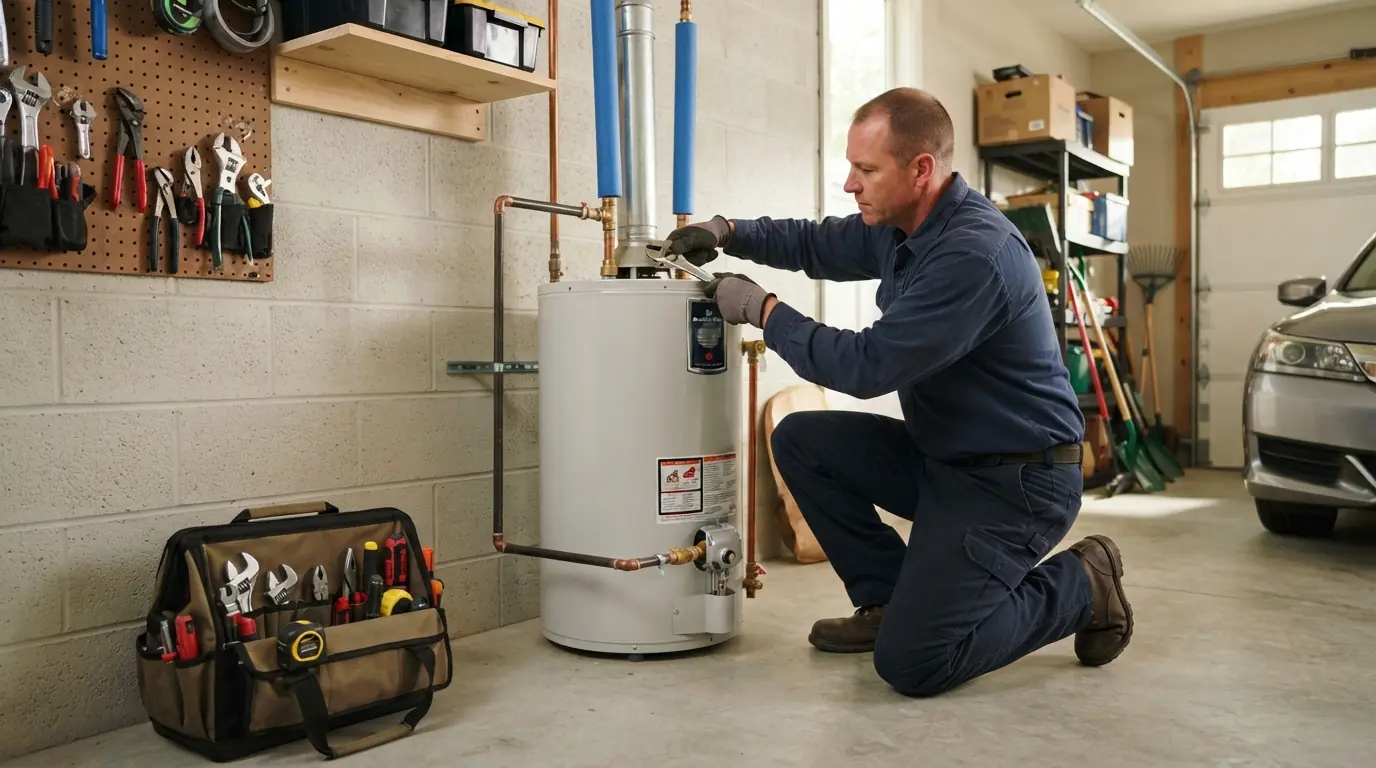
Water heater maintenance in Knoxville, TN is a yearly visit to flush sediment from the bottom of the tank, inspect and replace the anode rod when it is worn, test the temperature and pressure relief valve, and check the burner or elements, venting and connections. It's the cheapest way to get a tank's full service life.
Updated October 2026
What Maintenance Actually Does
Minerals settle in every tank heater as water is heated, and over time that sediment insulates the burner or buries the lower element. Meanwhile the anode rod, a sacrificial metal rod inside the tank, corrodes so the lining does not. Once the anode is gone, the steel tank starts to rust, and that is the beginning of the end.
A maintenance visit flushes the sediment, checks the anode, tests the relief valve and looks over the parts that fail. It will not revive a tank that is already leaking; for that, see water heater repair.
What a Maintenance Visit Covers
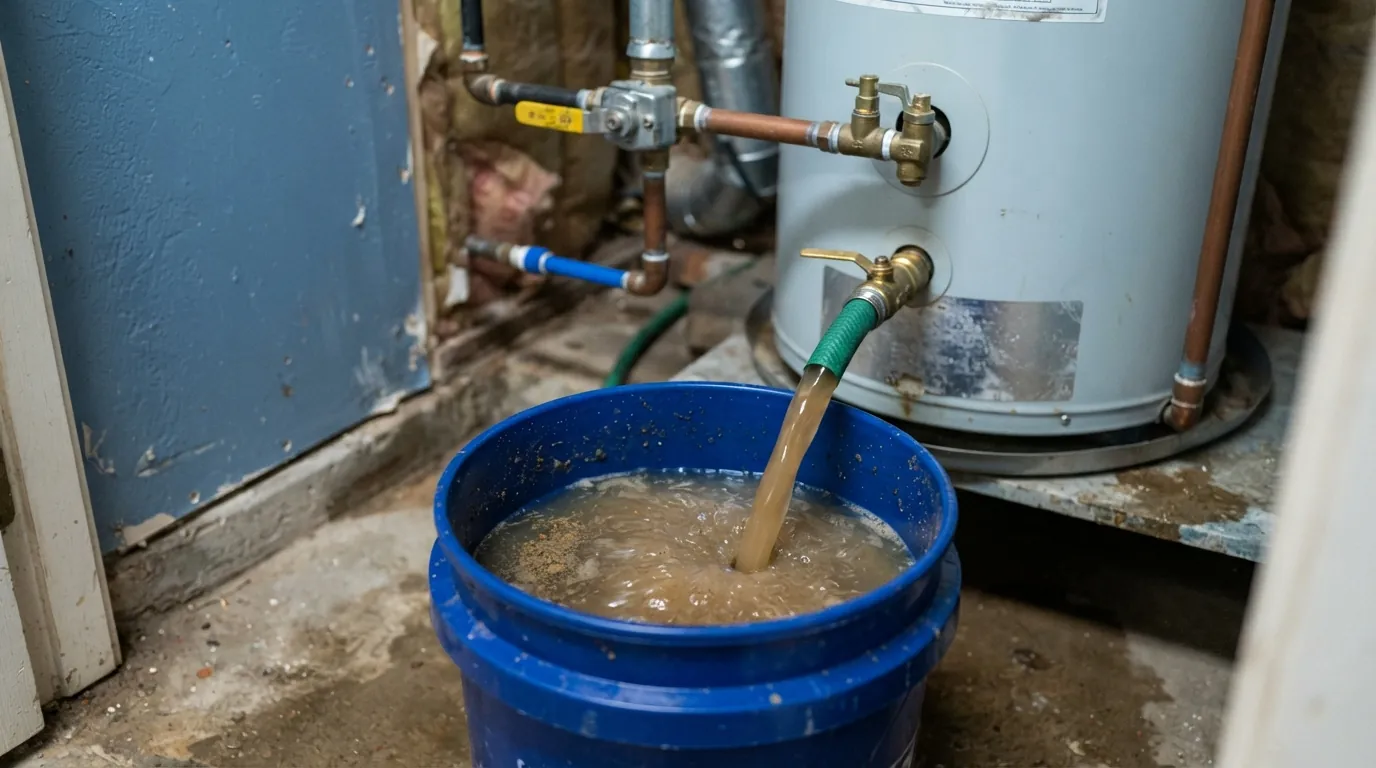
- Tank flushed until the water runs clear
- Anode rod inspected, replaced if spent
- Relief valve lifted and checked for reseating
- Discharge pipe checked
- Burner or elements and thermostat checked
- Venting and gas connection inspected on gas units
- Temperature set and noted
Water Heater Tank Flush
A flush drains water through the tank's drain valve with the cold supply open, stirring up sediment and carrying it out until the water runs clear. On a tank that has never been flushed, sediment can be heavy enough to clog the drain valve, and we have ways around that. Popping or rumbling while the burner runs is water boiling under a sediment layer, and a flush usually quiets it. On an old, heavily scaled tank, flushing can loosen deposits sealing a weak spot, so we tell you if a tank is that far gone.
Anode Rod Replacement
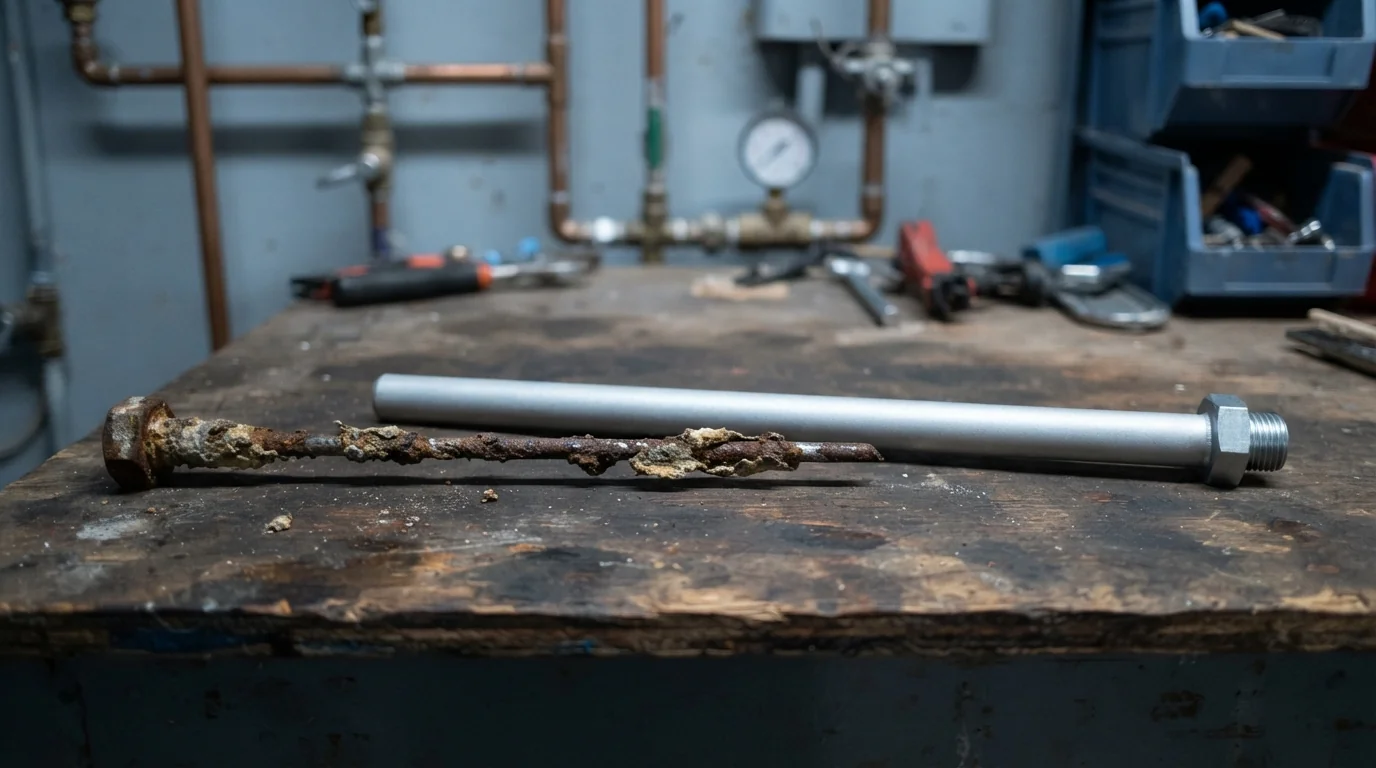
The anode rod screws into the top of the tank and corrodes on purpose, protecting the steel tank from rusting. When it's down to bare wire, the tank starts to corrode instead. We pull the anode and look: if more than a few inches of core wire shows, it gets replaced. Tight headroom is solved with a segmented rod. Softened water uses up anodes faster, and homes with a rotten egg smell in the hot water often need an aluminum-zinc anode in place of the standard magnesium one.
T&P Relief Valve Test
The temperature and pressure relief valve is the heater's last line of defense: it opens if the tank overheats or over-pressurizes. Valves that are never tested can stick shut with mineral buildup, which is exactly when they are needed. We lift the lever to confirm it opens and reseats without dripping, check that the discharge pipe runs to within a few inches of the floor or to a drain, and replace a valve that sticks or keeps weeping. A valve that drips often is also a sign the house needs an expansion tank.
Wells, City Water and How Often to Flush
Water Heater Care You Can Do Yourself
Two simple habits help between visits.
| Job | Reasonable DIY? | Why |
|---|---|---|
| Draining a few gallons from the drain valve | Yes | Every few months, until it runs clear |
| Checking for water at the base | Yes | A wet base means call before it spreads |
| Replacing the anode rod | Rarely | Needs a breaker bar, the right rod and a fresh seal |
| Replacing the relief valve | No | A safety device; it has to be installed correctly |
What Water Heater Maintenance Costs Depends On
A maintenance visit is quick; parts are added only when needed.
The core of every visit.
Replaced when worn; segmented rods for low headroom.
Replaced if it sticks or weeps.
A clogged plastic drain valve may be swapped for brass.
Descaling a tankless heater is a separate service.
How a Maintenance Visit Runs
- 1
Shut down
Gas to pilot or power off, cold supply checked.
- 2
Flush
Drained through the valve until clear.
- 3
Check the anode
Rod pulled and inspected.
- 4
Test the relief valve
Lifted, reseated, discharge pipe checked.
- 5
Restart
Refilled, relit or powered, temperature set.
Water Heater Maintenance Questions From Knoxville Homeowners
How often should a water heater be flushed?
Once a year for most homes; more often with hard or well water.
Why is my water heater popping?
Sediment on the bottom of the tank; a flush usually helps.
How long does an anode rod last?
It depends on water chemistry and softening; checking it every few years is wise.
Is it bad to never flush a water heater?
Sediment shortens its life and wastes energy; a first flush on an old tank should be done carefully.
Do tankless heaters need maintenance?
Yes, a descaling flush; see tankless service.
Can maintenance fix a leaking tank?
No. A leak from the tank itself means replacement.
Other Water Heaters Jobs We Handle
Heat Pump Water Heater Installation
Hybrid unit sizing and condensate drain.
More on heat pump water heater installationTankless Water Heater Repair
Tankless error codes and tankless descaling flush.
Tankless Water Heater Repair overviewWater Heater Replacement
40 and 50 gallon gas tank and electric tank swap.
Water Heater Replacement overviewWater heater overdue for service?
Call to schedule a flush and check-up.