Grease trap cleaning in Knoxville, TN removes the fats, oils and solids that settle in a restaurant's trap or interceptor before they pass into the sewer. A common rule of thumb is to service it before grease and solids fill about a quarter of its depth, and that sets how often your kitchen needs a visit.
Updated October 2026
Under-Sink Trap or In-Ground Interceptor
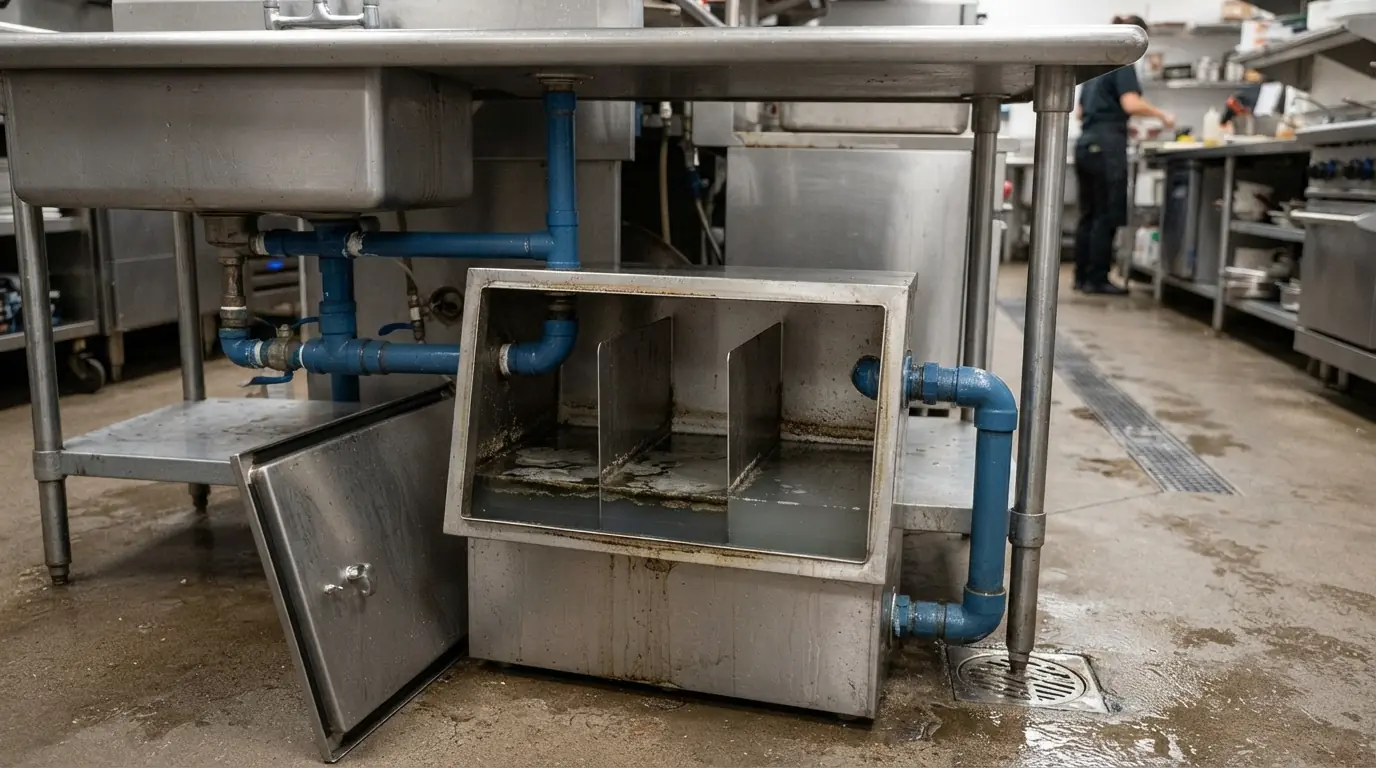
Smaller kitchens often run a grease trap under or beside the three-compartment sink, a box that can be cleaned by hand. Larger restaurants run an in-ground interceptor outside that has to be pumped by truck. Both work the same way: water slows down, grease floats, solids sink, and the clearer water between them flows on.
Either one works only while it has room. Once the grease layer and the sludge meet, grease passes straight into the building drain and on toward the street, setting into the plugs that hydro jetting is built to cut. Cleaning on schedule costs far less than clearing that line during a dinner rush.
What Every Pump-Out Includes
- Grease and solids layers measured
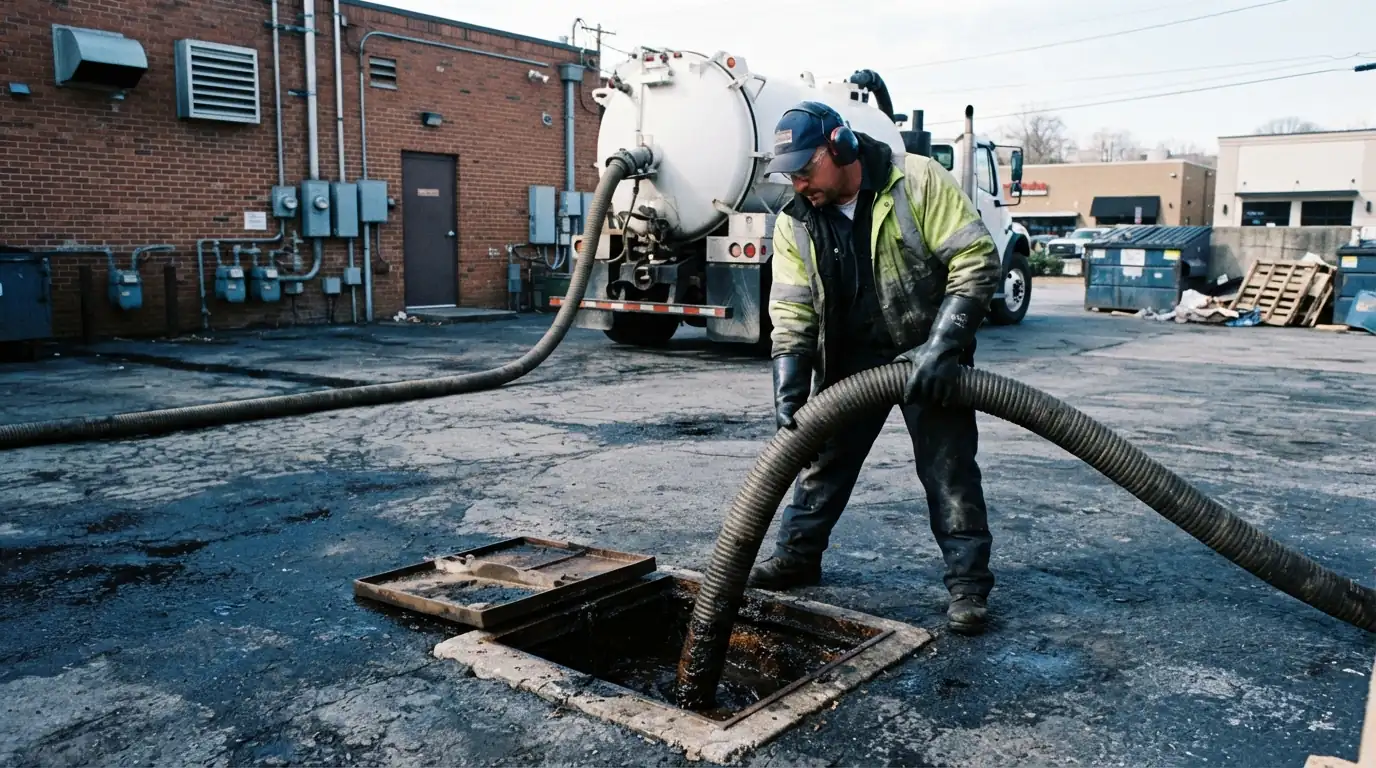
- Trap or interceptor fully pumped, not skimmed
- Baffles, tees and walls scraped
- Lids, risers and seals inspected
- Inlet line checked for buildup
- Waste hauled for approved disposal
- Log entry with date, volume and condition
Grease Trap Pump-Out Schedule
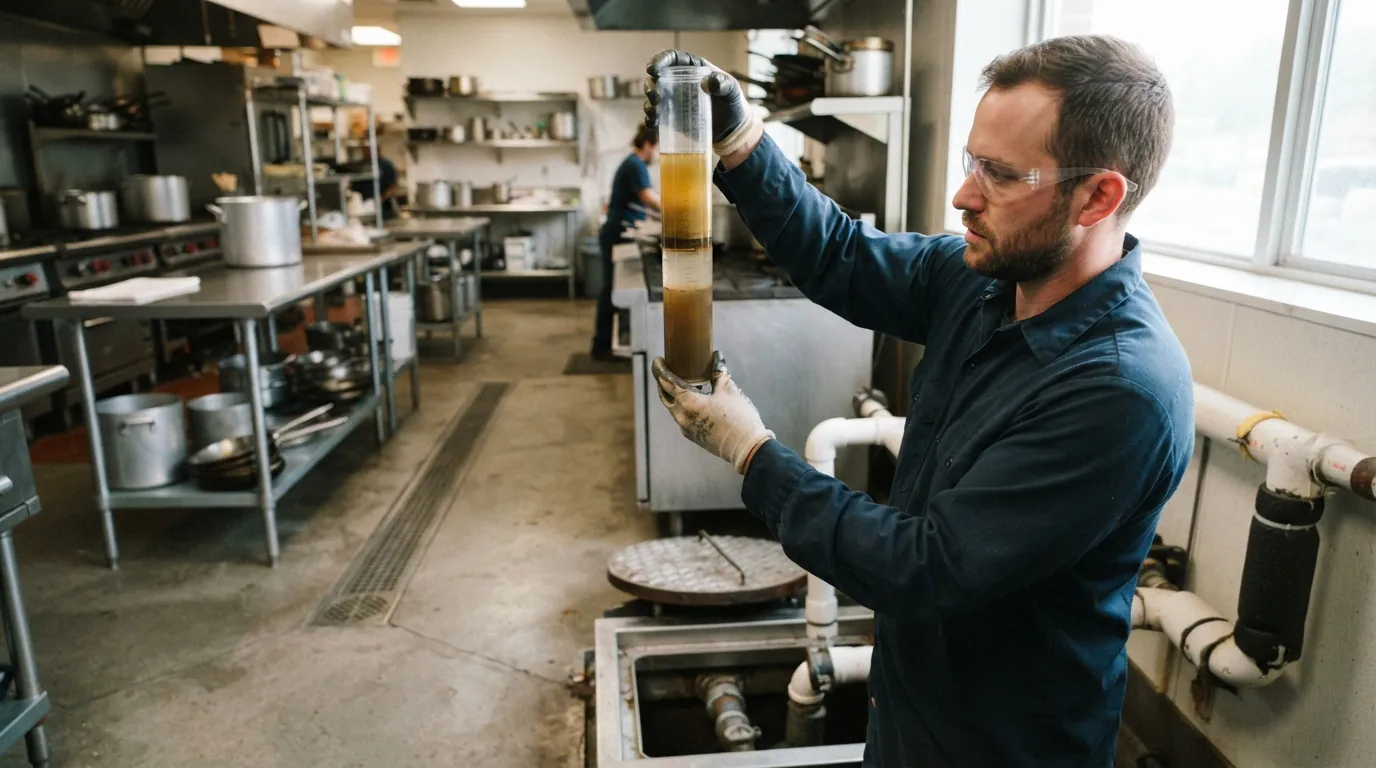
How often a trap needs service depends on its size and what the kitchen cooks. A fryer-heavy kitchen fills a small trap fast; a cafe serving salads may go far longer. We measure the grease and solids layers at each visit and set the schedule from what we find, not from a fixed calendar. The aim is to service it before the combined layers reach about a quarter of its depth. A kitchen that changes its menu or adds a fryer should expect its interval to change with it.
Interceptor Pumping and Jetting
In-ground interceptors are pumped out completely, not skimmed, because the solids on the bottom cause as much trouble as the grease on top. After pumping, the baffles and the inlet and outlet tees are scraped and checked, and the lid and riser are inspected for cracks that let rainwater in. If the line between the kitchen and the interceptor runs slow, it gets jetted during the same visit, so grease is not left sitting in the pipe waiting to reach the tank and plug it on a busy night.
Grease Trap Compliance Log
Sewer utilities expect food service businesses to keep records of trap cleaning, and inspectors ask for them. Every visit gets a log entry with the date, the trap or interceptor serviced, the volume removed and the condition we found. Keep those records with your other health and safety paperwork. A log showing steady service is far easier to hand an inspector than an explanation of why a trap overflowed, and it shows the pattern in your own numbers, which is how an interval gets tuned.
Rain, Riser Lids and In-Ground Interceptors
Indoor Grease Trap or Outdoor Interceptor
What your kitchen has decides how it is serviced.
| Question | Indoor trap | Outdoor interceptor |
|---|---|---|
| Location | Under or beside the sink | Buried outside the building |
| Capacity | Small | Large |
| Cleaning | By hand, often | Pumped by truck, less often |
| Typical kitchen | Cafes, small kitchens | Full-service and high-volume kitchens |
What Sets the Price of Grease Trap Service
Service is priced by the size of the unit and what it takes to clean it.
A small indoor trap is quick; a large interceptor needs a truck.
Longer gaps mean thicker, harder grease to remove.
Buried lids, locked enclosures or tight kitchens add time.
Added when the inlet line shows buildup.
Removed waste is hauled to an approved facility, priced by volume.
How a Grease Trap Visit Runs
- 1
Measure
Grease and solids depth recorded before pumping.
- 2
Pump
Contents removed completely.
- 3
Scrape and inspect
Walls, baffles, tees, lids and seals checked.
- 4
Jet if needed
Inlet line cleared when flow is slow.
- 5
Log
Visit recorded and next service date set.
Grease Trap Cleaning Questions From Knoxville Homeowners
How often should a grease trap be cleaned?
Often enough that grease and solids never fill about a quarter of its depth. Fryer-heavy kitchens need it far more often than cafes.
Can my staff clean the indoor trap?
Small indoor traps can be cleaned by kitchen staff if the waste is disposed of properly. Interceptors need pumping by truck.
What happens if the trap isn't cleaned?
Grease passes into the drain and the sewer, backing up the kitchen and causing problems downstream.
Can service happen outside business hours?
Yes. Visits can be set before opening or after close so the kitchen isn't interrupted.
Why does the kitchen drain smell after cleaning?
Disturbed sludge can smell briefly. A lasting odor points to a vent problem or a cracked seal.
Do you handle the rest of the kitchen plumbing?
Yes. Sinks, water heaters and drains fall under our restaurant plumbing work.
Other Commercial Jobs We Handle
Sewer Line Replacement
Full lateral replacement and Orangeburg pipe replacement.
Sewer Line Replacement detailsHeat Pump Water Heater Installation
Hybrid unit sizing and condensate drain.
Heat Pump Water Heater Installation in KnoxvilleGrease trap due or drains slowing?
Call to set a pump-out schedule that fits your kitchen's hours.