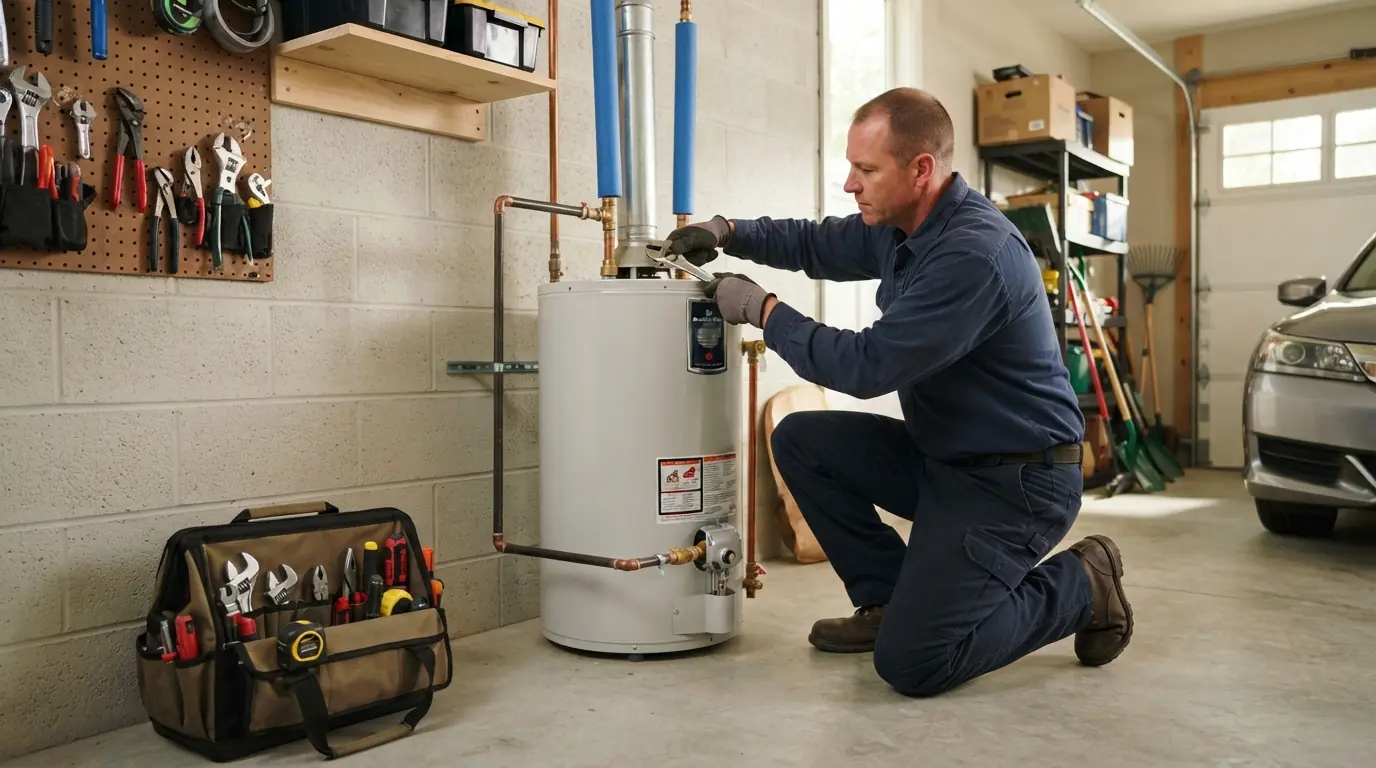
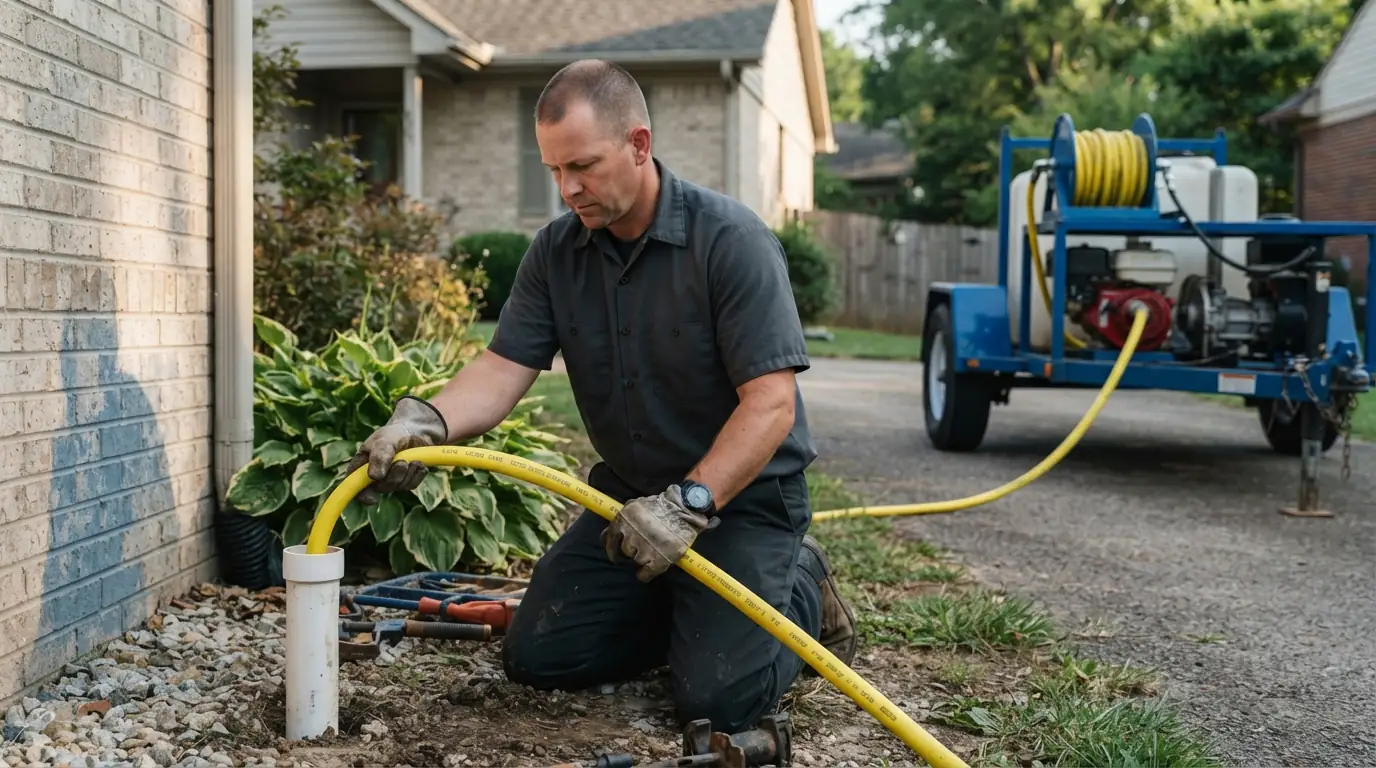
Hydro jetting in Knoxville, TN clears drain and sewer lines with high-pressure water that scours grease, roots and scale off the full pipe wall, but only after a camera confirms the pipe can take it. It outlasts cabling because it removes the buildup instead of punching a channel through it.
Updated October 2026
Why a Line Clogs Again Weeks After It Was Cabled
A drain cable spins a cutting head through the blockage and opens a channel. Flow comes back, but the grease coating the walls, the root mass around the joints and the scale inside old cast iron stay put, and the next clog builds on them.
A jetter's rear-facing jets pull the nozzle up the line while forward jets break the blockage, and the spray covers the whole wall. It is the follow-up we recommend once the same line has been cleared twice in a year. For a one-off clog, standard drain cleaning is still the right, cheaper call.
What Jetting Costs Next to Cabling
Jetting costs more than a standard clearing because it takes longer and more equipment. For comparison, a cabled main-line clearing in the Knoxville area runs about $180 through an outside cleanout or $270 through a roof vent.
A long run to the main takes more hose and time.
An outside cleanout is fastest; roof vents or pulled toilets add work.
Heavy grease or dense roots take more passes.
A camera run before and after is part of every jetting job.
Fragile pipe needs lower pressure and a slower pass.
Cabling figures are from published Knoxville drain cleaning cost data; jetting is quoted after the camera run.
Cable Machine or Jetter: Which Your Line Needs
Both have a place. Here is how they differ once they are in the pipe.
| Question | Drain cable | Hydro jetter |
|---|---|---|
| What it does | Punches a channel through the clog | Scours the full pipe wall |
| Grease | Opens it for a while | Removes it |
| Roots | Cuts a path | Cuts and flushes the mass out |
| Fragile pipe | Gentler | Low pressure or not at all |
| Best for | One-off clogs | Repeat clogs, grease, scale |
Grease Line Jetting
Kitchen lines clog with fats that go down liquid and set solid a few feet in, worst where the line runs through a cool crawlspace. Cabling pokes a hole in that plug; jetting scours it off the walls. We work the nozzle up the branch from the nearest cleanout and flush the loosened grease down to the main as it retracts, so it's carried out instead of packed further up the line. Restaurant kitchens see this constantly, which is why commercial lines are often jetted on a schedule alongside grease trap cleaning.
Root Cutting and Jetting
Roots enter through joints looking for moisture, then fill the pipe with a fibrous mat that catches everything else. A root-cutting nozzle on the jetter shears the mass off the joint and flushes the fragments out. It does not seal the joint, so roots will grow back; how fast depends on the tree and the pipe. Once the camera shows the same joints rooting year after year, a spot repair or liner at those joints usually costs less over time than repeated jetting.
Descaling Cast Iron
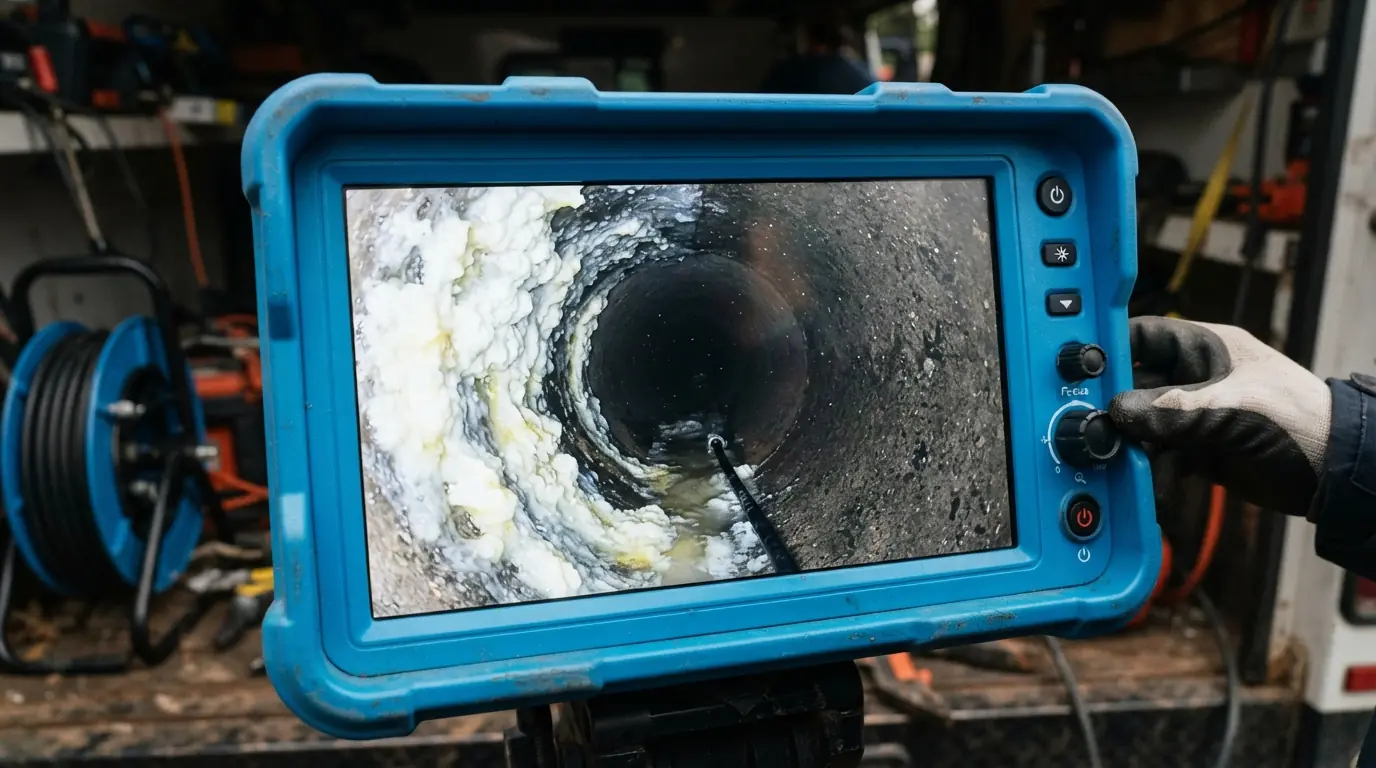
Cast iron stacks and under-slab lines corrode from the inside into a rough, ridged layer of scale that snags paper and narrows the pipe. A descaling nozzle strips that buildup and restores much of the original bore. It doubles as a diagnosis: once the scale is off, the camera can see whether the iron underneath is solid or cracked through. Thin, cracked iron should not be jetted hard, so we lower the pressure, or stop and recommend a repair instead.
What a Jetting Visit Includes
- Camera run before jetting to check the pipe
- Access through the best available cleanout
- Nozzle chosen for grease, roots or scale
- Nozzle worked upstream, pressure matched to the pipe
- Debris flushed down to the main
- Camera run after to show the clean line
- Findings and next steps explained on site
Clay, Cast Iron and Roots Under Knoxville Yards
How a Hydro Jetting Visit Runs
- 1
Camera first
Line scoped to confirm it is sound and find the problem.
- 2
Set up
Hose run to the best cleanout, floors and fixtures protected.
- 3
Jet
Nozzle chosen for the job and pressure matched to the pipe.
- 4
Flush
Grease, roots and scale carried down to the main.
- 5
Camera after
Clean line shown on screen, next steps explained.
Hydro Jetting Questions From Knoxville Homeowners
Can hydro jetting damage my pipes?
It can on pipe that's already cracked, collapsed or badly corroded, which is why we camera first and lower pressure or stop on fragile sections.
How long does jetting keep a line clear?
Longer than cabling, because the walls are clean. Roots return at open joints; grease returns with kitchen habits.
Is jetting safe for older homes?
Usually, on PVC, sound cast iron and intact clay. Orangeburg and badly cracked lines should be repaired, not jetted.
Do I need an outside cleanout?
It helps. Without one we work through a roof vent or a pulled toilet, which adds time, or install a cleanout at the foundation.
Can jetting clear a fully blocked line?
Yes. Forward jets break through as the nozzle advances, though a hard blockage may be opened with a cable first.
Should my line be jetted every year?
Only if the camera shows a reason, like recurring roots or heavy grease. Most homes need it after a problem, not on a schedule.
Other Drains & Sewer Jobs We Handle
Cast Iron Drain Replacement
Cast iron stack replacement and under-slab building drain.
More on cast iron drain replacementSewer Cleanout Installation
Two-way outdoor cleanout and indoor cleanout access.
Sewer Cleanout Installation detailsSewer Camera Inspection
Pre-purchase sewer scope and locate and depth marking.
Sewer Camera Inspection detailsLine clogging again already?
Call to get it on camera and jetted clean, with the footage to show for it.