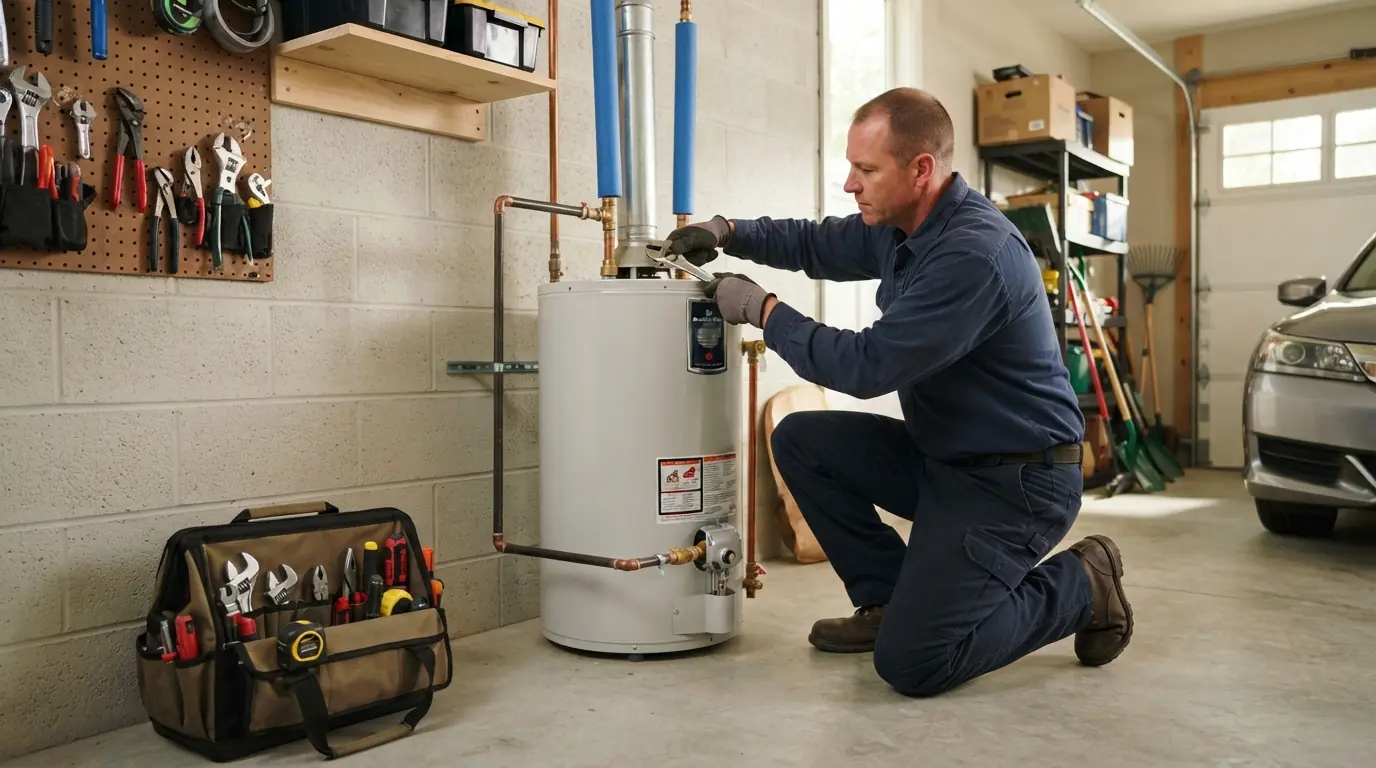
Water leak detection in Knoxville, TN starts with a meter test: with every fixture off, a moving dial confirms an active leak on the supply side. We then isolate hot from cold, section by section, and locate the leak with acoustic listening, thermal imaging and moisture meters, so walls and ceilings are opened only where the leak is.
Updated October 2026
Confirm the Leak, Then Pinpoint It
Not every stain is a supply leak. A wet ceiling can be a drain, a shower pan, a toilet seal, a roof or condensation from an air handler, and each is found differently. Supply leaks run under constant pressure and show on the meter; drain leaks only leak while water runs down them.
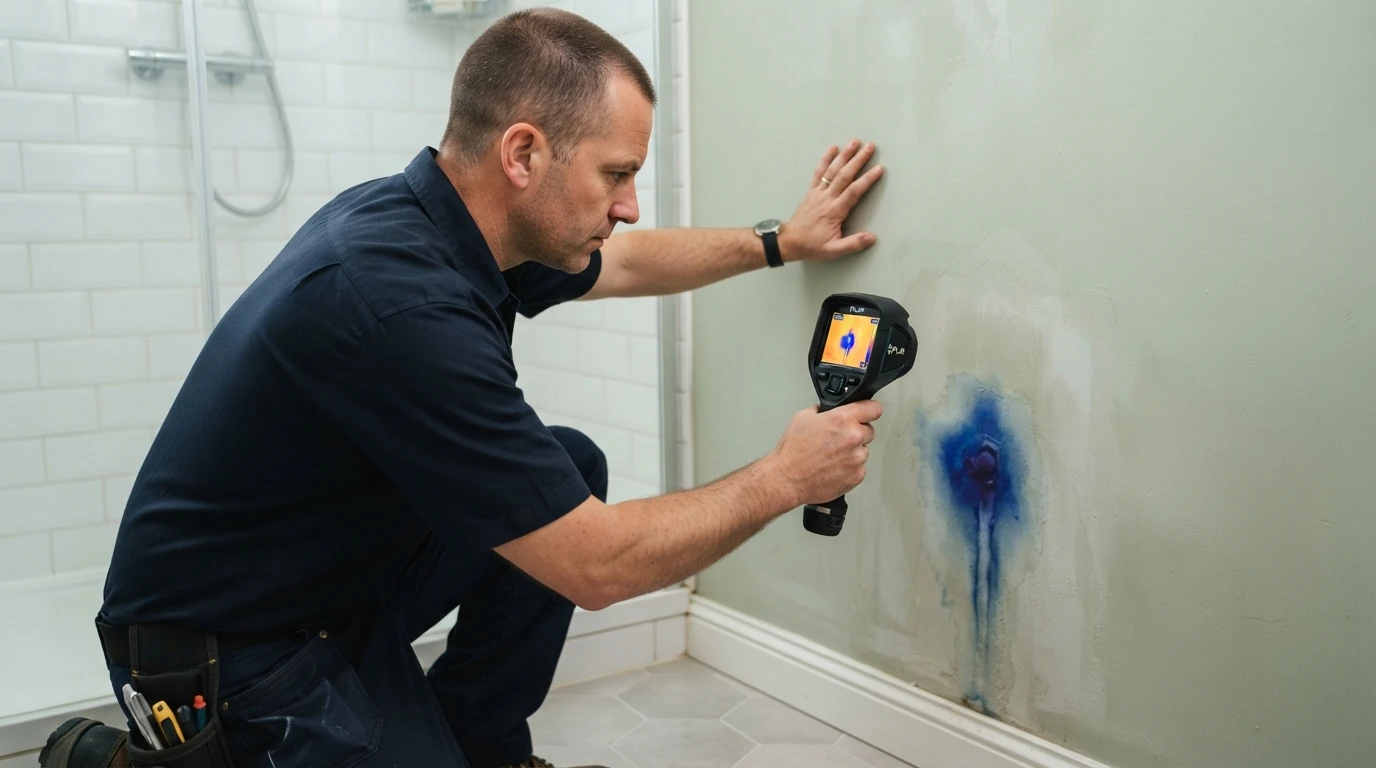
So we sort out which kind it is first, then use the tool that suits it: acoustic listening for pressurized lines, thermal imaging for hot lines and wet areas, moisture meters to map how far the water spread. The repair follows, from a single fitting to a slab leak repair when the line runs under concrete.
Signs of a Hidden Leak
How We Track a Leak Down
- 1
Meter test
Every fixture off, dial watched.
- 2
Split the system
House shutoff, heater and branches isolated.
- 3
Map moisture
Readings taken around the damage.
- 4
Pinpoint
Thermal and acoustic tools mark the spot.
- 5
Open and repair
Small opening at the source, leak repaired.
Hidden Wall Leak
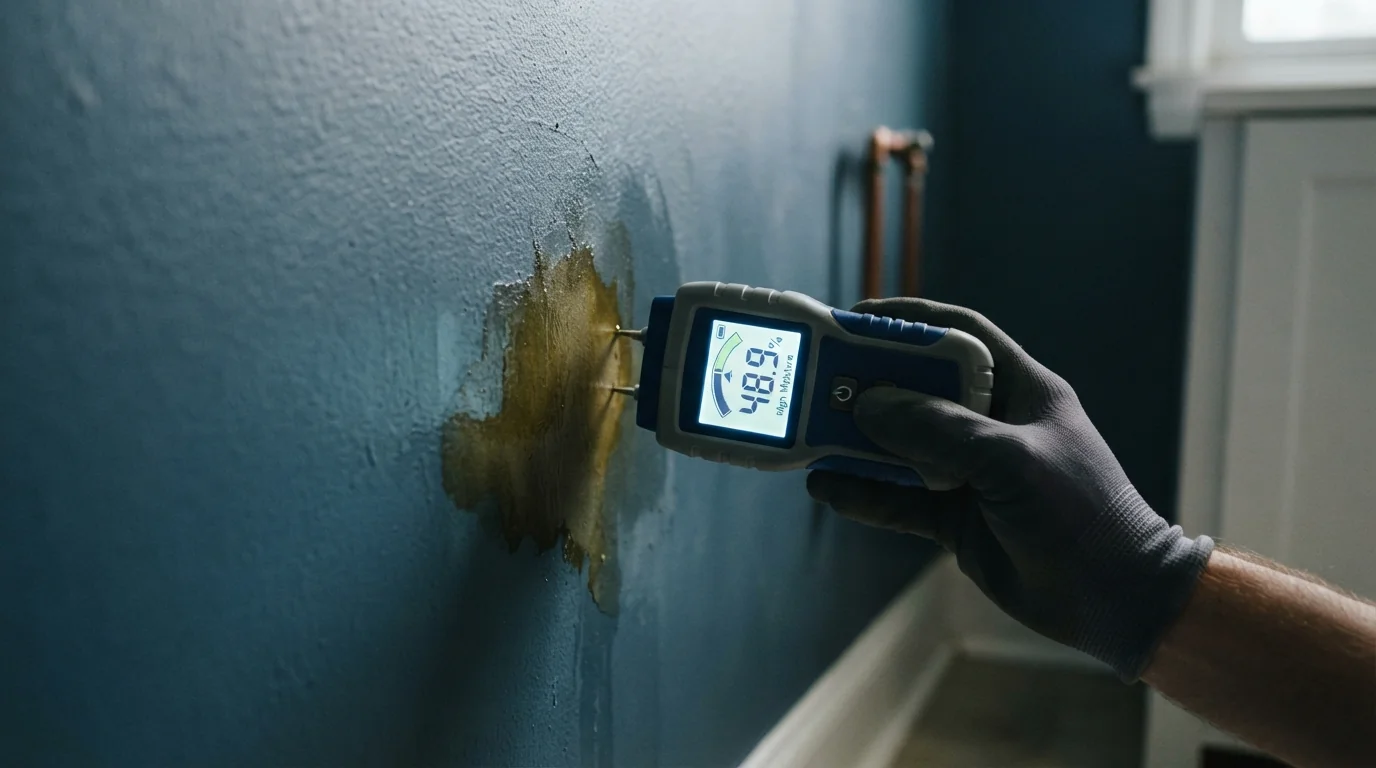
A leak inside a wall shows up as bubbling paint, swelling baseboards, a musty smell or soft drywall, usually well after it started. Supply lines leak constantly; drain lines leak only when fixtures above them are used, so timing the symptom against household use tells us which it is. We map the wet area with a moisture meter, find the source with thermal imaging and listening, and open the wall at the source rather than where the stain is biggest, since water travels down the studs before it shows itself.
Meter Running With Fixtures Off
The water meter is the simplest leak detector in the house. Turn off every faucet, the ice maker and the irrigation, then watch the dial or the low-flow indicator for a few minutes. If it moves, water is leaving the system somewhere. Closing the main shutoff inside the house then tells us whether the leak is indoors or on the service line under the yard. From there, isolating the water heater and individual branches narrows the search before any tool touches a wall.
Ceiling Stain From a Bath Above
A stain on a ceiling below a bathroom usually comes from one of four places: the toilet's wax seal, the tub or shower drain, the shower pan or grout, or a supply line. We run each fixture above in turn while watching the ceiling with a thermal camera and a moisture meter; the one that makes the spot grow is the source. Knowing which saves opening a large section of ceiling. A leak that appears only during showers is usually the pan or the valve, which ties into shower repair.
Acoustic and Thermal Locating
Water escaping from a pressurized pipe makes a hiss that ground microphones and listening probes pick up through drywall, tile and concrete. Thermal cameras show temperature differences: a hot line leaking shows as a warm bloom, and evaporating water on a cold line as a cool one. Moisture meters confirm what the camera suggests. None of these tools replaces judgment about how the house was plumbed, but together they turn a guess into a spot small enough to open with a drywall saw instead of a sledgehammer.
Leaks, Bills and Mold in a Knoxville Home
What a Leak Detection Visit Includes
- Meter test with every fixture off
- Main shutoff test: yard or house
- Hot and cold sides isolated
- Moisture mapping around the damage
- Thermal imaging of suspect areas
- Acoustic listening on pressurized lines
- Marked spot and repair options
What Leak Detection Costs Depends On
Finding a leak is priced by time and tools; opening less is where it pays for itself.
Supply leaks are found under pressure; drain leaks need fixtures run in turn.
One room is quicker than a whole-house search.
Tile, plaster and slab call for different tools than drywall.
Priced once the leak is found.
Wet drywall, insulation or flooring needs drying beyond the plumbing.
Water Leak Detection Questions From Knoxville Homeowners
How can I check for a leak myself?
Turn off every fixture and watch the meter for several minutes. Movement means a leak.
Can you find a leak without opening walls?
We locate it without opening them, then open only the small area the repair needs.
Is a ceiling stain always plumbing?
No. Roofs, condensation lines and ice dams stain ceilings too, and we sort out which before cutting.
Does insurance pay for leak detection?
Many policies cover access and water damage from a sudden leak. Check yours.
How fast does mold start after a leak?
Within 24 to 48 hours on soaked materials, so drying matters as much as the repair.
Why is my bill high with no visible leak?
Often a running toilet or a hidden supply leak. Dye and meter tests sort it out quickly.
Other Emergency Jobs We Handle
Burst & Frozen Pipe Repair
Frozen pipe thawing and split copper line.
Burst & Frozen Pipe Repair in KnoxvilleGas Leak Detection & Repair
Rotten egg smell and pressure test after repair.
Gas Leak Detection & Repair in KnoxvilleSump Pump Repair & Installation
Float switch failure and check valve replacement.
Sump Pump Repair & Installation overviewStain spreading or meter moving?
Call today. We find the leak before anything gets opened.