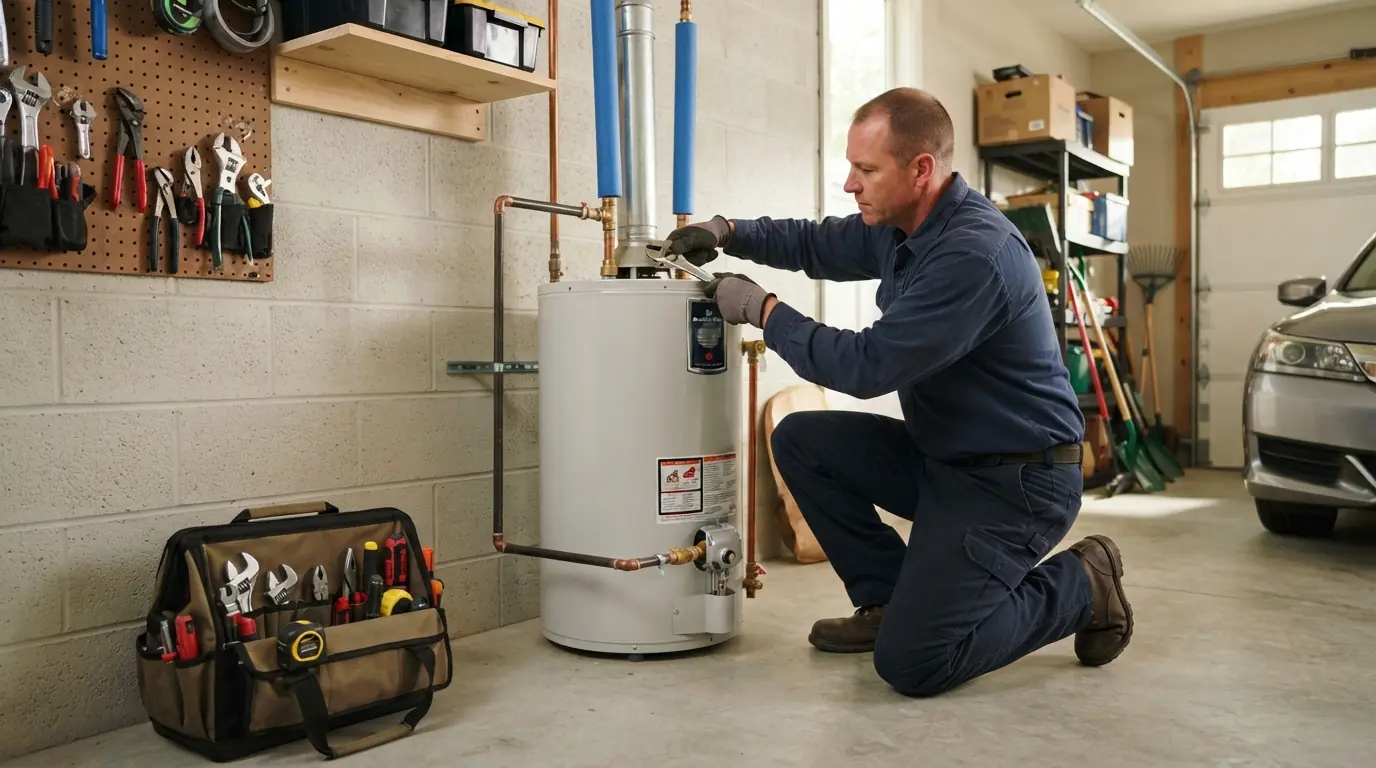
Whole-house repiping in Knoxville, TN replaces every hot and cold supply line from the main shutoff to each fixture, usually in PEX or copper, at roughly $16.40 to $30.60 per linear foot of pipe in published local data. It's the fix for galvanized, polybutylene, pinholing copper and houses with repeated leaks.
Updated October 2026
When a Repipe Beats Another Repair
Galvanized steel rusts shut from the inside until pressure drops and the threads start leaking. Polybutylene fails at its fittings and from within, often without warning. Copper in some homes develops pinhole leaks. When a house has had two or three leaks in different places, the pattern is the pipe, not bad luck.
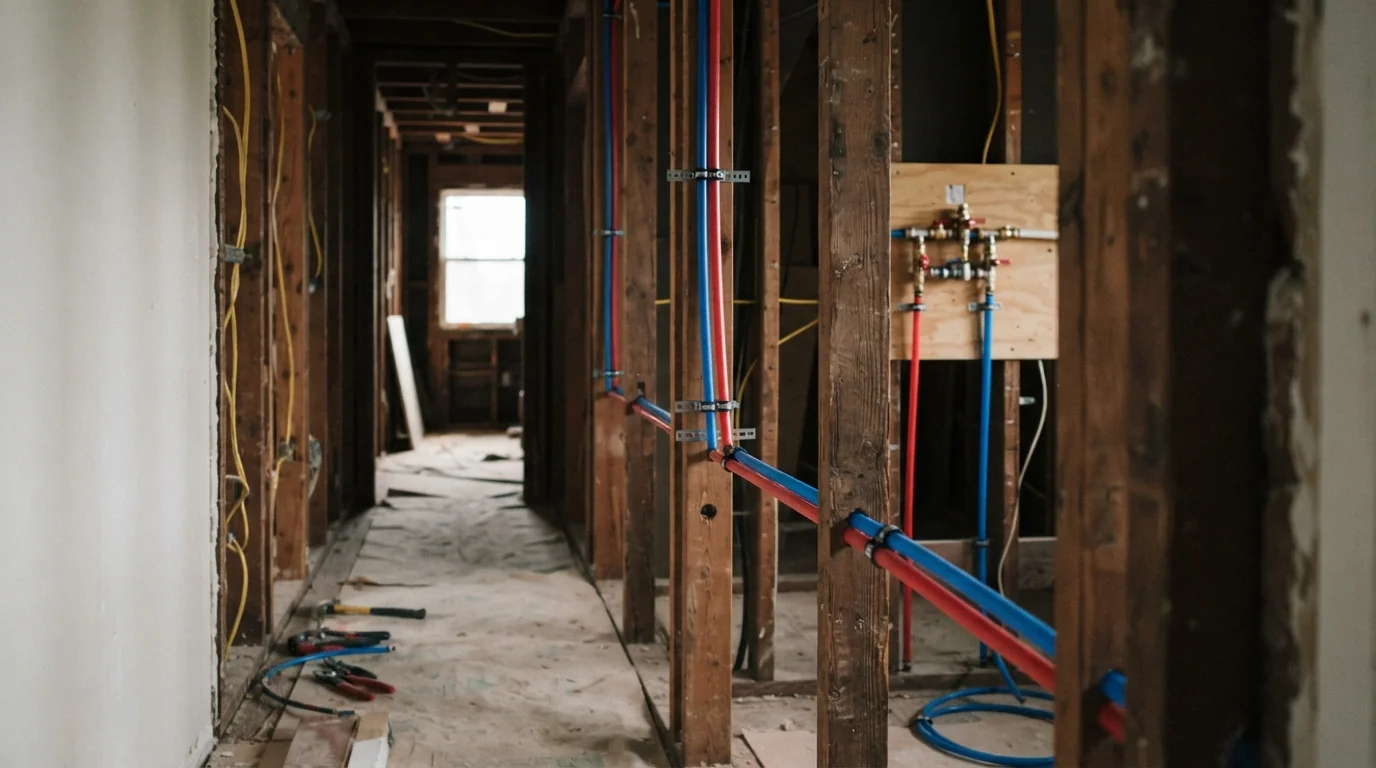
A repipe runs new lines through walls, ceilings and the crawlspace or attic, with small access openings rather than torn-out walls. New stops go in at every fixture, often to Moen, Delta or Kohler trim that stays, and a Watts pressure regulator goes in at the main where pressure runs high. For one bad line under concrete, slab leak repair may be enough.
What a Repipe Costs in Knoxville
Published Knoxville cost data puts repiping supply lines at about $16.40 to $30.60 per linear foot, depending on material and layout.
PEX costs less than copper.
More bathrooms and longer runs mean more pipe.
A crawlspace or unfinished basement is easier than a slab or finished ceilings.
Access openings are patched after inspection.
A plumbing permit typically runs $100 to $250.
Per-foot range from published Knoxville repipe cost data; your house is priced after a walkthrough.
PEX or Copper for Your Repipe
Both last; they differ in price, install time and how many walls get opened.
| Question | PEX | Copper |
|---|---|---|
| Installation | Long flexible runs, few fittings | Rigid lengths, soldered joints |
| Wall openings | Fewer | More |
| Freeze tolerance | Better | Splits when frozen |
| Price | Lower | Higher |
Galvanized Pipe Replacement
Galvanized steel supply pipe was common in homes built before the 1960s, and sometimes later. Its zinc coating wears away inside, rust builds up at the threads and along the walls, and the bore narrows until the shower barely runs. Brown water after a vacation or a pressure drop at every fixture are the usual signs. Replacing a section only moves the problem, because the same rust is everywhere. A repipe replaces all of it back to the main, often paired with replacing a galvanized service line from the meter.
Polybutylene Replacement
Polybutylene is gray, sometimes blue or black, flexible plastic pipe marked PB, installed in many homes from the late 1970s into the 1990s. It breaks down from the inside over years of exposure to treated water, and its fittings crack, so it can fail suddenly and flood a room. Many insurers ask about it, and some buyers walk away from a house that still has it. Because the failure is in the material itself, the only real fix is replacing all of it, including the fittings hidden in the walls.
PEX vs Copper Repipe
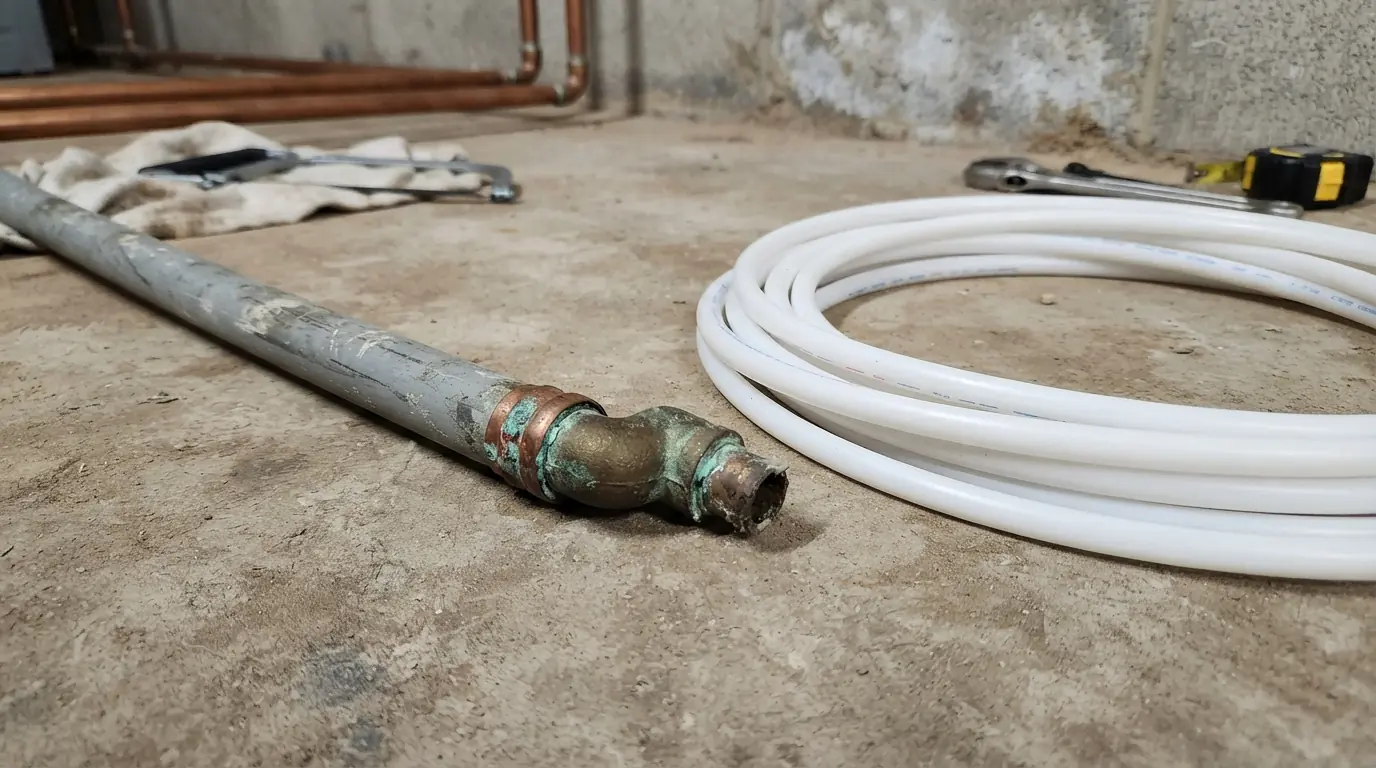
PEX is flexible plastic tubing that runs through walls and ceilings in long lengths with few fittings, which means fewer openings, faster installation and a lower price. It also tolerates scale and freezing better than rigid pipe. Copper is the long-standing choice, rigid and durable, but it costs more, takes longer, and can pinhole under some water conditions. Many repipes use PEX for the runs and copper or brass at stub-outs and the water heater. We explain the tradeoffs for your house and price both if you want to compare.
The Pipe Knoxville Houses Were Built With
How a Whole-House Repipe Runs
- 1
Walkthrough
Fixtures counted, routes and access planned.
- 2
Permit
Pulled before work starts.
- 3
Run new lines
PEX or copper run through small openings.
- 4
Switch over
Fixtures reconnected with new stops, old lines abandoned.
- 5
Inspect and patch
Pressure test, inspection, drywall patched.
How Long a Repipe Takes, and Living Through It
Most houses are repiped over several working days, and families usually stay home. The water is off during the working day and back most evenings, because the new lines are run alongside the old ones and switched over in sections.
Drywall patching comes after the inspection, once the new pipe has passed. We plan the order of rooms with you so the kitchen and one bathroom are back in service as early as possible.
Whole-House Repiping Questions From Knoxville Homeowners
Can I stay in the house during a repipe?
Usually, yes. Water is off during working hours and back on most evenings.
How do I know if I have polybutylene?
Gray flexible pipe marked PB, often visible at the water heater or under sinks. We can confirm it.
Will you damage my walls?
Small openings are cut where needed and patched after inspection.
Is PEX safe for drinking water?
Yes. PEX used for potable water is certified for it.
Will a repipe raise my water pressure?
If the old pipe was galvanized and choked with rust, usually noticeably.
Should the water heater be replaced at the same time?
Only if it's old or failing; a repipe is a convenient time to decide.
Other Pipes & Gas Lines Jobs We Handle
Gas Line Installation
Gas range or dryer line and outdoor grill stub.
Gas Line Installation in KnoxvilleGas Line Repair
Corroded black pipe replacement and failed gas pressure test.
Gas Line Repair in KnoxvilleLeaking Pipe Repair
Pinhole leak in copper and leaking fitting or joint.
Leaking Pipe Repair in KnoxvilleTired of leak after leak?
Call for a walkthrough and a repipe plan for your house.