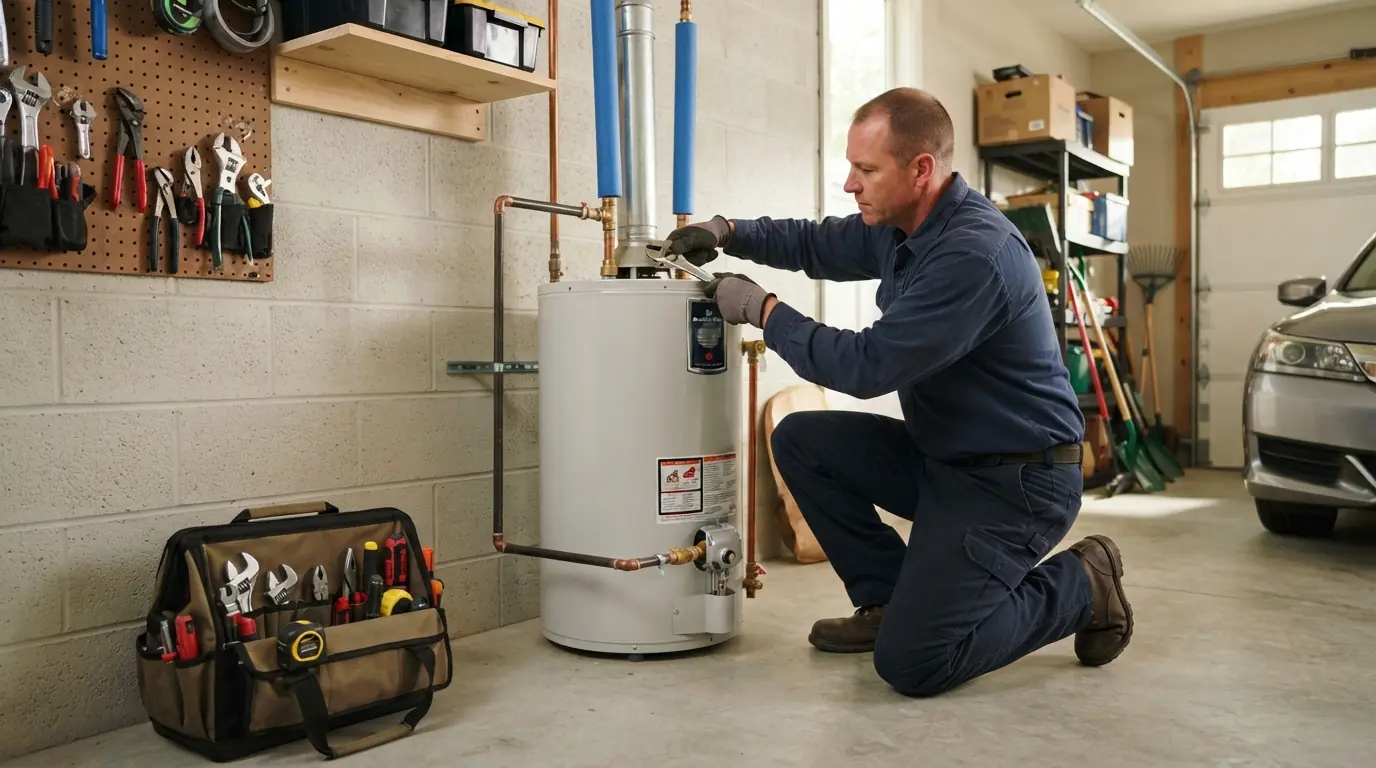
Slab leak repair in Knoxville, TN starts with locating the leak under the concrete using a meter test, line isolation, acoustic listening and thermal imaging. The fix is either a spot repair through a small opening in the slab or a reroute that abandons the leaking line and runs new pipe through walls or the attic.
Updated October 2026
Finding a Leak You Cannot See
Slab leaks are usually in copper supply lines laid in or under the concrete, and they fail from abrasion against the slab, corrosion, or a bad joint made decades ago. Hot lines fail more often, which is why a warm patch of floor is the classic sign. The first step is confirming a leak at all: every fixture off, meter watched.
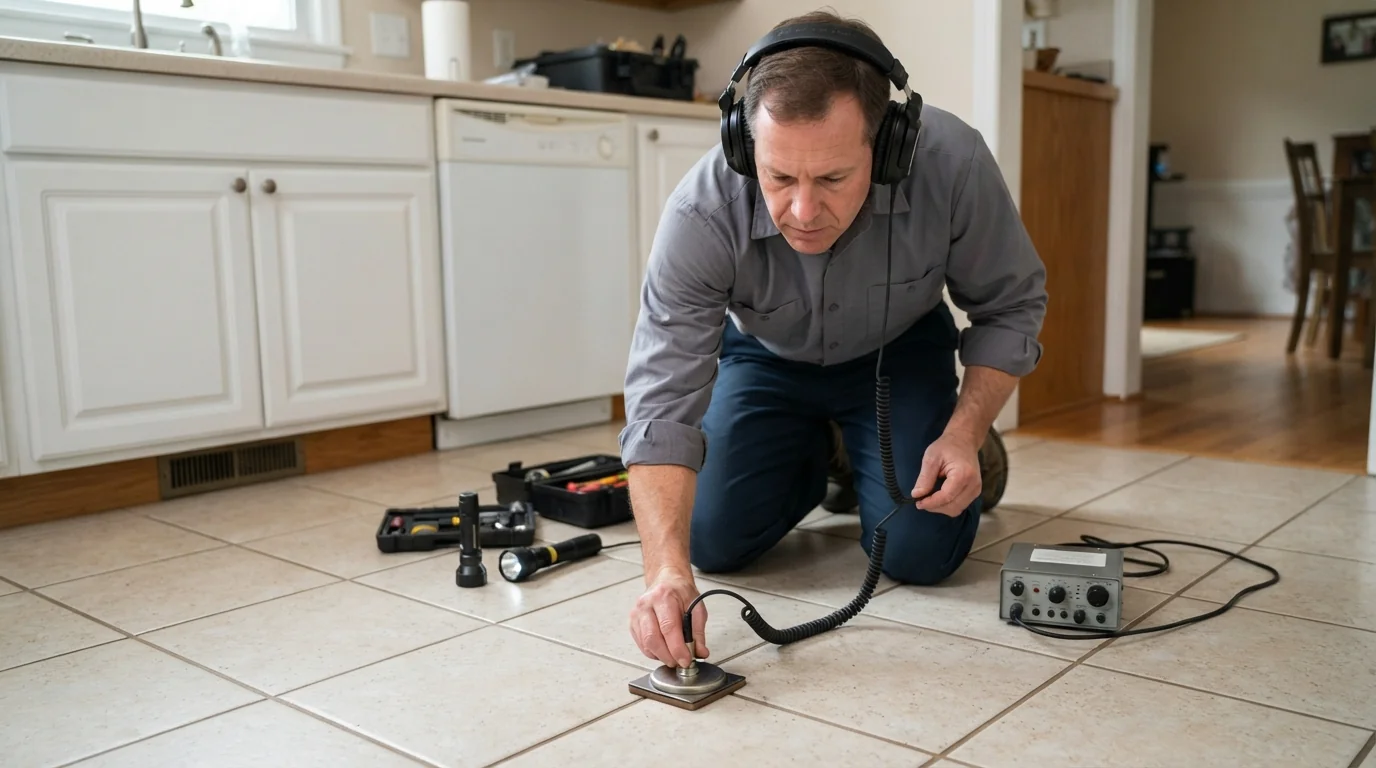
Then we isolate hot from cold, listen along the line with acoustic equipment, confirm with thermal imaging on hot lines, and mark the spot. Opening a slab on a guess is the expensive mistake. Leaks that won't pin down this way get further leak detection before anything is cut.
Signs of a Leak Under the Slab
From Warm Floor to Fixed Line
- 1
Confirm
Meter test with every fixture off.
- 2
Isolate
Hot and cold sides separated and pressure-tested.
- 3
Locate
Acoustic and thermal tools mark the spot.
- 4
Repair or reroute
Section replaced, or a new line run above the slab.
- 5
Test and restore
Pressure test, water on, damage next steps explained.
Warm Spot on the Floor
A warm or hot patch on tile or a concrete floor, often near a kitchen, bath or laundry, is the most recognizable slab leak sign. It means a hot water line is leaking under that area and heating the slab from below. You may also notice the water heater running more than usual, because it's refilling constantly. Other signs are running water with everything off, damp or cupping flooring, cracks in tile, or a meter that keeps moving. A warm spot is worth a call the same day.
Reroute vs Jackhammer
There are two ways to fix a slab leak. A direct repair opens the slab at the marked spot, replaces the bad section and patches the concrete; it makes sense for a single leak in an otherwise sound line. A reroute abandons the leaking line under the slab and runs new PEX or copper through the walls and attic to the same fixtures. It avoids breaking concrete and is usually the better choice when the line is old or has leaked before, because the next leak is likely in the same pipe.
Under-Slab Leak Locating
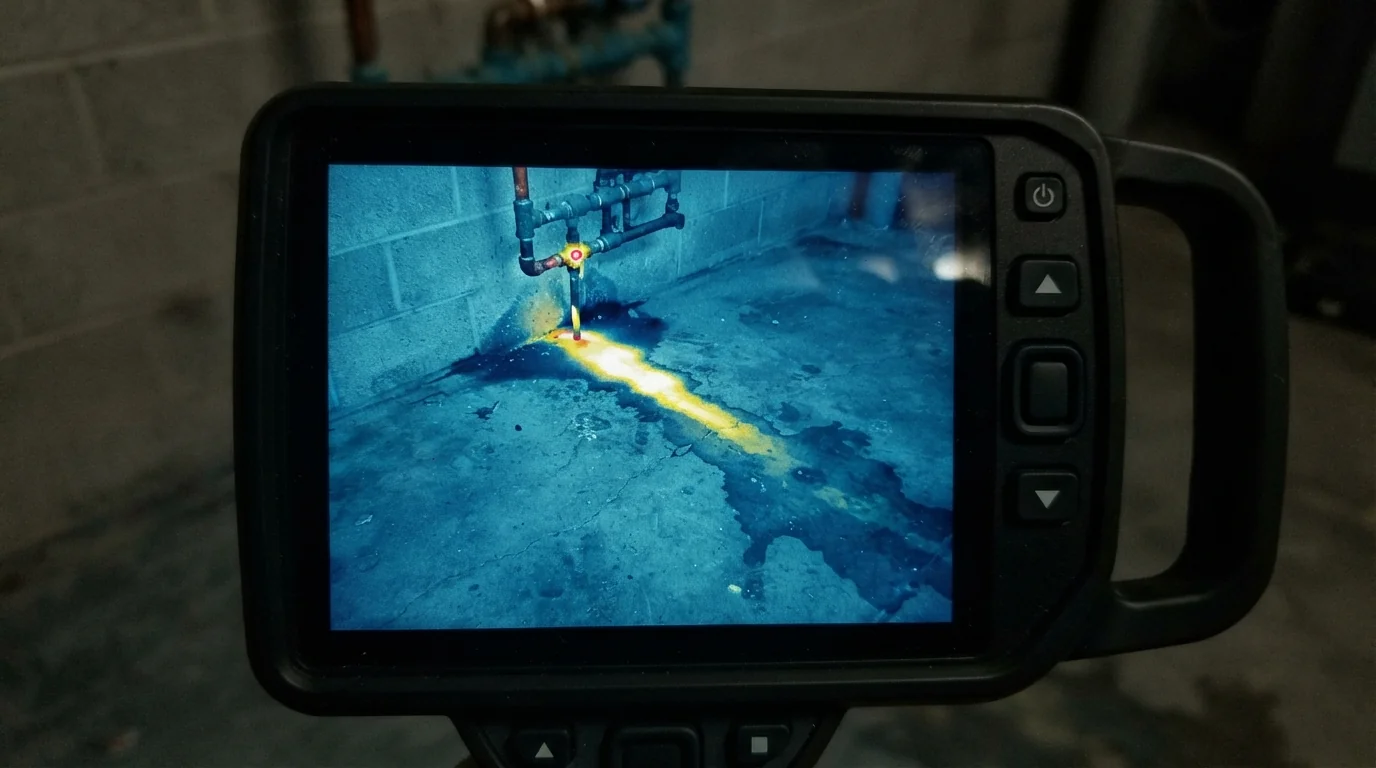
Locating starts by isolating the problem. Shutting off the water heater's cold supply tells us whether the leak is on the hot or cold side, and pressure testing individual lines narrows it further. Acoustic ground microphones pick up the hiss of pressurized water escaping through concrete, and a thermal camera shows the heat bloom of a hot line leak. On a good locate, the opening is small and centered on the leak. The equipment is half the job; the other half is reading how the house was plumbed.
Why Knoxville Slabs Stress the Pipes Beneath Them
Spot Repair, Reroute or Repipe
The age of the line and the number of leaks decide it.
| Option | Best when | Downside |
|---|---|---|
| Spot repair through the slab | One leak, otherwise sound pipe | Floor opened and patched |
| Reroute | Old line or a repeat leak | New pipe runs through walls or attic |
| Whole-house repipe | Leaks across several lines | Biggest project, ends the problem |
What Decides the Cost of a Slab Leak Repair
Most of the price is decided by how the leak is reached and how the line is fixed.
Pinpointing takes time and saves far more in concrete work.
A spot repair opens the floor; a reroute runs new pipe overhead.
Tile, hardwood or carpet over the leak affects the opening.
A longer reroute takes more pipe and labor.
Soaked drywall or flooring needs restoration beyond the plumbing.
Slab Leak Repair Questions From Knoxville Homeowners
How do I know if I have a slab leak?
A warm floor, a sudden jump in your bill, running water with everything off, or a meter that keeps moving are the usual signs.
Is a slab leak an emergency?
A hot line leak wastes water and energy and soaks the slab; call the same day. Closing the heater's cold supply slows a hot-side leak.
Is rerouting better than breaking the slab?
Often, especially on old copper or a line that has leaked before, since the next leak tends to be in the same pipe.
Will insurance cover a slab leak?
Many policies cover the water damage and access, not the pipe itself. Check yours before work starts.
Can a slab leak hurt my foundation?
Water washing soil from under a slab over time can contribute to settling, one more reason not to wait.
What if leaks keep showing up?
Several slab leaks usually mean the whole system is aging, and repiping the house is worth pricing.
Other Pipes & Gas Lines Jobs We Handle
Main Water Line Repair
Leak between the meter and the house and yard soft spot or standing water.
More on main water line repairMobile Home Plumbing
Frozen risers and heat tape and belly leaks and repiping.
More on mobile home plumbingWater Line Replacement
Lead or galvanized service line and trenchless water line pull.
More on water line replacementWarm spot on the floor?
Call today. We pinpoint the leak before any concrete is cut.