Septic to sewer conversion near Knoxville, TN connects a home's building drain to a public sewer main through a new lateral, usually 2 to 6 feet deep, after the utility approves the tap and a permit is pulled. The old septic tank is then pumped and removed or filled so it can't collapse later.
Updated October 2026
When Connecting to Sewer Makes Sense
Some homes connect because a new sewer main has reached their street and the utility sets a deadline; others because the septic system is failing and a main is close enough to beat the cost of a new drain field. Either way, the decision starts with where the main is, how deep, and whether the house can drain to it by gravity.
If the main sits higher than the house drain, the answer can be a grinder or ejector pump. We confirm elevations before pricing, because that one question changes the whole job.
What Drives the Cost of a Sewer Conversion
The distance to the main and the utility's fees set most of the price.
Longer laterals mean more trench and pipe.
A deep main means more digging; a high one may need a pump.
Tap and connection fees are set by the sewer utility.
Pumping, then filling or removing the old tank.
Driveway crossings, landscaping and lawn repair.
Tap Fee and Permit
Connecting to a public sewer means an application to the sewer utility, a tap or connection fee set by that utility, and a plumbing permit for the new lateral. Fees and rules vary from one utility to the next, so we confirm them for your address before quoting. The utility may make the tap itself or require it to be made to its specification, and an inspection of the open trench usually comes before backfill. We schedule the work so the inspection happens promptly and the trench is not left open longer than necessary.
Septic Tank Abandonment
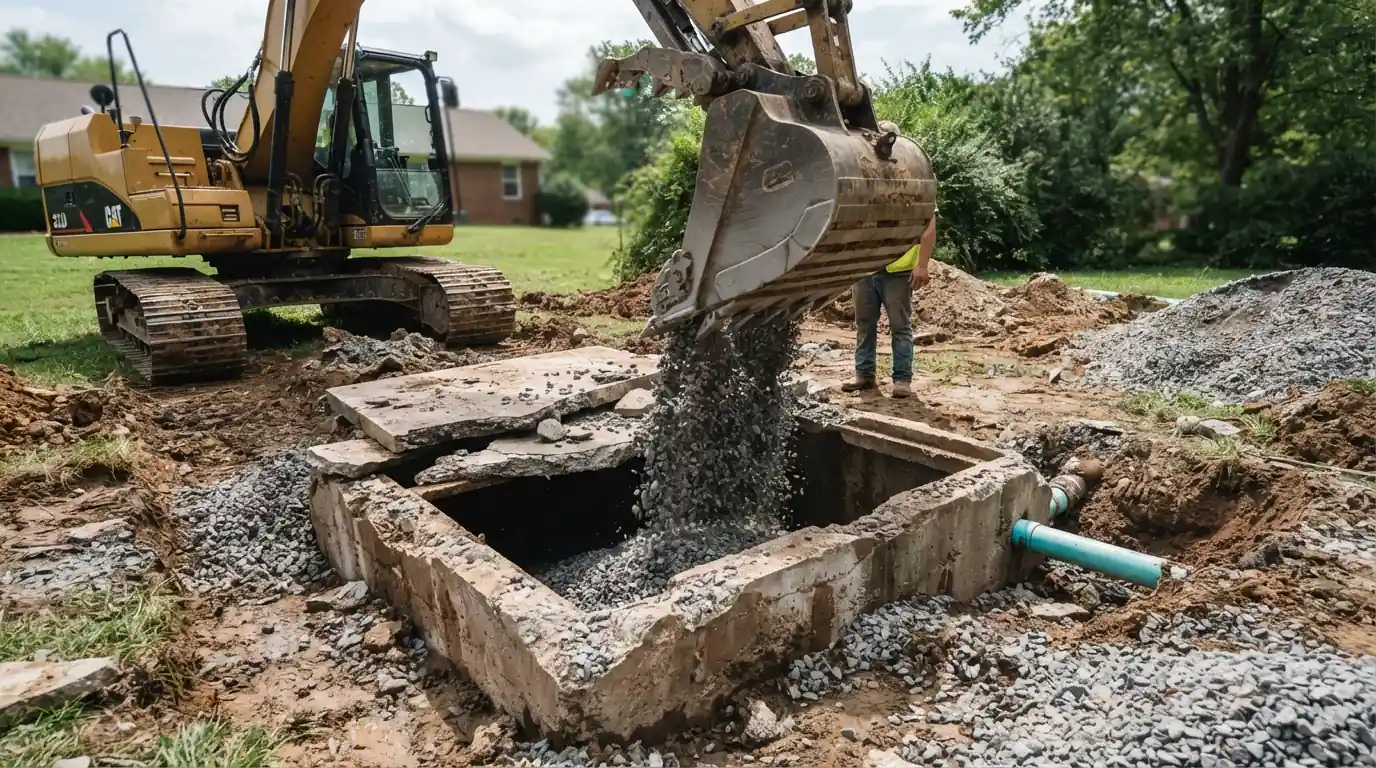
Once the house is on sewer, the old tank has to be taken out of service properly. It is pumped out by a septic hauler, then either removed or left in place with the lid broken in and the tank filled with sand, gravel or soil so it cannot collapse under a mower or a child later. The inlet and outlet pipes are disconnected and capped, and the drain field is left where it is. The health department sets the exact requirements, and we follow them and keep the paperwork for your records.
Lateral to the Main
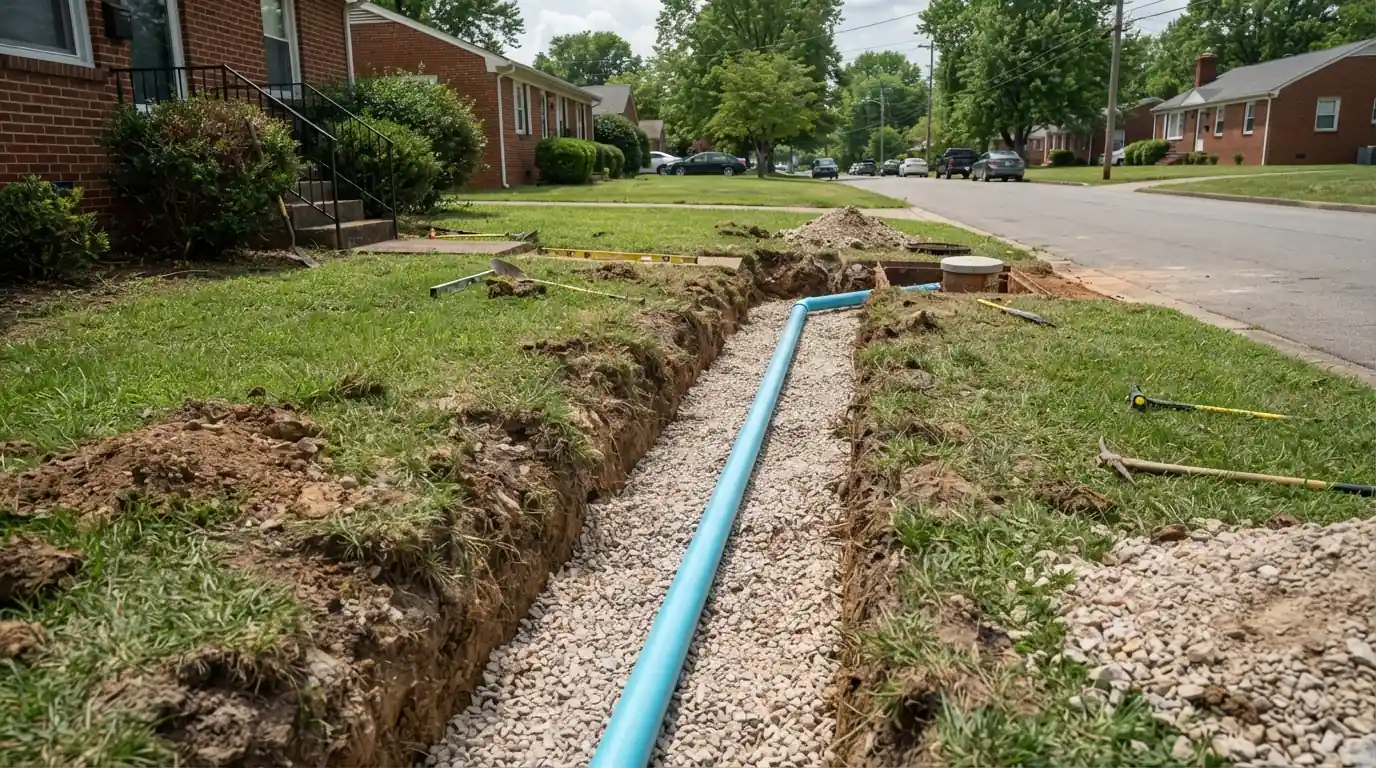
The new lateral runs from the house's building drain, often where it used to leave for the septic tank, to the sewer main or the stub the utility provides. It's laid in a trench at a steady fall, bedded on stone, with a two-way cleanout near the house so future clearing and camera work are easy. The old line to the tank is cut and capped. Where the route crosses a driveway or mature trees, part of the run can sometimes be bored instead of trenched, which saves the restoration.
What a Sewer Conversion Includes
- Main location, depth and elevation confirmed
- Utility application and tap coordinated
- Plumbing permit pulled
- New lateral on stone bedding at a steady fall
- Two-way cleanout near the house
- Camera run through the new line
- Septic tank pumped and abandoned
Where a Knoxville Sewer Connection Tends to Fail
From Septic Tank to Sewer Main
- 1
Check elevations
Main depth and house drain height compared.
- 2
Apply and permit
Utility tap application and plumbing permit.
- 3
Lay the lateral
Trench, bedding, pipe and cleanout.
- 4
Inspect and connect
Inspection, then cutover at the house.
- 5
Abandon the tank
Pumped, disconnected, filled or removed.
How Long You Are Between Septic and Sewer
Most of the work happens while the septic system keeps running, so the house stays usable while the trench is dug and the new lateral is laid. The disruption comes at the cutover, when the old line to the tank is cut and the new one is joined to the building drain.
That window stays short when the new lateral is ready and inspected ahead of time. We plan it with you, and arrange for the tank to be pumped right after the cutover so it can be abandoned without delay.
Septic to Sewer Conversion Questions From Knoxville Homeowners
Am I required to connect to sewer?
Some utilities require it within a set time once a main is available; others do not. We check the rule for your address.
Can I keep using my septic until the connection?
Usually, yes. The cutover happens once the new lateral is laid and inspected.
What happens to my drain field?
It is left in place and simply no longer used.
Will my yard be torn up?
There will be a trench along the route; boring can avoid driveways and trees.
What if the sewer main is uphill from my house?
A grinder or ejector pump lifts the waste up to the main.
Does the septic tank have to be removed?
It is removed, or pumped and filled in place, following the health department's rules.
Other Water Quality & Maintenance Jobs We Handle
Well Pump Repair & Replacement
No water from the well and waterlogged pressure tank.
Well Pump Repair & Replacement in KnoxvilleSmart Water Shutoff & Leak Sensors
Whole-house flow monitors and wireless leak sensors.
Smart Water Shutoff & Leak Sensors in KnoxvilleBackflow Testing & Certification
Annual backflow test and irrigation backflow preventers.
Backflow Testing & Certification detailsWhole-House Water Filtration
Carbon filter for chlorine and sediment pre-filter.
Whole-House Water Filtration in KnoxvilleSewer main now at your street?
Call to check elevations and plan the connection.