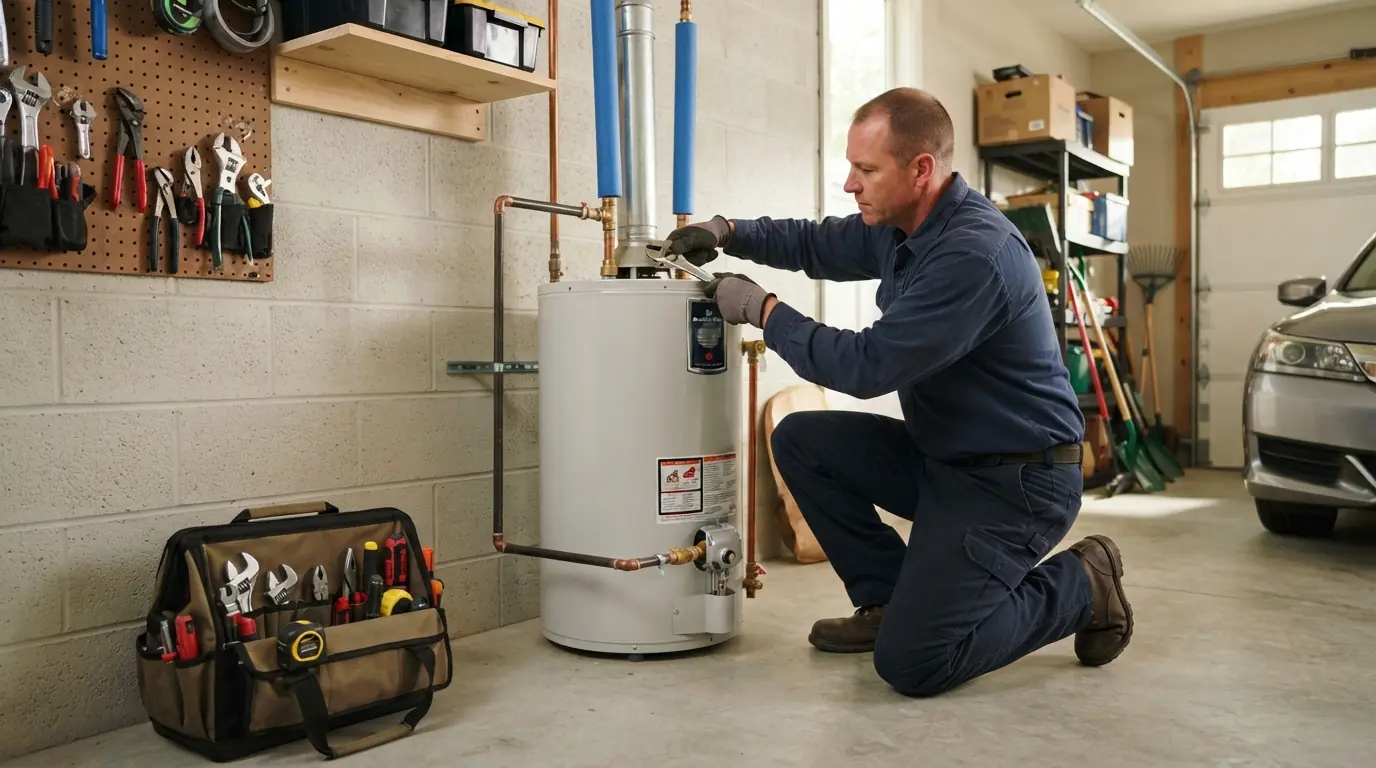
Whole-house water filtration in Knoxville, TN usually means a sediment prefilter and a carbon filter at the main to cut chlorine taste and odor, with a reverse osmosis unit under the kitchen sink for drinking water. KUB's water meets current standards, so filtering is about taste, sediment and your own plumbing, not an emergency.
Updated October 2026
What You're Filtering For
Filtration only makes sense against a target. On city water the usual ones are chlorine taste and smell, disinfection byproducts, and particles shaken loose from old pipes. On a well they are sediment, iron, hardness and bacteria. Each needs a different medium, and the wrong filter just adds a cartridge to change.
We test first, then build the system around the results: a sediment stage to protect everything after it, carbon for chlorine, and reverse osmosis where you drink and cook. Watts housings and Fleck control valves are common choices, and Rheem builds whole-house systems too. If hardness is the real complaint, a softener or conditioner is the tool, not a filter.
What Changes the Price of a Filtration System
Equipment is most of the price; the install depends on your plumbing.
Each stage adds equipment and cartridges.
Larger households need larger tanks for the same result.
Needs more carbon contact than chlorine.
A garage near the main is simplest; crawlspaces cost more.
A fridge line or remineralizing stage adds parts.
Carbon, Sediment or Reverse Osmosis
Most homes need two of these, not all three everywhere.
| Stage | Removes | Where it goes |
|---|---|---|
| Sediment | Sand, rust, grit | At the main, first in line |
| Carbon | Chlorine, chloramine, taste, odor, many byproducts | At the main after sediment |
| Reverse osmosis | Dissolved minerals, lead, most contaminants | Under the kitchen sink |
Carbon Filter for Chlorine
Utilities disinfect with chlorine or chloramine to keep water safe all the way through the mains, and that is what most people taste and smell. Activated carbon removes it along with many disinfection byproducts. A whole-house carbon tank or large cartridge at the main treats every tap and shower. Chloramine needs more contact time than chlorine, so the carbon has to be sized for your flow, not just the pipe size. Undersized carbon lets the smell back through within months, the most common complaint about filters that did not work.
Sediment Pre-Filter
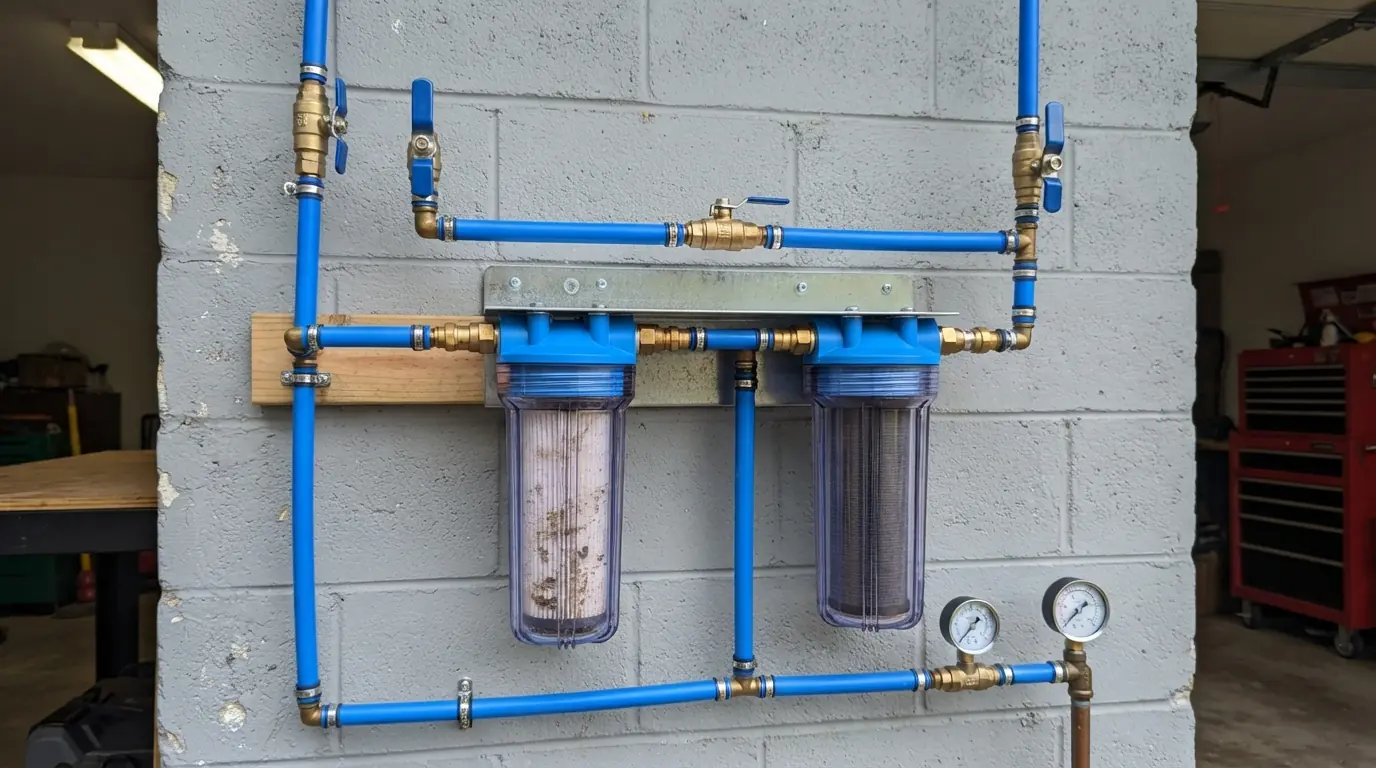
A sediment filter catches sand, rust flakes and grit before they reach fixtures, appliances and the finer filters downstream. It matters most on wells, in homes with old galvanized or iron pipe, and after work on the mains stirs things up. We use a clear housing where possible so you can see when the cartridge is loaded, and fit a bypass so it can be changed without shutting off the house. It is the cheapest stage in any system and the one that makes every later stage last longer.
Reverse Osmosis at the Sink
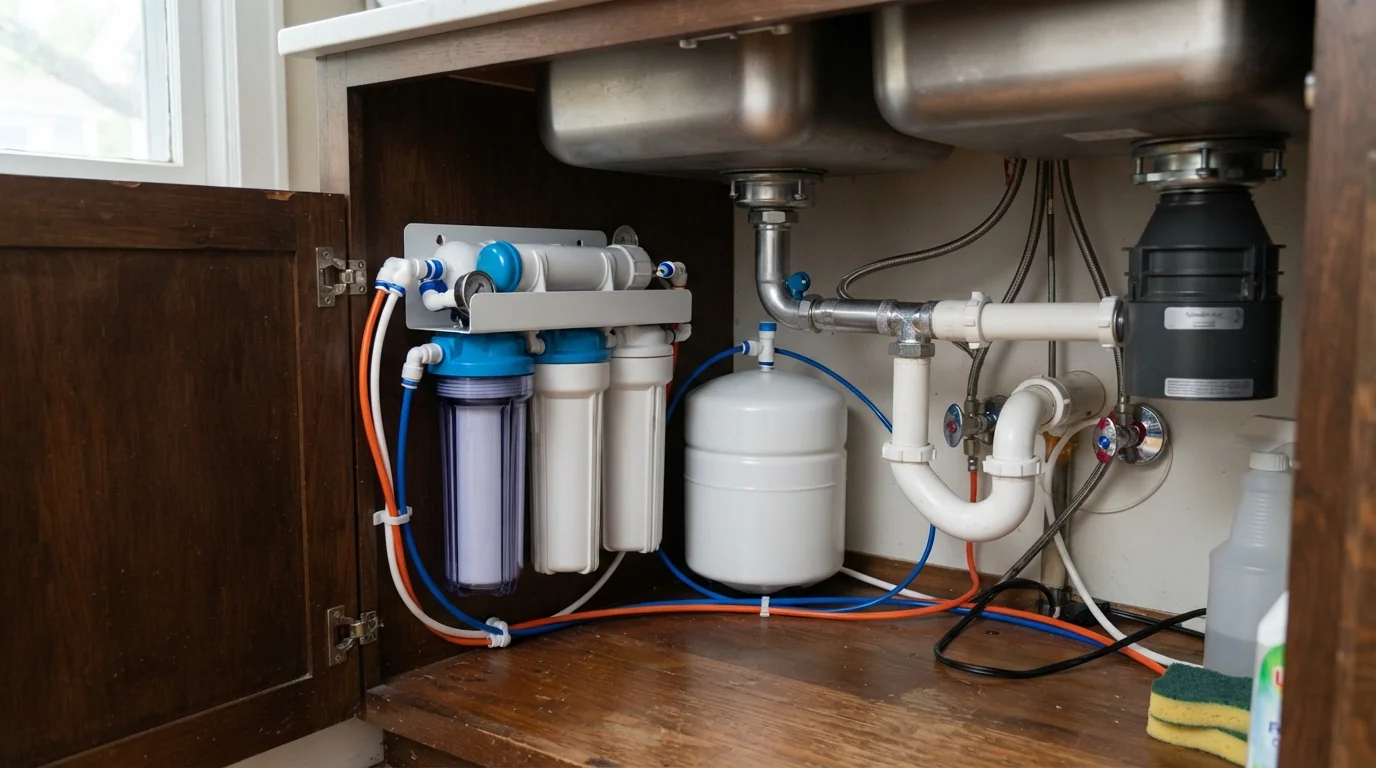
Reverse osmosis forces water through a membrane fine enough to remove dissolved minerals, lead and most other contaminants, which is why it serves drinking water rather than the whole house. An under-sink unit feeds a dedicated faucet and a small storage tank, with a drain connection for the reject water. Many kitchens also run it to the refrigerator's ice maker. Membranes and prefilters need replacing on schedule, and we mount the unit so those changes take minutes instead of an afternoon under the sink.
What Is in Knoxville Tap Water, and What Isn't
Installing a Filtration System
- 1
Test
Chlorine, hardness, iron, sediment and pH checked.
- 2
Design
Stages chosen and sized for your flow.
- 3
Install
Main cut, bypass fitted, housings or tanks mounted.
- 4
Flush
New media rinsed until the water runs clear.
- 5
Explain
Cartridge schedule and bypass shown.
Whole-House Water Filtration Questions From Knoxville Homeowners
Is Knoxville tap water safe to drink?
It meets current federal standards. Filtering improves taste and adds margin; it does not fix unsafe water.
Will a whole-house filter remove lead?
Most whole-house carbon doesn't reliably. Under-sink reverse osmosis or a certified point-of-use filter is the right tool for lead.
How often do filters need changing?
Sediment and carbon cartridges every few months to a year depending on use; RO membranes less often.
Does a filter soften water?
No. Hardness needs a softener or conditioner.
Will a filter lower my water pressure?
A properly sized system barely does. A pressure drop usually means a loaded cartridge.
Can you filter well water too?
Yes, usually with sediment and iron stages and sometimes UV for bacteria, sized from a well test.
Other Water Quality & Maintenance Jobs We Handle
Smart Water Shutoff & Leak Sensors
Whole-house flow monitors and wireless leak sensors.
Smart Water Shutoff & Leak Sensors detailsSeptic to Sewer Conversion
Tap fee and permit and septic tank abandonment.
Septic to Sewer Conversion overviewWater Softener Installation
Softener sizing and bypass valve and drain line.
Water Softener Installation in KnoxvillePlumbing Inspection
Pre-purchase plumbing inspection and annual whole-home plumbing check.
Plumbing Inspection detailsWant to know what is in your water?
Call to book a test and a filtration plan that fits the results.