How to Identify Polybutylene
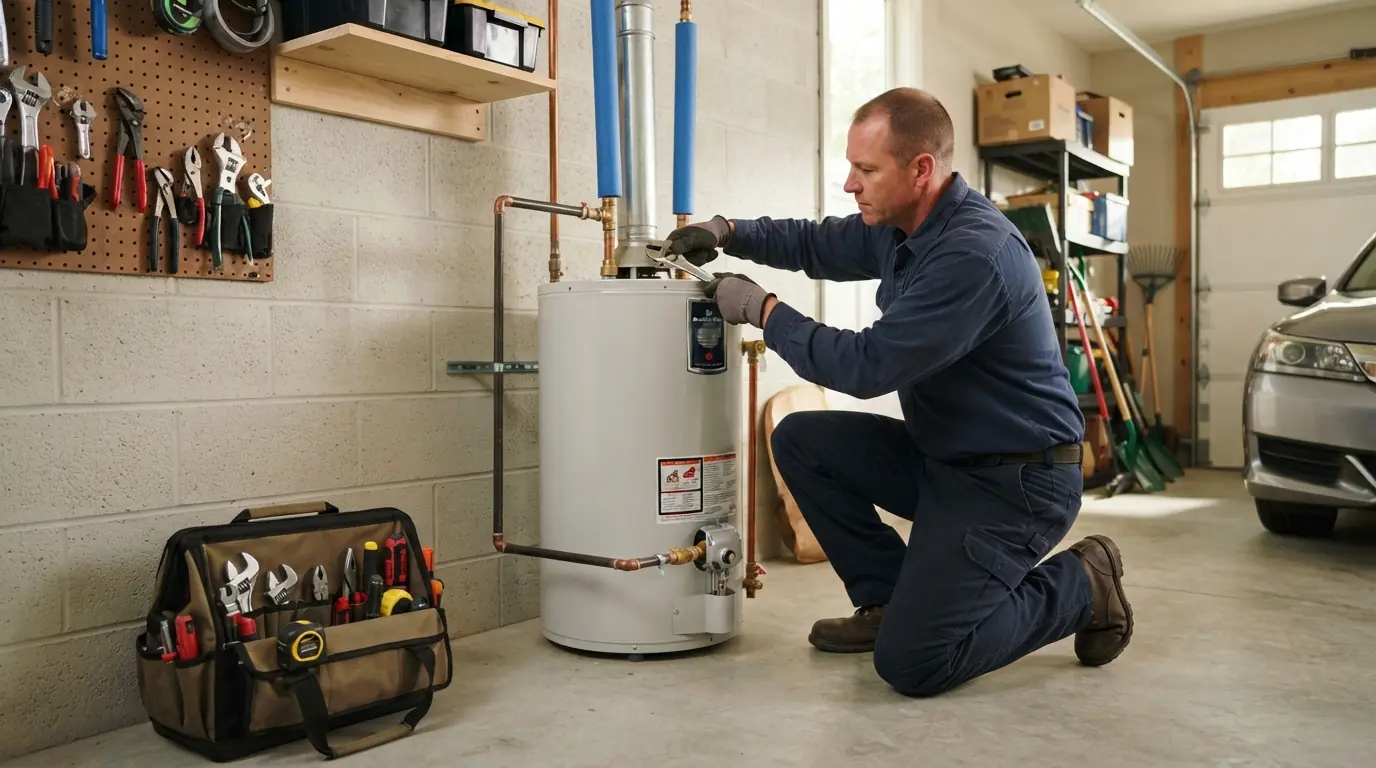
Polybutylene is flexible plastic supply pipe, usually gray but sometimes blue or black, often stamped with a PB code along its length. It was installed in many homes from the late 1970s into the 1990s. Look where pipe is exposed: at the water heater, under sinks, near the main shutoff, in an unfinished basement or crawlspace. Its fittings are the giveaway on older installs, plastic or metal inserts held with crimp rings, and those fittings are where many failures start.
How to Identify Galvanized Pipe
Galvanized supply pipe is dull gray steel with threaded joints, and a magnet sticks to it firmly. It was common in homes built before the 1960s and sometimes later. The signs it's failing are gradual: pressure that fades at every fixture over the years, brown water after the house sits unused, and leaks at the threads. Copper looks orange-brown and a magnet will not stick; that's not what you are looking for here.
Why Both Fail
Polybutylene breaks down from the inside after years of exposure to treated water, and its fittings crack, so it can fail suddenly and flood a room rather than weep slowly. Galvanized steel rusts from the inside, narrowing the bore until pressure drops, then leaks where the threads have thinned the wall. Local plumbing data puts polybutylene's typical failure at about 30 years, which means most of what remains in the ground and the walls today is past its expected life.
Found gray pipe marked PB? Call for a walkthrough.
(865) 344-9122Repair or Repipe?
One leak on either material can be repaired, but it's rarely the last. When a house has had two or three leaks in different places, the pattern is the pipe. Insurers often ask about polybutylene, and some buyers walk away from a house that still has it.
Published Knoxville data puts repiping supply lines at about $16.40 to $30.60 per linear foot, depending on material and layout, plus a plumbing permit that typically runs $100 to $250. For most houses, that's cheaper over time than a string of emergency repairs and the water damage that comes with them.
What a Repipe Involves
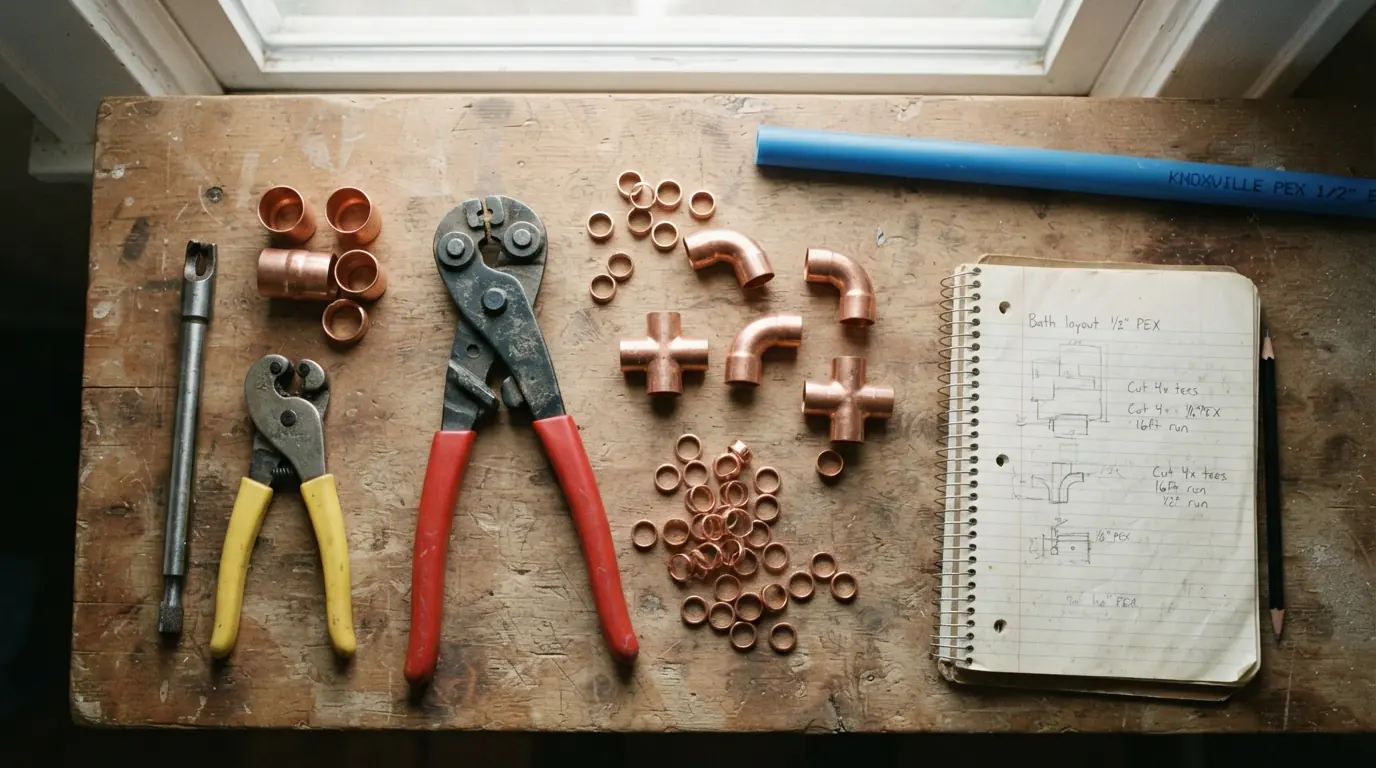
A whole-house repipe runs new PEX or copper lines to every fixture through small openings in walls and ceilings, with the family usually living at home through it. Water is off during the working day and back most evenings, new shutoffs go in at every fixture, and the openings are patched after the inspection. PEX costs less and needs fewer openings; copper costs more and suits some owners' preference.
The Service Line Counts Too
The pipe from the meter to the house can be galvanized, and in older neighborhoods it can be lead: KUB's inventory estimates about 3,400 lead service lines remain in Knoxville. If the house is being repiped, check the service line at the same time; water line replacement from the meter to a new shutoff finishes the job.
Polybutylene and Galvanized Pipe Questions
Is polybutylene pipe illegal?
No, but it's no longer installed, and many insurers and buyers treat it as a known risk.
Can I replace only part of my polybutylene?
You can, but the remaining pipe keeps the same risk. Most owners replace it all.
Does galvanized pipe affect water quality?
Rust from failing galvanized pipe causes brown water and low pressure.
How long does a repipe take?
Most houses are repiped over several working days while the family stays home.
Will a repipe raise my home's value?
It removes a known risk that buyers and insurers ask about, which helps at sale time.