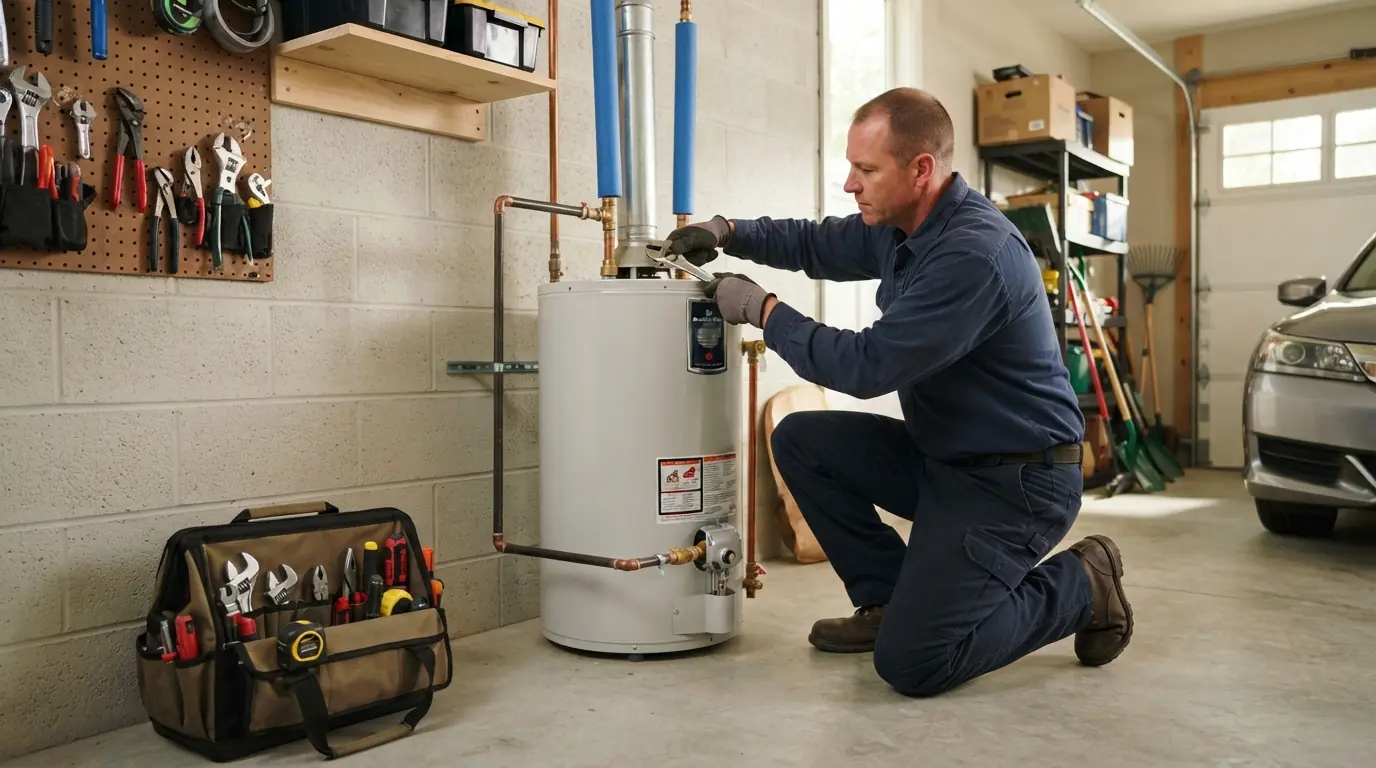
Where Knoxville's Water Comes From
KUB takes in more than 30 million gallons a day from the Tennessee River at Fort Loudoun Lake and treats it at the Mark B. Whitaker Water Treatment Plant, with a state-certified lab running more than 100,000 tests for over 150 contaminants. Greater Knoxville is also served by several other public water systems, so a home's exact hardness depends on which one supplies it.
How Hard Is It, Really?
KUB's own water quality guide puts hardness at 60 to 120 ppm, and other published figures average about 90 mg/L, or 5.3 grains per gallon. On the Water Quality Association's scale, under 60 ppm is soft, 61 to 120 is moderately hard, 121 to 180 is hard, and anything above that's very hard. Knoxville's city water sits in the middle of the moderate band.
You will see the occasional online estimate that puts Knoxville much higher. Those are usually regional estimates rather than measurements of treated city water, which is why a test at your own tap beats any number on a website.
What Moderately Hard Water Does to a House
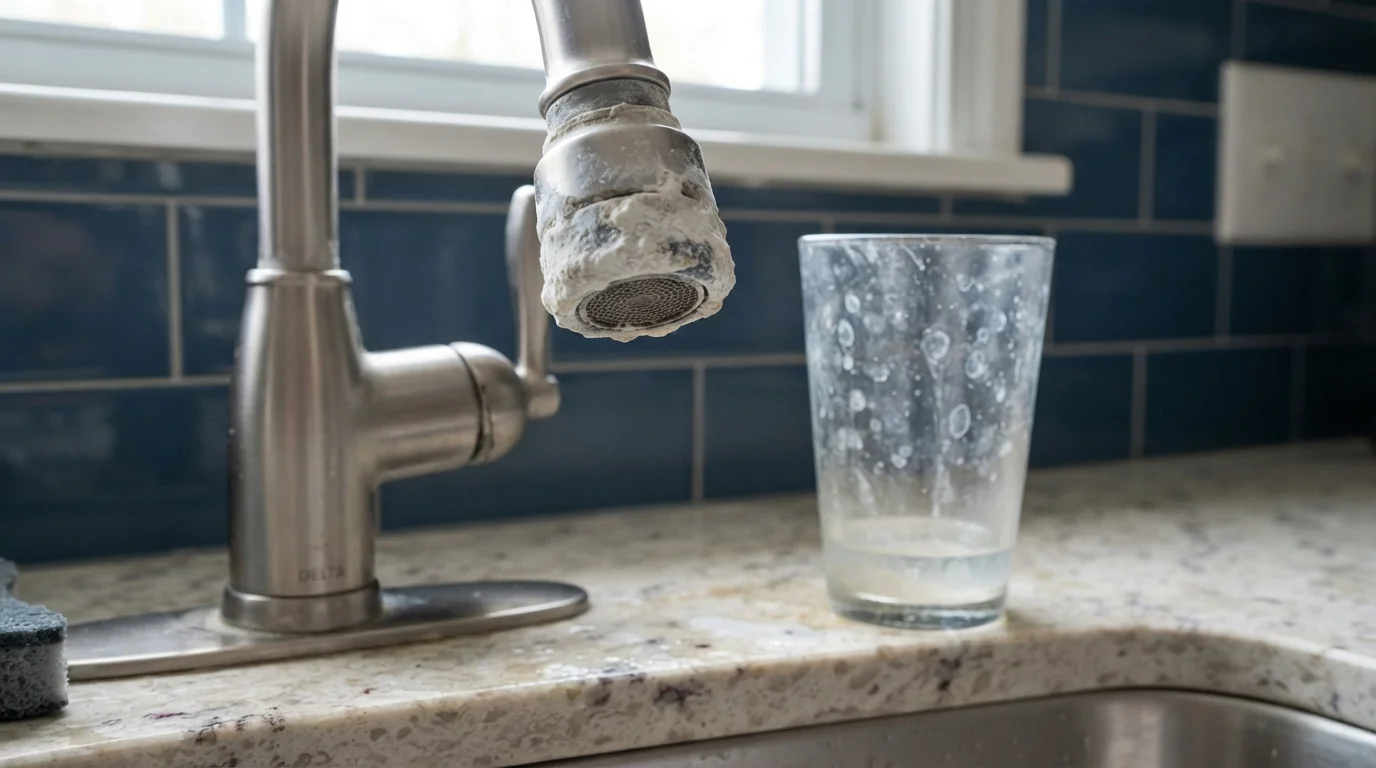
The effects are slow. Scale settles in the bottom of tank water heaters, where it insulates the burner or buries the lower element; it coats the narrow heat exchanger of a tankless unit much faster; and it gathers in faucet aerators, shower heads and cartridges, which is why a single weak faucet is usually a clogged aerator. Spotted glasses and a film on shower doors are the everyday signs.
None of that is a health issue. It is a maintenance issue, and it's managed by flushing water heaters, descaling tankless units and cleaning aerators.
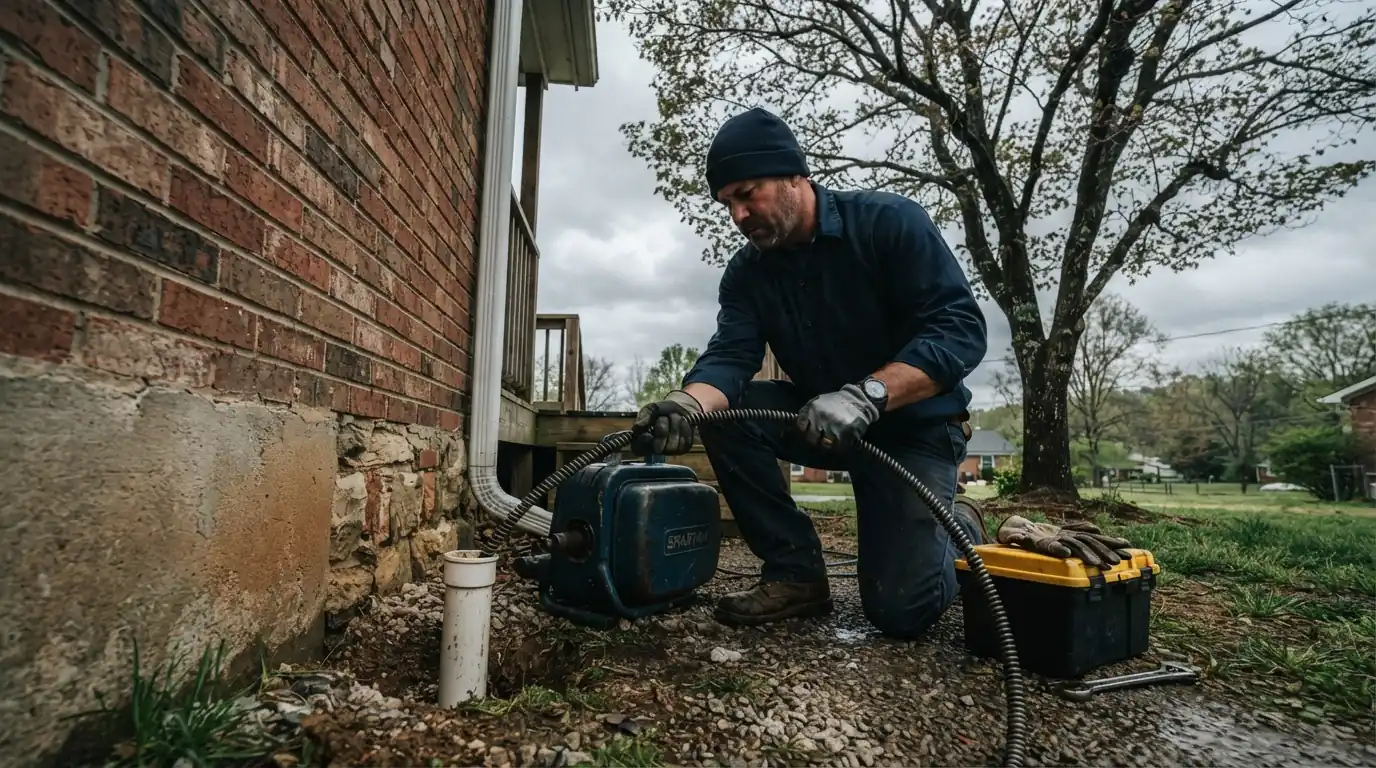
Want to know what your water measures? Call to book a test.
(865) 344-9122Well Water Is a Different Story
Homes on private wells in Knox, Blount, Anderson and Union County communities often see higher mineral content than KUB customers, because well water skips treatment entirely. Iron and manganese are common too. A well home is where a properly sized water softener most clearly pays for itself, often with a sediment or iron prefilter ahead of it.
Softener, Conditioner or Nothing
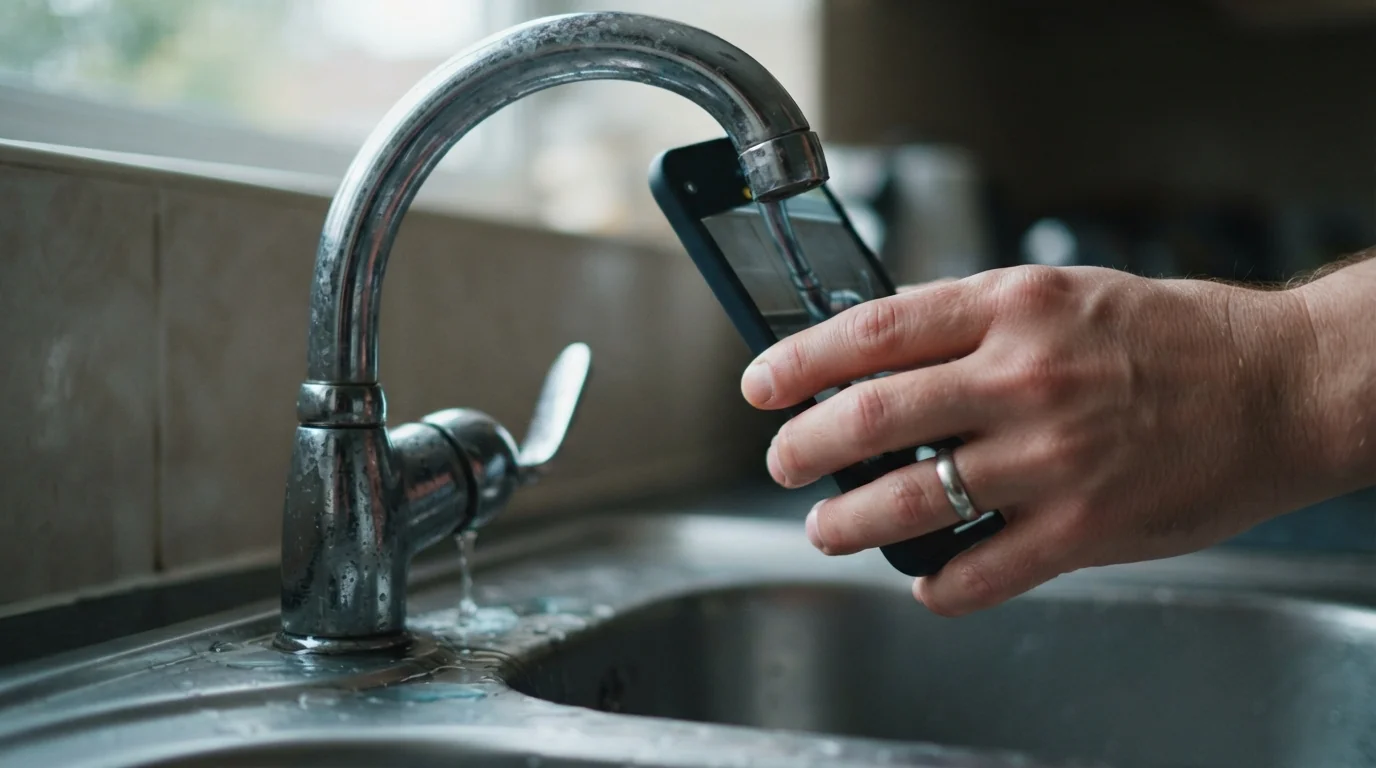
For city water feeding an ordinary tank heater, many homes do fine with no treatment. For a tankless heater, a salt-free conditioner is often recommended. For visible scale everywhere, or a well, an ion-exchange softener is the tool that actually removes hardness. Test first, then decide.
Chlorine, Lead and Other Questions
KUB disinfects with chlorine or chloramine, which some people taste; a carbon filter handles that. Measured lead in KUB water has been about 1.18 ppb, well under the 15 ppb action level, and lead that does reach a tap comes from plumbing inside homes built before 1986, not from the plant. That is a question for filtration and a tap test, not a softener.
Knoxville Water Questions
Is Knoxville tap water safe to drink?
KUB water meets current federal standards. Hardness is a maintenance issue, not a health one.
Do I need a water softener in Knoxville?
Not always on city water. Tankless heaters, wells and homes with visible scale benefit most.
Why do my glasses have spots?
Moderately hard water leaves mineral spots as it dries; a rinse aid helps.
Does hard water damage pipes?
It mostly affects water heaters, tankless units and fixtures rather than the pipe itself.
How do I find my exact hardness?
A test at your tap. Utilities also publish annual water quality reports.