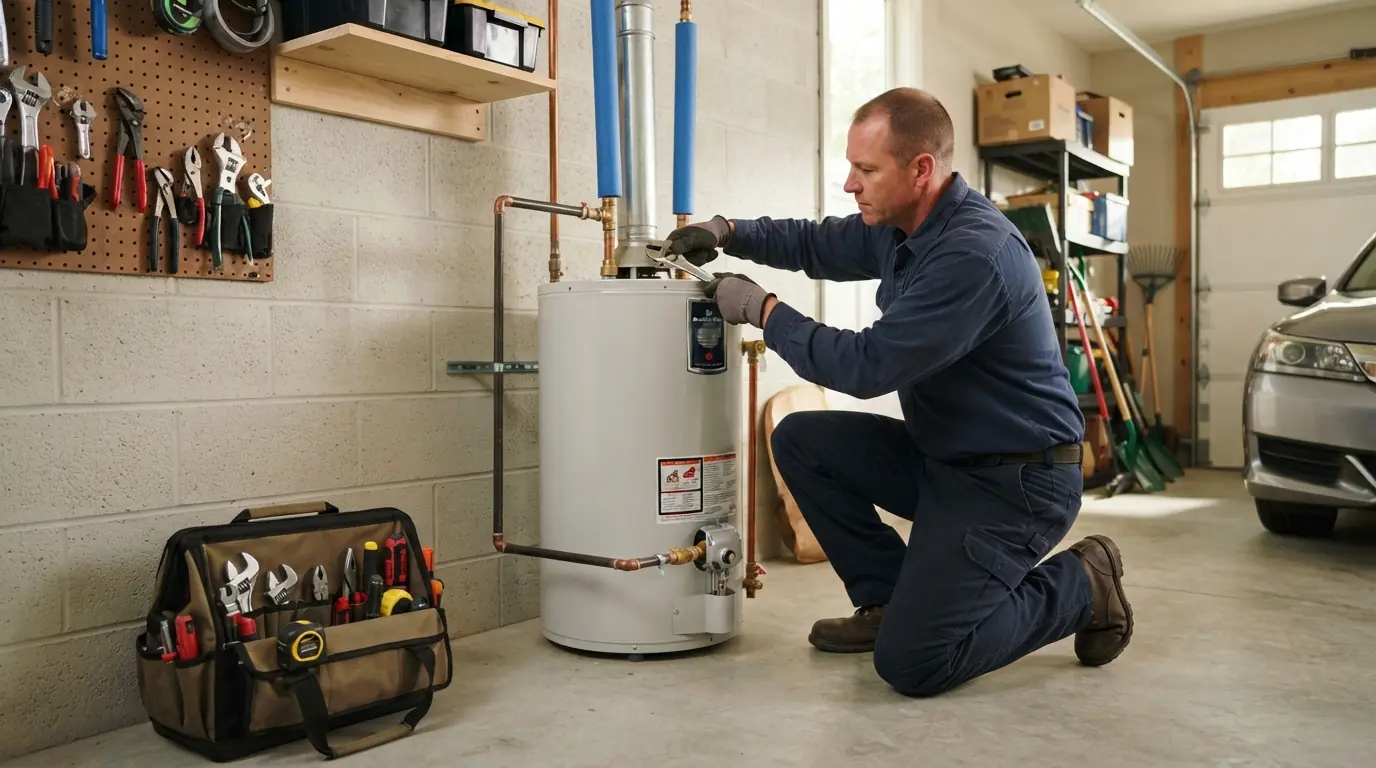
How to Tell a Pipe Has Frozen
The clearest sign is a faucet that gives a trickle or nothing at all on a cold morning while other faucets still run. If no faucet in the house works, the freeze may be at the main line or the meter, or the problem may be on the utility's side, so check whether the neighbors have water.
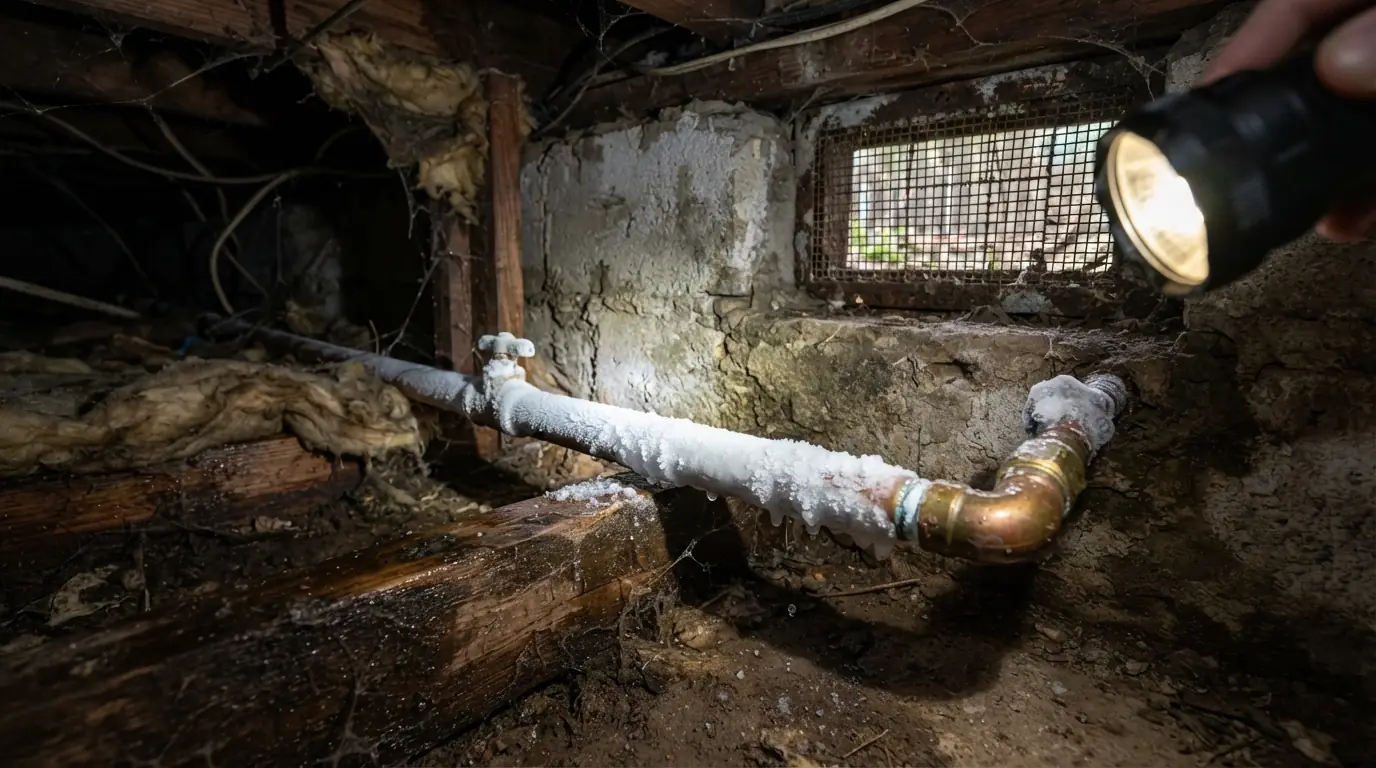
Frost on an exposed pipe in a crawlspace or garage, or a section that looks slightly swollen, tells you where the ice is. Pipes along exterior walls, under sinks on outside walls, and anywhere near a foundation vent are the usual suspects.
The First Ten Minutes
Find the main shutoff and be ready to close it. If you see a bulge, hear hissing, or have any reason to think the pipe has split, close it now; a frozen pipe often splits and only leaks once it thaws. Open the faucet on the frozen line so meltwater and pressure have somewhere to go.
Then add warmth. Raise the thermostat, open the cabinet doors under sinks on exterior walls, and run a space heater safely in the room or crawlspace, well clear of anything that can burn. Those are the moves local plumbers give on the phone during every cold snap, because they work and they are safe.
Thawing a Pipe Safely
Work from the open faucet back toward the frozen section, so water can escape as the ice melts. A hair dryer, a heat lamp or towels soaked in hot water are all safe on exposed pipe. Keep heating until full flow returns.
Never use a torch or any open flame. It can set fire to framing and insulation in seconds, and it can heat the pipe unevenly enough to split it. If the frozen section is inside a wall or ceiling you cannot reach, call rather than cutting into it; a plumber will find it and thaw it with controlled heat.
Pipe split and spraying? Shut off the main and call now.
(865) 344-9122How to Tell If It Already Split
A pipe that froze solid has often split already and simply has not leaked yet. As it thaws, watch it closely. Water spraying or dripping, a hiss from inside a wall, a wet spot spreading on a ceiling, or the water meter moving with every faucet off all mean a split.
If you find one, close the main and call. Copper splits along its length; plastic usually fails at a fitting. Either way the damaged section has to be cut out and replaced and the run pressure-tested, which is the core of burst pipe repair.
Why Some Knoxville Homes Freeze and Others Do Not
Knoxville's winters swing from mild to pipe-freezing overnight, and the sudden drop after a warm week is what catches people out. The local frost line runs about 18 inches deep, so buried lines are usually safe; exposed runs in crawlspaces, garages and attics are not.
Elevation matters too. Homes on exposed hillsides or down in cold valleys can see much colder nights than a house a mile away, and older metal pipe in historic homes freezes more readily than newer plastic.
Stopping It Next Winter
Most frozen pipes are preventable. Insulate exposed supply lines, seal the drafts that reach them, cover foundation vents in the coldest months, and disconnect garden hoses so frost-free faucets can drain. On the hardest nights, let a faucet on an exterior wall drip. Plumbing winterization before the first hard freeze does all of it in one visit.
Frozen Pipe Questions
Should I leave faucets dripping in a freeze?
On the coldest nights, a slow drip on faucets along exterior walls keeps water moving and relieves pressure.
Can a frozen pipe thaw on its own?
Yes, as temperatures rise, and that is when a hidden split starts leaking. Watch it.
Is it safe to use a heat gun?
On exposed pipe, with care and kept moving. Never an open flame.
What if no faucet in the house works?
The freeze may be at the main or meter, or on the utility side. Check with a neighbor, then call.
Does insurance cover burst pipes?
Sudden bursts are often covered for water damage; check your policy for exclusions.