Test It Yourself First
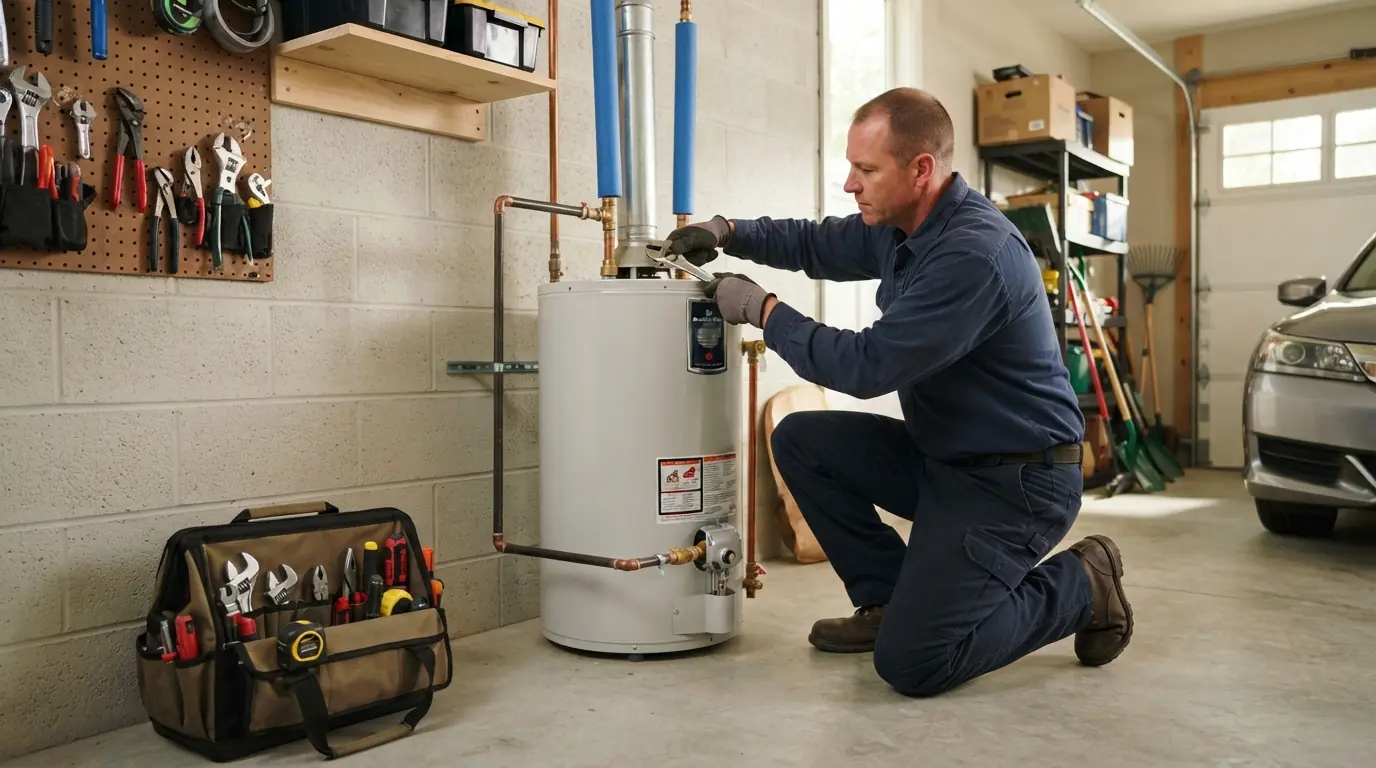
A pressure gauge that threads onto an outdoor hose bib is inexpensive at any hardware store. With every fixture off, the reading is your static pressure. Most plumbers like to see roughly 40 to 80 psi; well below that explains weak showers, and above it explains banging pipes and leaking fixtures.
Take a second reading with a faucet running inside. A large drop between the two points to a restriction in the pipes rather than a weak supply, and that distinction decides almost everything that follows.
One Fixture or the Whole House?
Weak flow at a single faucet or shower is almost always the fixture: a clogged aerator screen or a scaled shower head, a two-minute fix. Unscrew the aerator, rinse it, and try again. A single-handle faucet with a worn cartridge can also restrict one tap.
When every fixture is weak, the cause is upstream. That's where the gauge readings, the main valve and the pipe material come in.
Pressure weak or pipes banging? Call us any hour.
(865) 344-9122After a Water Main Break
When KUB has a main break, pressure can stay low and water can run discolored for a while after service is restored. A significant break that cut water from Downtown to Bearden left some customers with exactly that afterward.
Run the cold water at the lowest faucet for a few minutes until it clears, and clean the aerators, because sediment stirred up by the break collects there. If pressure is still low a day or two after the utility's work is done, the cause is probably in the house rather than the main.
Regulators, Valves and Old Pipe
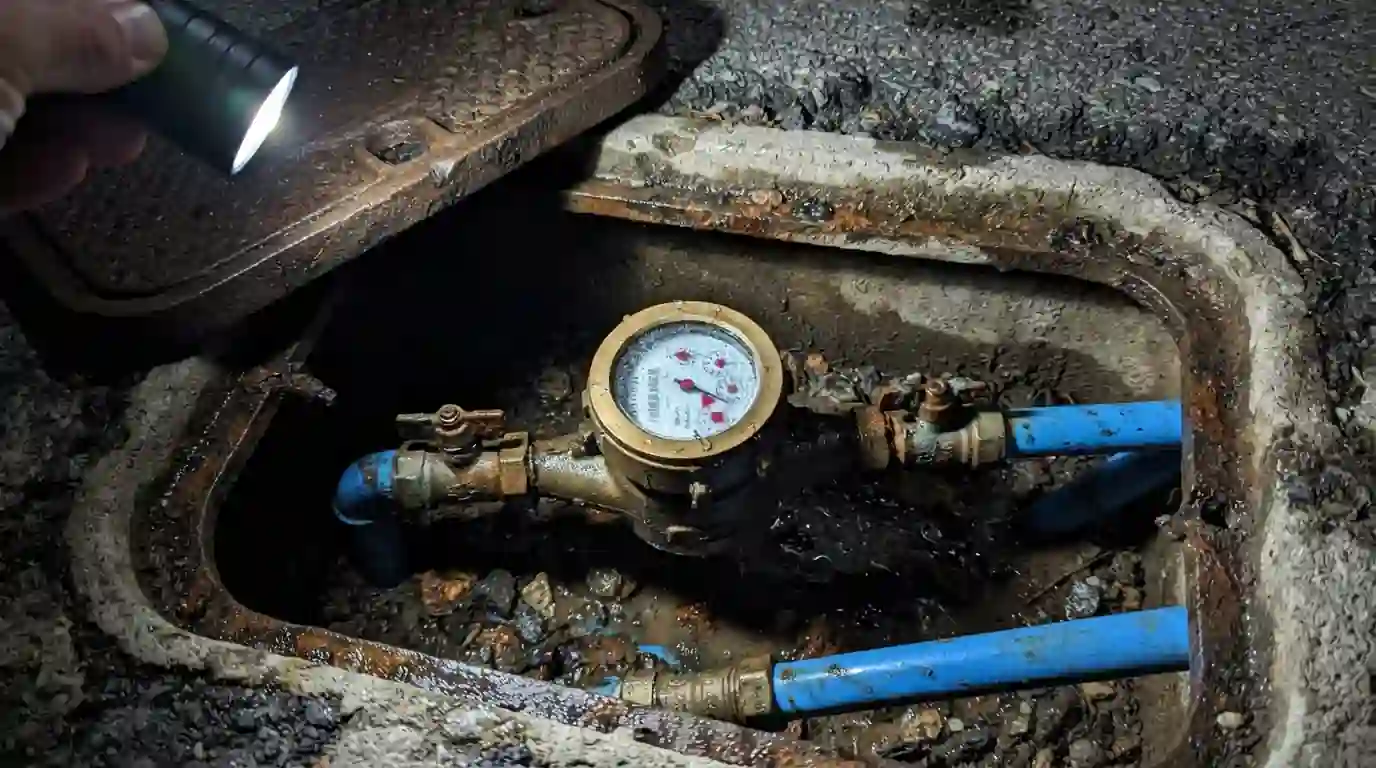
Many homes have a pressure-reducing valve where the water line enters the house. When it fails, pressure can drop low or creep high. A main shutoff that was never fully reopened after a repair is another common cause, and an easy one to check.
In older houses, galvanized steel pipe narrows as rust builds inside it, and the whole house slowly loses pressure over years. No valve fixes that; the pipe has to be replaced, often as part of a repipe. Our low water pressure repair work starts with exactly these checks.
| What you notice | Most likely cause |
|---|---|
| One faucet weak | Clogged aerator or cartridge |
| Whole house weak, suddenly | Failed regulator or closed valve |
| Whole house weak, over years | Galvanized pipe narrowing |
| Weak after a main break | Sediment in aerators, or the main |
| Pipes bang, relief valve drips | Pressure too high |
When the Street Supply Is the Limit
Knoxville is hilly, and a house at the top of a rise or at the end of a long line can get weaker water than homes lower down. If the gauge reads low with every fixture off, the pipes test clear and the regulator is fine, the supply itself is the limit.
That's the case for a booster pump, a pump and small pressure tank on the main line that raises pressure for the whole house. It's the right fix only after the cheaper causes are ruled out.
Too Much Pressure Is a Problem Too
High pressure feels good in the shower and is hard on everything else. It wears out faucet cartridges and toilet fill valves, makes pipes bang when valves close, and can make a water heater's relief valve drip.
A pressure regulator brings it back into range, and a water heater on a closed system usually needs a working expansion tank as well. Replacing a failed regulator is a short job, and it protects every fixture in the house.
Water Pressure Questions
What is normal water pressure for a house?
Most plumbers like to see roughly 40 to 80 psi; codes generally call for a regulator above 80.
Why is my shower weak but the sink is fine?
Usually a scaled shower head or a worn valve cartridge in that shower.
Can low pressure be the utility's fault?
Yes, after a main break or at high points in the system; a gauge at your outdoor faucet helps tell.
Do pressure regulators wear out?
Yes. When they fail, pressure can drift low or creep high.
Is high water pressure a real problem?
Yes. It is hard on fixtures, hoses and the water heater, so it is worth correcting.