The Riser Freezes First
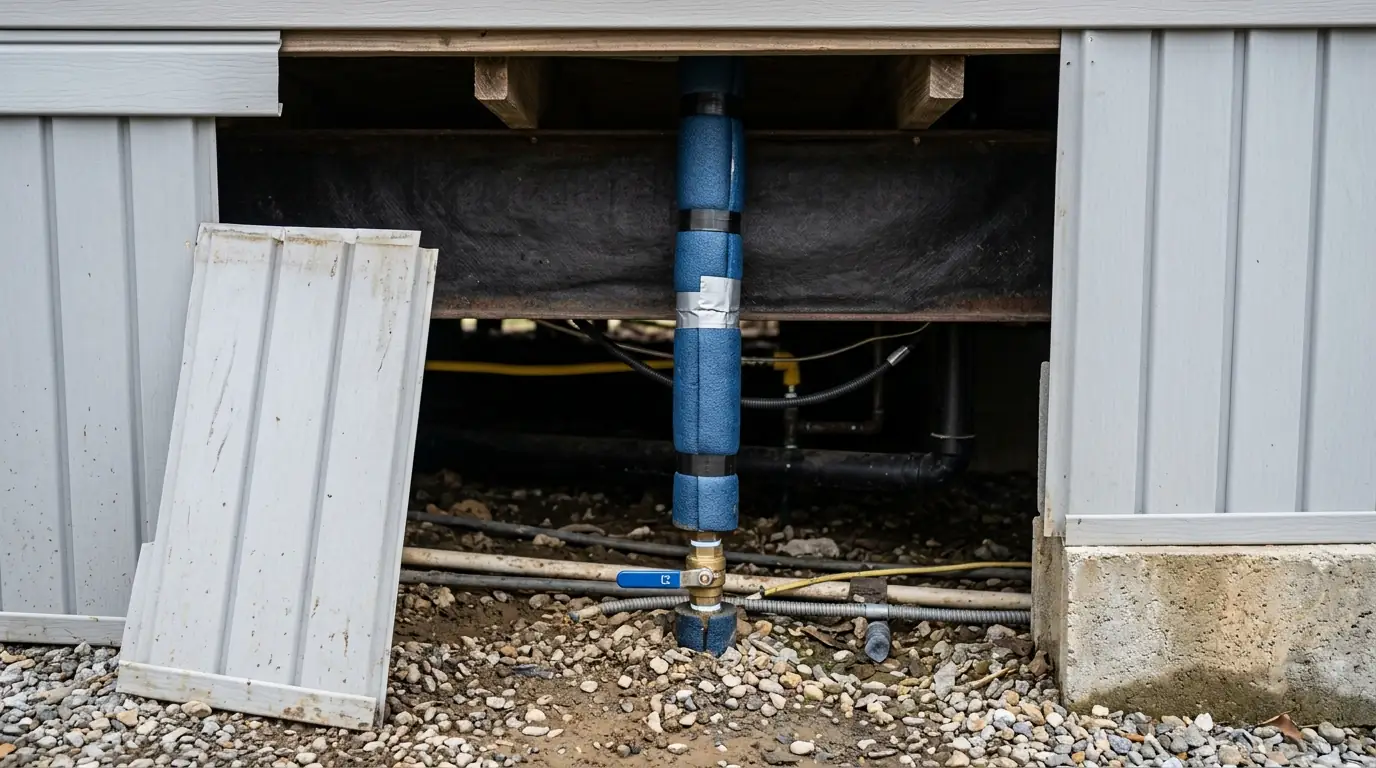
Water comes into a manufactured home through a riser, a pipe that comes up out of the ground and into the floor. It is the most exposed pipe on the property, sitting in open air under the home with only insulation and heat tape between it and a hard freeze.
Heat tape fails quietly. The outlet it plugs into trips, the tape wears out after a few winters, or the insulation slips off. Before the first cold snap, check that the tape is plugged in and warm, and that the insulation still covers the riser all the way up to the floor. If the riser freezes anyway, our guide to frozen pipes in Knoxville covers the first steps, and a mobile home plumber can thaw it and replace the tape.
Skirting Is Part of the Plumbing
The skirting around the base of the home is there to keep wind off the pipes. A missing panel or a gap at a corner lets cold air blow straight across the belly and the riser, and that is often the real cause of a home that freezes every winter in the same spot.
Walk around the home in the fall and close any gaps. A vent cover on the windward side can be closed in the coldest weeks and opened again in spring to keep moisture down.
Leaks Hide Under the Belly
Supply and drain lines in a manufactured home run inside the floor, behind a belly wrap of fabric or plastic with insulation above it. A leak there does not stain a ceiling. Instead the belly sags as it fills with water, insulation gets heavy and wet, or a damp patch appears on the ground under the home.
If you see the belly hanging lower in one spot, or your water bill jumps with nothing visibly leaking, have it checked soon. Water held in the belly ruins insulation and can rot the floor decking above it. Our guide to a water bill that suddenly jumped walks through the meter test that confirms a hidden leak.
Belly sagging or riser frozen? Call us any hour.
(865) 344-9122Gray Pipe in Older Homes
Many manufactured homes built in the 1980s and early 1990s were plumbed with gray polybutylene pipe. It was cheap and easy to install, but it can become brittle and fail without warning, often at the fittings.
If your home is from that era and you see gray pipe at the water heater or under a sink, plan to replace it with PEX before it fails rather than after. It can be done in stages, starting with the runs that are easiest to reach. Our page on polybutylene and galvanized pipe explains how to recognize it.

Water Heaters Sized for a Closet
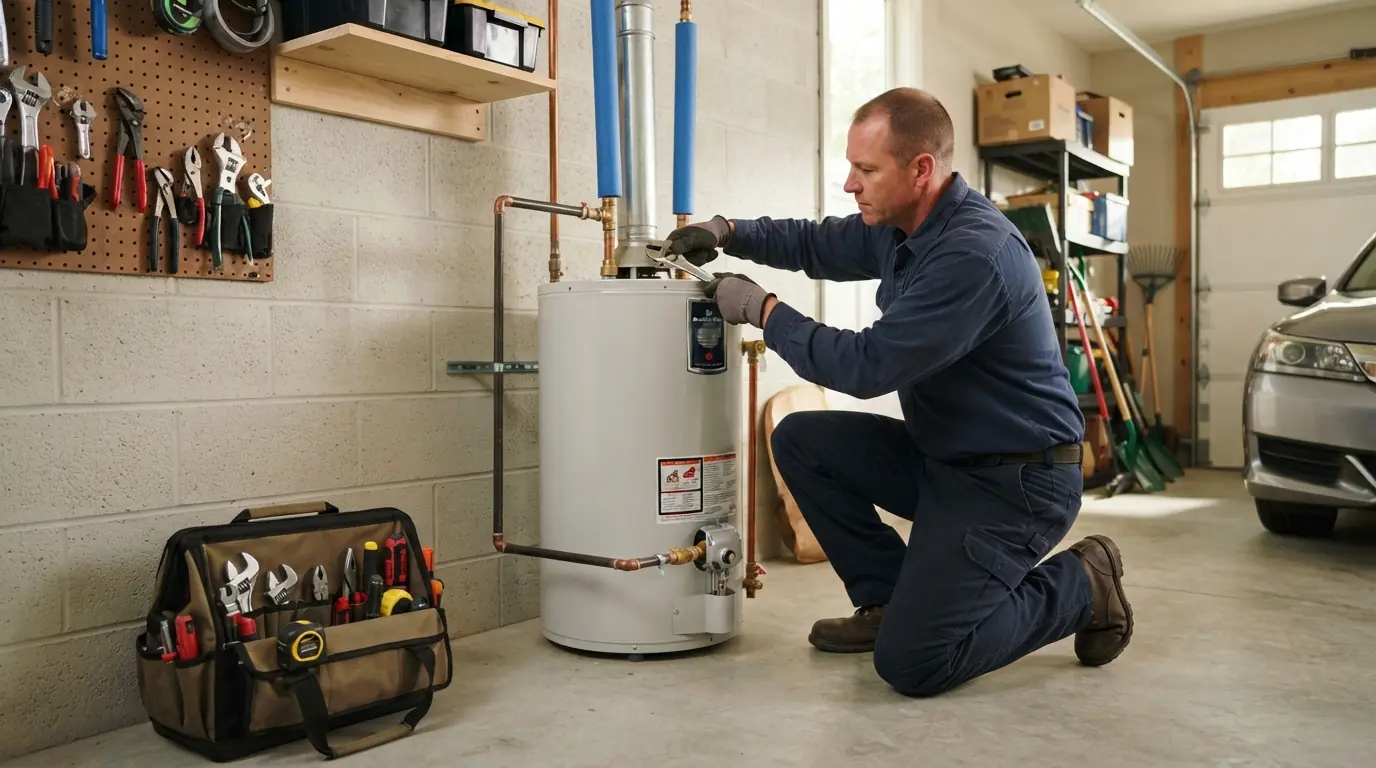
Mobile home water heaters are often special models built for small closets, with connections and access panels in specific places. When one fails, the replacement needs to fit the same space and be approved for manufactured homes, which is not always the same model sold for site-built houses. Check the heater's age on its label; past ten to twelve years, plan for a replacement before the tank leaks onto the floor.
Wells, Septic and the Line Between
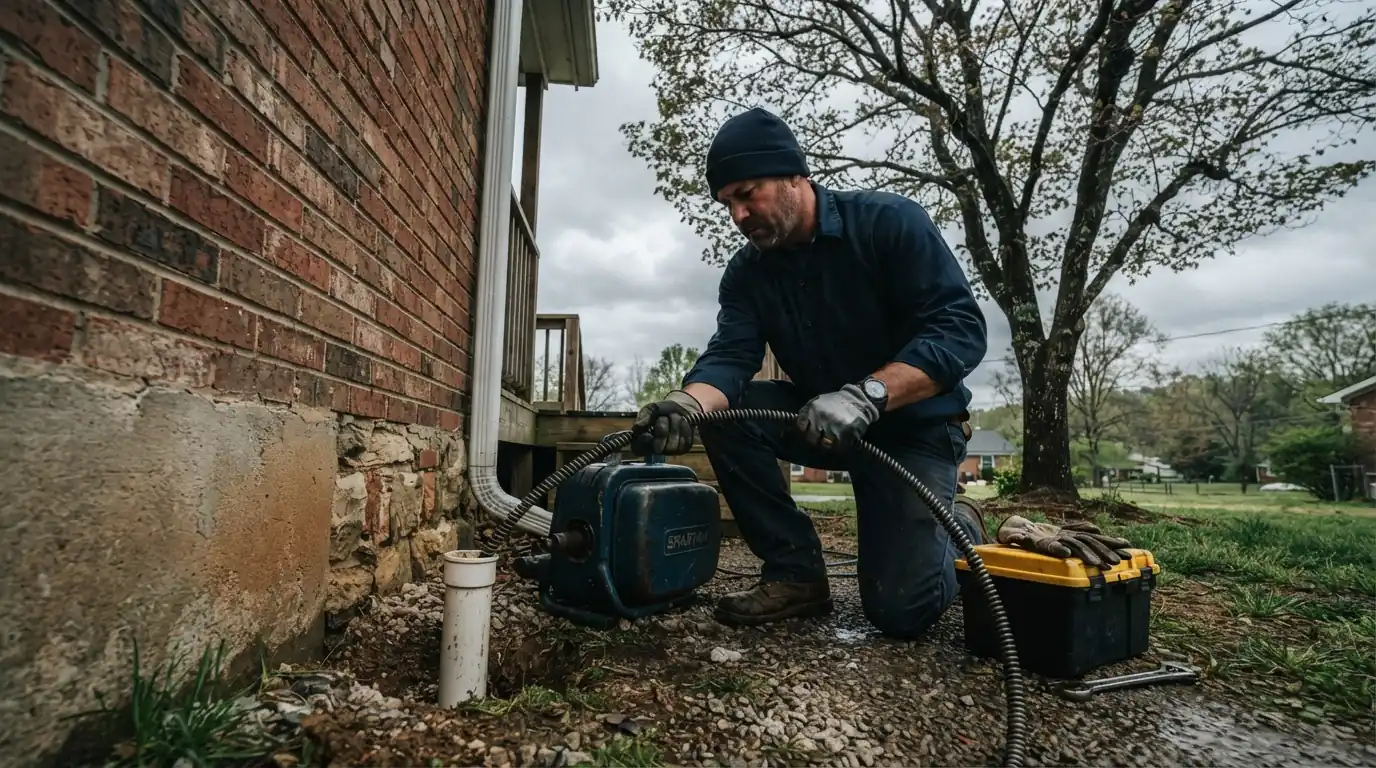
Outside town, many manufactured homes around Knoxville are on a private well and a septic system. A no-water call can start at the well pump, the pressure tank, the buried line to the home or the riser itself. Telling the plumber which you have, and whether the pressure dropped slowly or all at once, points to the cause before anyone crawls underneath. The well pump side and the home's plumbing can be handled on the same visit.
Mobile Home Plumbing Questions
Why does my mobile home freeze in the same spot every winter?
Usually a skirting gap or failed heat tape near that spot.
How do I know if I have polybutylene pipe?
It is gray plastic pipe, often marked PB; common in homes from the 1980s and early 1990s.
Can I repair a belly leak myself?
Finding it is hard; resealing the belly properly matters as much as the pipe repair.
Do mobile homes need special water heaters?
Usually a model approved for manufactured homes that fits the closet.
Is a sagging belly always a leak?
Not always, but water is the most common cause; have it checked.