Rule Out the Ordinary Reasons
Before hunting for a leak, check the bill itself. A longer billing period, an estimated reading followed by an actual one, filling a pool, watering a new lawn, or a houseful of guests can all push a bill up without anything being wrong.
If usage in gallons is up and none of those apply, something is leaking. The next step takes about fifteen minutes and a look at the water meter.
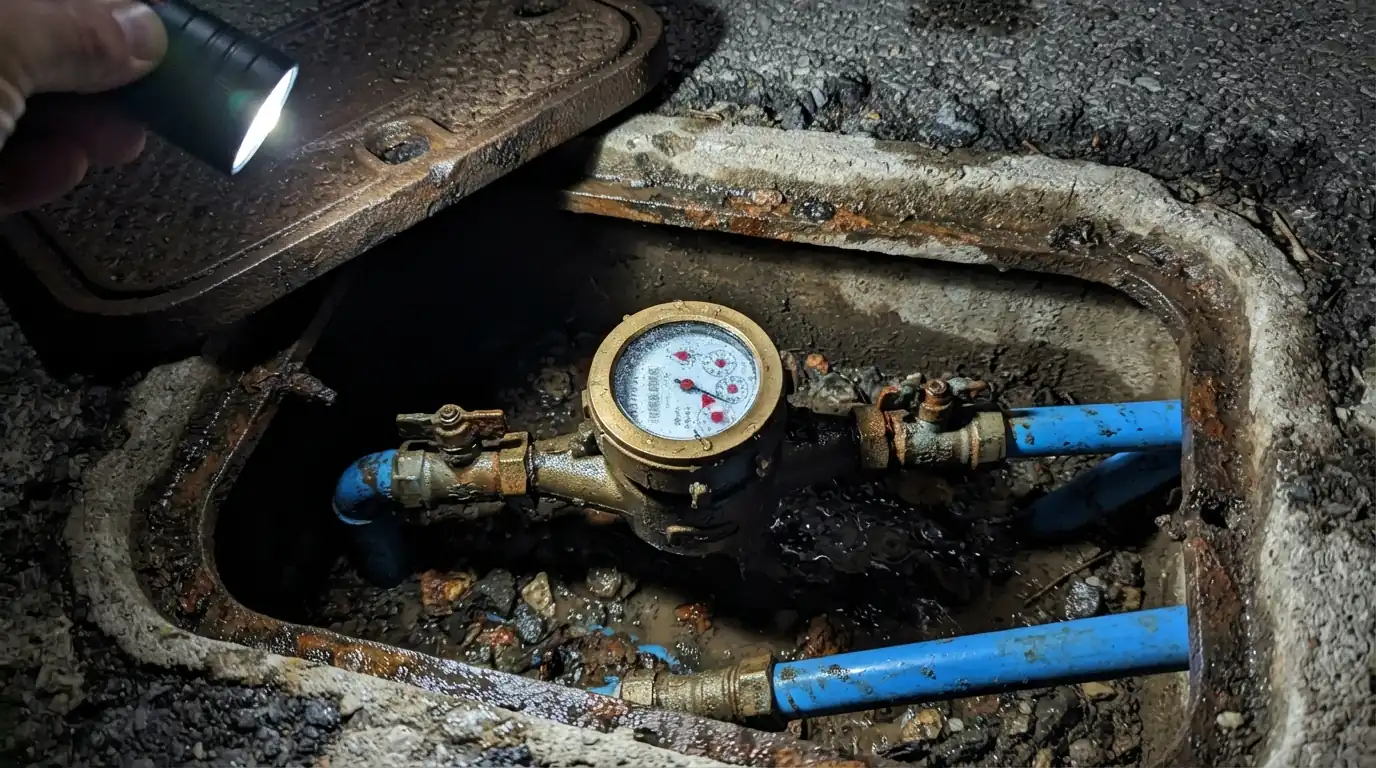
The Meter Test
Turn off every faucet, the washer, the dishwasher, the ice maker and any irrigation. Then find the meter and look at it. Most meters have a small leak indicator, a triangle or star that spins with even a trickle of flow, and a sweep hand that moves as water passes.
If the indicator moves with everything off, water is leaving somewhere. Close the main shutoff valve at the house and look again. If it stops, the leak is inside the house; if it keeps moving, the leak is on the service line between the meter and the house.
Check the Toilets First
A running toilet is the most common cause of a sudden jump, and it can waste a surprising amount of water while making almost no noise. Put a few drops of food coloring in the tank, wait fifteen minutes without flushing, and look in the bowl. Color in the bowl means the flapper is leaking.
A toilet that refills on its own every so often, or hisses faintly, has the same problem or a fill valve set too high. Both are inexpensive parts, handled under toilet repair. The table sums up what each check tells you.
| Check | What it tells you |
|---|---|
| Leak indicator moving, everything off | A leak somewhere |
| Stops when the house main is closed | The leak is inside the house |
| Keeps moving with the main closed | The leak is on the service line |
| Dye shows in the toilet bowl | The flapper is leaking |
| Warm spot on a slab floor | Possible hot water slab leak |
Meter moving with everything off? Call us any hour.
(865) 344-9122Leaks You Cannot See
If the toilets pass and the meter still moves, the leak is hidden. Inside, look for a stain spreading on a ceiling, a warped floor, a musty smell, or on a slab house a warm spot on the floor that points to a slab leak on a hot line.
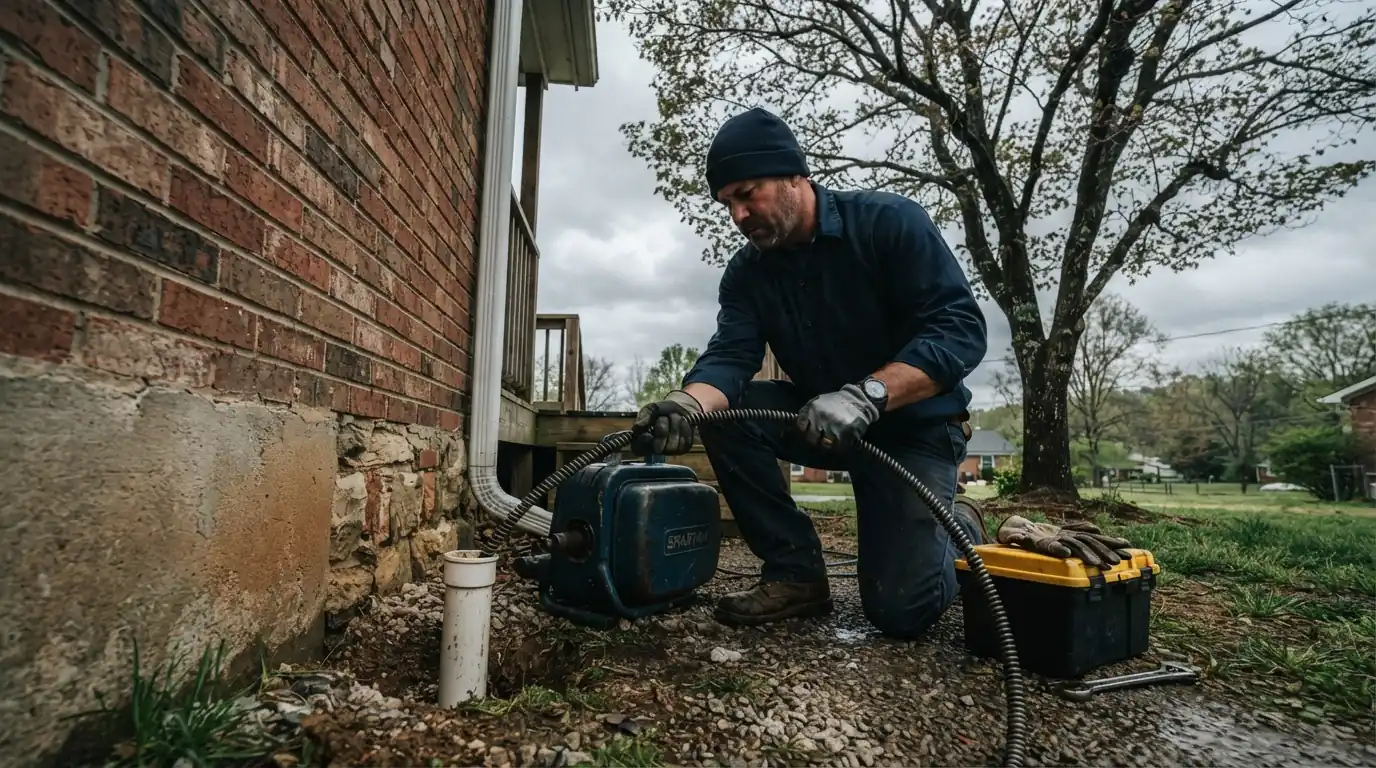
Outside, a soggy patch or a strip of unusually green grass along the path from the meter points to the service line, handled under water line repair. Pinpointing a hidden leak before anything is opened is the job of leak detection.
Why a Small Leak Is Worth Fixing Now
At about $6.85 per 1,000 gallons, a slow leak is not always expensive on the bill alone. The larger cost is what the water does while it runs: a hidden leak soaks wall cavities and subfloor framing, and mold can start within 24 to 48 hours.
A leak that has run for a whole billing cycle has usually been running long enough to damage something. Finding it early is what keeps a plumbing repair from turning into a flooring or drywall repair as well.
When to Call a Plumber
Call when the meter moves with everything off and you cannot find the source, when the leak is on the service line or under the slab, or when the dye test finds a toilet you would rather not repair yourself.
Bring the bill and any meter readings you took. They tell a plumber how fast the water is leaving, which narrows the search before any equipment comes off the truck.
Water Bill Questions
Can a running toilet really raise my bill that much?
Yes. It runs day and night, often without a sound.
Who is responsible for the line from the meter to the house?
Generally the owner, on the house side of the meter; KUB can confirm for your property.
Will KUB adjust my bill for a leak?
Ask KUB directly, with the repair receipt in hand; adjustment policies are theirs to explain.
Where is my water meter?
Usually in a box at the curb or near the property line, under a lid you can lift.
Can a slab leak run with no water showing?
Yes. A warm floor, a running sound or a moving meter may be the only signs.