How Each One Heats Water
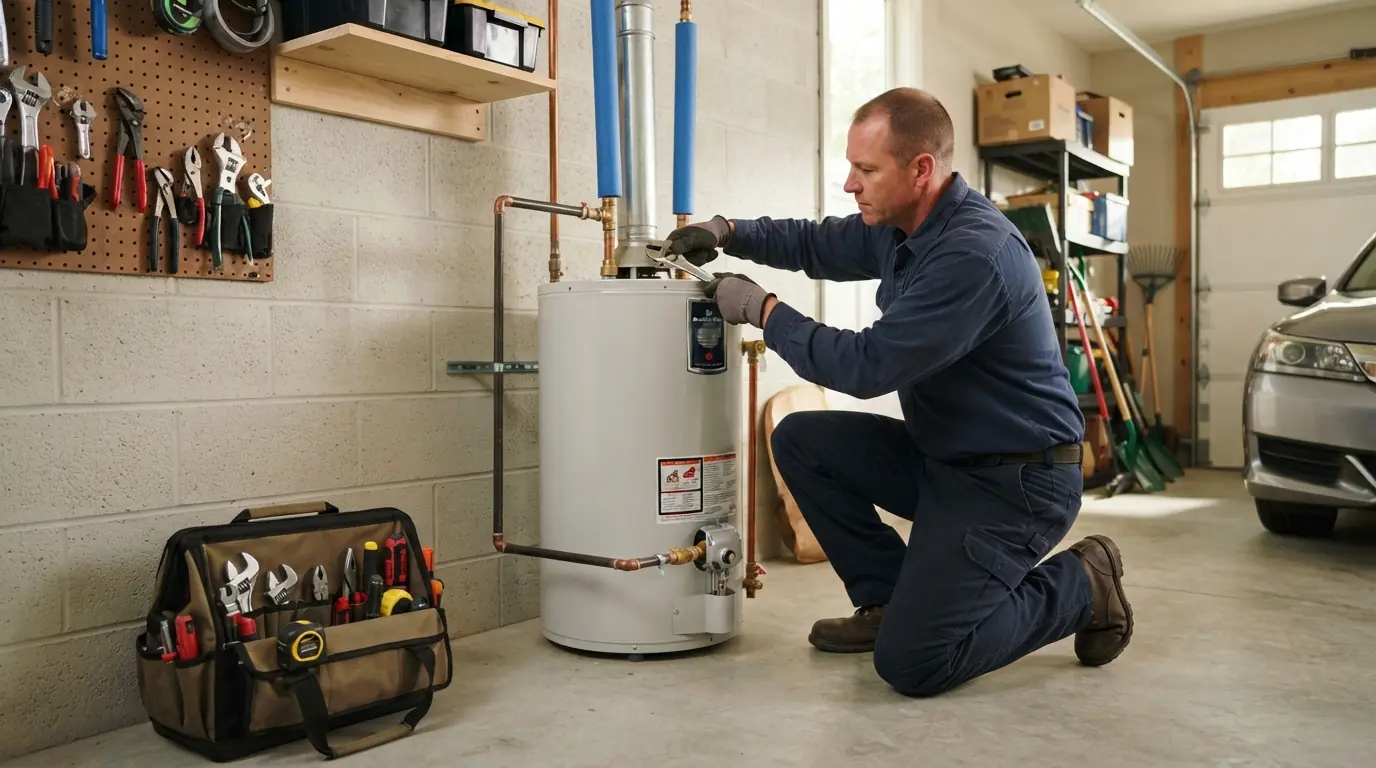
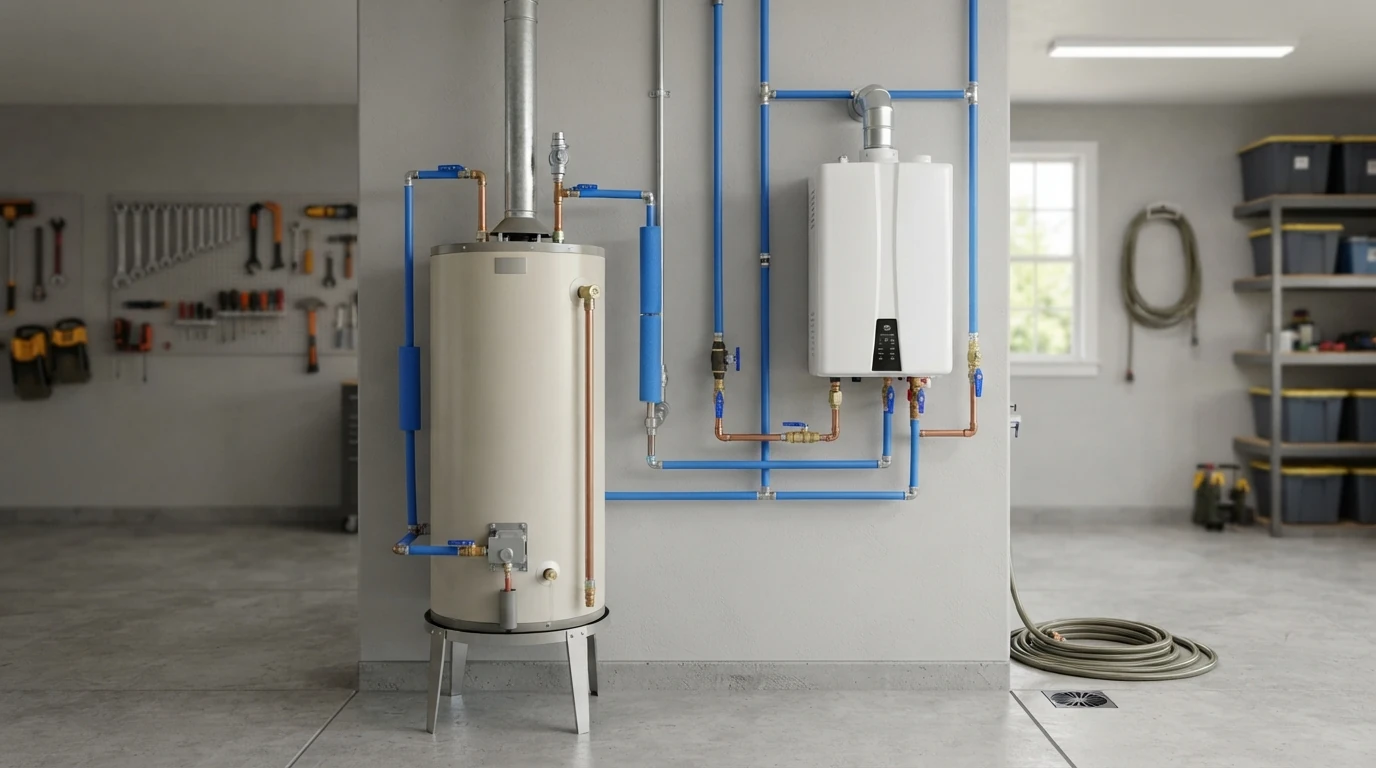
A tank heater keeps 40 or 50 gallons hot around the clock and refills as you use it. When the stored hot water runs out, you wait for it to recover. A tankless heater stores nothing: it fires the moment a tap opens and heats water as it flows, so it never runs out, but it has a maximum flow rate. Open too many hot taps at once and the temperature drops.
That difference shapes everything else. A tank is limited by volume, a tankless unit by flow, and the right choice depends on which limit your household hits first.
What the Install Really Involves
Replacing a tank with a tank is usually a like-for-like swap on the existing gas line or circuit and flue. Switching to tankless is a bigger job. Most whole-house gas units need a larger gas line from the meter, new venting to an outside wall or the roof, a condensate drain on condensing models, and service valves so the heat exchanger can be flushed.
Published Knoxville data puts a tank replacement at about $1,140 to $3,040. Tankless installs usually land above that once the gas and venting work is added, which is why the site visit matters more than the price of the unit itself.
Knoxville Water and Tankless Units
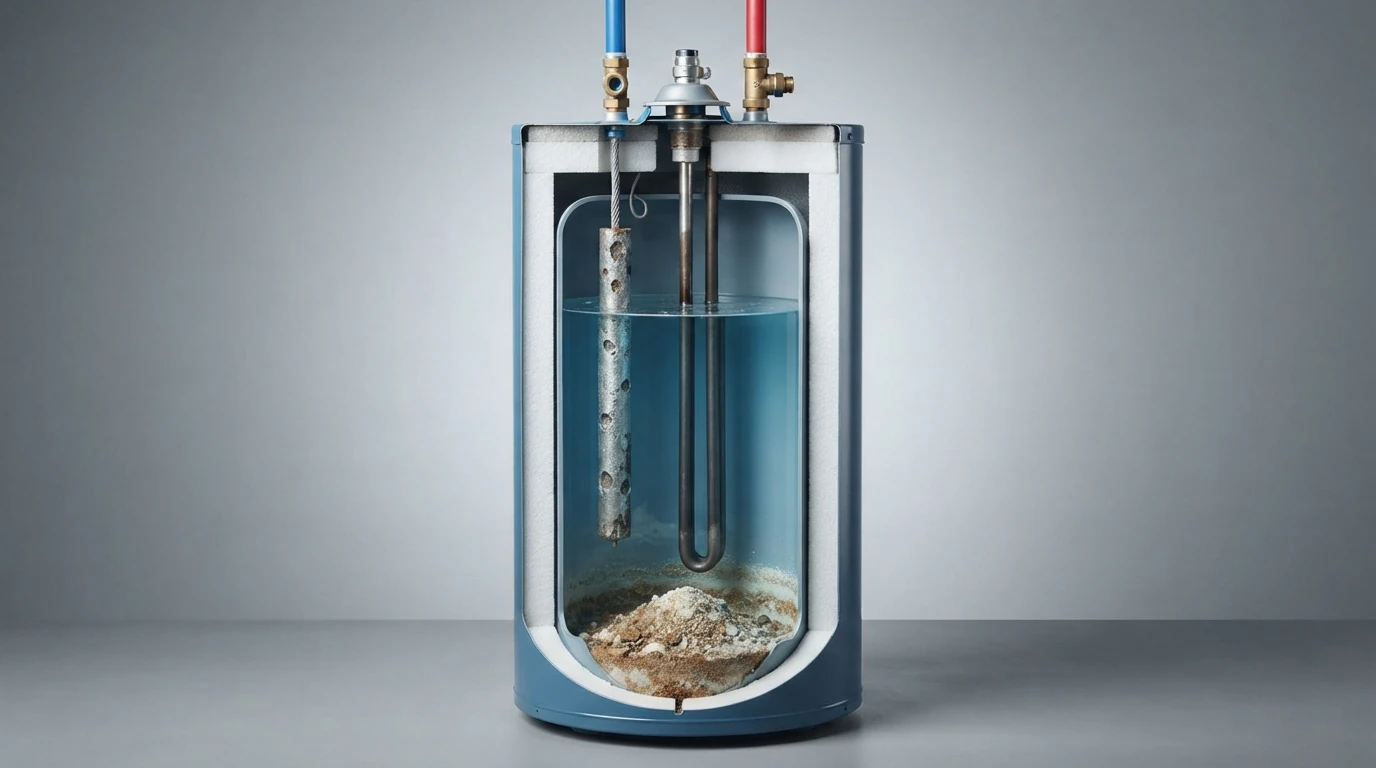
KUB's water averages around 90 ppm of hardness, moderately hard. Most households barely notice, but a tankless heat exchanger does: water is heated fast in narrow passages, exactly where calcium drops out. Local guidance is that tankless owners here should run at least a salt-free conditioner, and every tankless unit needs a descaling flush on schedule. A tank heater collects sediment too, but it tolerates neglect longer before it complains.
Weighing tankless against a new tank? Call for a site check.
(865) 344-9122Which Households Suit Each
There is no universal winner. These are the patterns that usually decide it.
| Situation | Usually the better fit |
|---|---|
| Gas home, frequent back-to-back showers | Tankless |
| Electric home with a garage or basement | Heat pump tank |
| Tight budget, the old tank still fits | Like-for-like tank |
| Large soaking tub | Large tank or high-output tankless |
| Well water heavy in minerals | Tank, or tankless with treatment |
Running Costs and Service Life
A tank loses some heat around the clock keeping water hot; a tankless unit does not, which is where its savings come from. How much that matters depends on how much hot water you use. Tankless units are built for a longer service life than most tanks when they're descaled on schedule, and skipped descaling is the most common reason they fail early. A tank is simpler, cheaper to replace, and forgiving.
Power Outages and Other Practical Details
A tankless heater needs electricity to fire, so it stops in a power outage. A standing-pilot gas tank keeps heating without power. Tankless units are wall-mounted and free up floor space; tanks need a spot on the floor and room for a drain pan. If you're leaning one way, the tankless installation and tank replacement pages cover what each job includes, and electric homes should also look at heat pump water heaters.
Tankless vs Tank Questions
Will a tankless heater lower my gas bill?
It avoids the standby heat loss of a tank, so it usually uses less gas; how much depends on your hot water use.
Can I install tankless on my existing gas line?
Sometimes, but most whole-house units need a larger line. A load calculation settles it.
Do tankless heaters need a softener?
On Knoxville city water, a salt-free conditioner and regular descaling are usually enough.
Which lasts longer?
A well-maintained tankless unit is built for a longer life than most tanks; skipped descaling shortens it.
Can I switch back to a tank later?
Yes, though the venting and gas work done for the tankless unit may not all be reused.